Preventing and Properly Treating Blisters on Your Feet
In this article
Note: This article contains affiliate/advertising links. As an Amazon Associate we earn from qualifying purchases. If you click such a link and buy something, we may receive a small commission – at no extra cost to you.
A blister on the heel or on the little toe can turn any walk into an ordeal. It rarely happens by chance, but almost always from the same cause: sustained friction between the skin and the shoe. The good news is that you can usually prevent friction blisters with a few simple measures and, if they do appear, treat them properly. In this guide you’ll learn how blisters form, how to prevent them, and when it’s better to leave a blister alone.
How does a blister on the foot form?
A friction blister forms when the upper layers of skin shift against each other due to constant shearing movement. The body responds by pumping tissue fluid between the layers. This blister fluid acts like a cushion and protects the sensitive skin beneath. Three factors work together here:
- Friction from shoes that are too tight, too loose or new
- Moisture, for example from sweat or wet socks, which softens the skin
- Heat, which makes the skin softer and therefore more vulnerable
Areas with a lot of pressure or movement are especially at risk: heels, toe tips, the balls of the feet and the sides of the little toes. Anyone who walks long distances, hikes or breaks in new shoes knows these weak spots well.
Preventing blisters on your feet
Prevention is far more pleasant than treatment. With the following measures you reduce friction and keep your feet dry.
Choose the right shoes
Shoes should neither pinch nor slip at the heel. It’s best to try on new models in the afternoon, when your feet are slightly swollen, and take a few steps. New shoes are best broken in gradually rather than worn straight away on a long trip. A thumb’s width of space in front of the toes is a good guideline.
Don’t underestimate socks
Socks made of functional material or blended fabric wick moisture away better than pure cotton, which retains sweat. Make sure they sit without wrinkles, because even a small fold creates a friction point. On long hikes, some people find that two thin layers of socks help, because the friction then occurs between the socks rather than on the skin.
Care for and protect the skin
Dry, cracked skin chafes more quickly. Regular care keeps the calluses supple – you can read how to go about this in the article Using foot cream correctly: ingredients and routine. Directly before a long strain, however, the rule is: don’t apply greasy cream, but keep the skin rather dry. At known problem spots you can apply a blister plaster, tape or a little petroleum jelly as a preventive measure to reduce friction.
Control moisture
Sweaty feet are more prone to blisters. During long activities, change your socks as soon as they become damp, and let your shoes dry well between uses. A light foot powder can absorb excess moisture. If, on the other hand, you often suffer from cold, poorly circulated feet, you’ll find further suggestions in the article Constantly cold feet: causes and what helps.
Properly caring for a closed blister
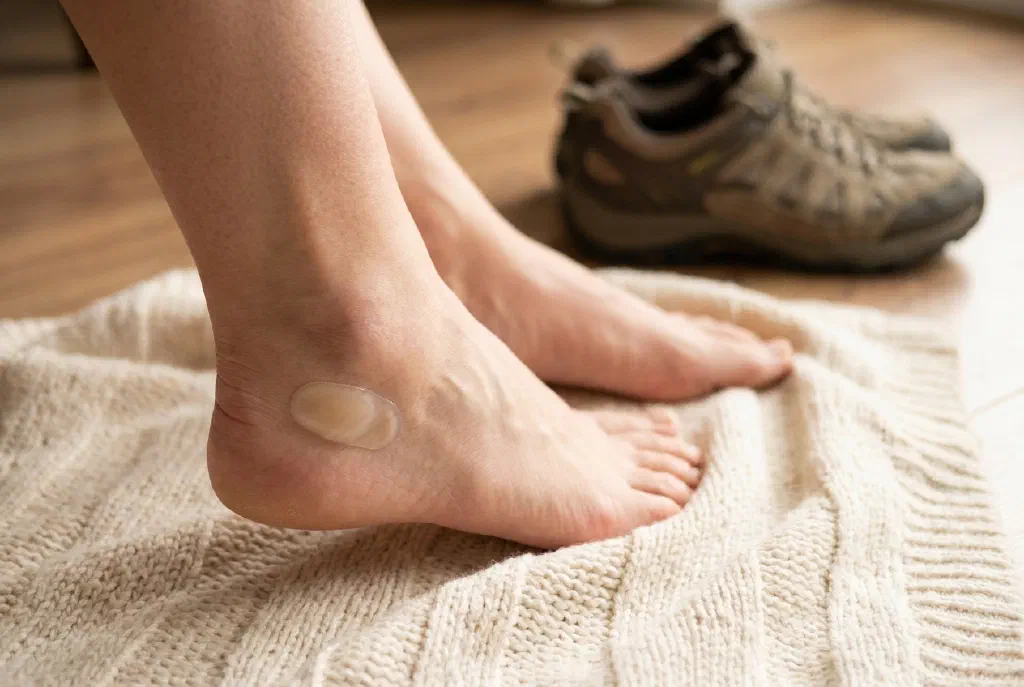
If the blister is still closed and the skin over it is intact, the most important rule is: don’t pierce it. The intact layer of skin is the best protection against germs, and the fluid is gradually broken down by the body itself.
- Clean the area gently and dab it dry.
- Cushion the blister with a hydrocolloid blister plaster, which takes over the friction and creates a moist healing environment.
- Avoid further pressure by switching to more suitable footwear.
A blister plaster can stay on the skin for several days. Don’t peel it off prematurely; wait until it loosens on its own.
Treating an open or burst blister
If the blister has already burst, the main concern is to avoid an infection:
- Wash your hands and clean the wound with clean water or a mild antiseptic.
- Leave the detached layer of skin in place if possible, since it covers the wound.
- Apply a sterile plaster or wound dressing and change it regularly.
Very large or taut blisters that will inevitably be under pressure can be opened carefully. If you do this, use a disinfected needle, pierce at the edge, let the fluid drain gently and leave the skin over it in place. Cleanliness is crucial here.
When you should seek medical advice
Most blisters heal within a few days without complications. In certain cases, however, you should have the area checked by a doctor:
- Signs of infection such as increasing redness, warmth, pus or throbbing pain
- Blisters with no recognizable friction cause
- If you have diabetes or circulatory disorders, since even small wounds can be problematic here
Conclusion
Blisters on the feet are avoidable in the vast majority of cases. Well-fitting shoes, moisture-wicking socks and well-cared-for skin take away the basis for friction. If a blister does appear, patience is the best helper: leave closed blisters alone, and keep open wounds clean and protected. That way the skin heals reliably, and you’ll soon be back on your feet pain-free.
Frequently Asked Questions (FAQ)
Should I pierce a blister? Generally no. A closed blister protects the wound beneath it best on its own and should remain intact. Only very large, taut blisters that will inevitably come under pressure can be opened carefully at the edge with a disinfected needle – the layer of skin stays in place.
How long does it take for a blister to heal? Smaller friction blisters usually heal within a few days to about a week, provided no further friction is added. A blister plaster can support the healing process by protecting the area and keeping it moist.
Do two pairs of socks help against blisters? For some people, yes. If you wear two thin layers of socks, the friction occurs between the two socks rather than directly on the skin. It’s important that the socks sit without wrinkles and that the shoe still offers enough room.
When do I need to see a doctor about a blister? Seek medical advice if signs of infection appear – such as strong redness, warmth, pus or throbbing pain. With diabetes or circulatory disorders, too, you should have blisters checked as a precaution, since wounds heal more poorly here.