How to Apply Foot Cream Correctly: Ingredients and Routine
In this article
Note: This article contains affiliate/advertising links. As an Amazon Associate we earn from qualifying purchases. If you click such a link and buy something, we may receive a small commission – at no extra cost to you.
Your feet carry you through everyday life, yet they usually get the least care. Dry patches, rough heels and hard calluses are the result. A good foot cream can make a big difference if you choose the right ingredients and apply it regularly and correctly. In this guide you’ll learn which active ingredients soften calluses, how to build your routine and what to look out for when choosing a product.
Why feet need their own cream
The skin on your feet is noticeably different from the rest of the body. On the heels and soles it has hardly any sebaceous glands, but a particularly thick horny layer that keeps growing due to pressure and friction. Ordinary body lotion is therefore often too light. A foot cream is richer and contains active ingredients that specifically deliver moisture into the callused skin and keep it supple.
Dry, cracked heels develop when the skin lacks moisture and fat. Left untreated, painful cracks (rhagades) can form. With the right care you prevent this before it gets that far.
These ingredients soften calluses
When looking at the ingredient list, it’s worth paying attention to a few proven active ingredients:
- Urea: The classic in foot care. Urea binds water in the skin and at the same time loosens the bonds between the horny cells. This makes calluses softer and easier to remove. For daily care, 5 to 10 percent is often enough; for heavy calluses, 15 to 25 percent makes sense.
- Glycerin: A humectant that stores water in the skin and keeps it supple. Well tolerated and found in many creams.
- Lactic acid and other fruit acids: They dissolve dead skin flakes and support the callus-softening effect of urea.
- Panthenol (provitamin B5): Promotes regeneration and soothes stressed skin.
- Plant oils and shea butter: They provide fat that protects the skin from moisture loss – important because the sole itself produces hardly any fat.
- Allantoin: Has a skin-soothing effect and helps smooth rough areas.
For sensitive or cracked skin, avoid heavily perfumed products, as fragrances can cause irritation.
Which concentration suits you?
The right urea concentration depends on the condition of your skin. For slightly dry skin, a mild cream is enough for maintenance. If you have pronounced calluses on your heels, reach for a more highly concentrated variant and reduce it once the skin has improved. This way you avoid the skin becoming too thin.
How to build your care routine
An effective routine is simpler than many think. The decisive factor is consistency.
- Cleanse: Wash your feet in the evening with lukewarm water and a mild soap. An occasional foot bath softens the skin even more.
- Dry: Dry especially the spaces between your toes thoroughly to avoid moist areas and fungal growth.
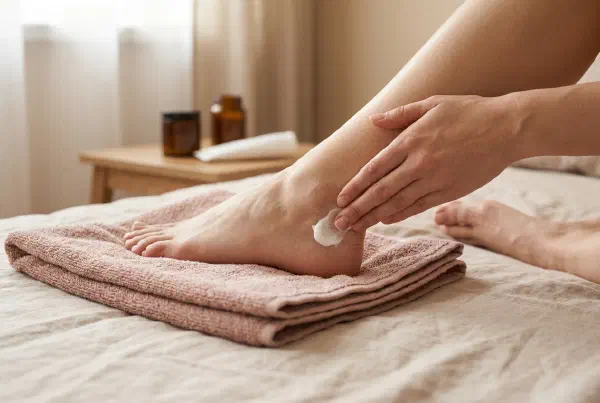
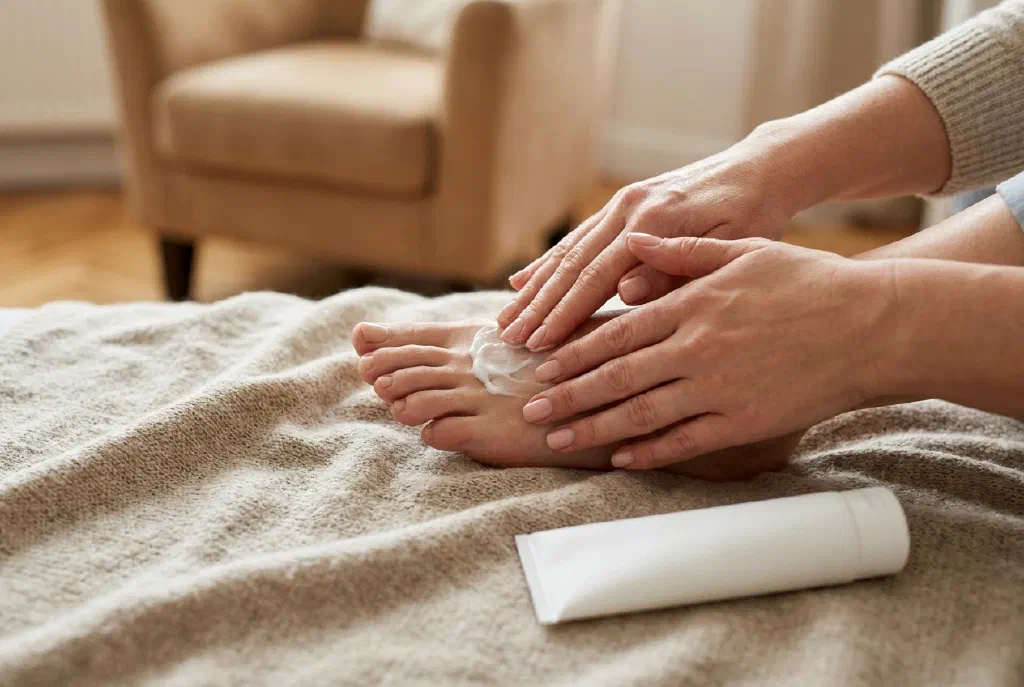
- Apply cream: Apply the foot cream and massage it in – from the heel across the sole to the instep. It’s best to leave out the spaces between the toes.
- Let it absorb: In the evening the cream has time to work overnight. Cotton socks boost the effect because they hold in the moisture.
Before applying cream, you should only reduce calluses carefully with a pumice stone or file – never with sharp blades. The cream takes care of the rest over the following days.
Avoiding common mistakes
- Too much at once: A thick layer doesn’t absorb better, it stays sticky. An even, thin layer works better.
- Only applying cream when there are problems: Care works preventively. Anyone who only starts when their heels are already cracking needs longer to see improvement.
- The wrong cream: A pure moisturizing lotion without callus-softening active ingredients does little for thick calluses.
When is cream alone not enough?
Foot cream cares for and prevents, but does not replace medical treatment. If your feet are often cold, this can indicate poorer circulation – you can read more about this in the article Constantly cold feet: causes and what helps. Misalignments also change the distribution of pressure and lead to increased calluses in certain spots; you can find out which measures make sense then under Splayfoot and fallen arches: what helps with misalignments.
Deep cracks, severe pain, inflammation or calluses that keep coming back despite care should be examined by a doctor or podiatrist if in doubt. This applies especially if you have diabetes, since foot health requires particular attention here.
Frequently Asked Questions (FAQ)
How often should I apply foot cream?
For visible results, daily application is ideal, preferably in the evening before going to bed. With very dry skin you can also apply cream in the morning and evening. Once the skin has improved, one application per day is often enough for maintenance.
Does foot cream really help against calluses?
Yes, as long as it contains callus-softening active ingredients such as urea or lactic acid. These loosen the callused skin so that it comes off more easily. For thick calluses, the cream works best in combination with regular, gentle removal using a pumice stone.
Can I use normal body lotion for my feet?
For slightly dry skin this is possible, but body lotion is usually too light and contains no callus-softening active ingredients. For rough heels and calluses, a special foot cream is significantly more effective.
Why shouldn’t I apply cream between my toes?
In the spaces between the toes, moisture evaporates poorly. If cream stays there, a warm, moist environment forms that encourages skin fungi. Therefore only apply cream to the sole, heel and top of the foot, and keep the spaces between the toes dry.