Trimming Toenails Correctly: Straight Instead of Ingrown
In this article
Note: This article contains affiliate/advertising links. As an Amazon Associate we earn from qualifying purchases. If you click such a link and buy something, we may receive a small commission – at no extra cost to you.
Ingrown nails are among the most common and most painful foot problems – and in the vast majority of cases they are caused by improper cutting. Anyone who trims their toenails too short, too round, or with force is practically inviting the nail edge to grow into the surrounding skin. The good news: with the right technique, the proper tools, and a little patience, this can almost always be avoided. In this guide you will learn step by step how to cut your toenails so that they grow back healthy, straight, and pain-free.
Why the cut shape determines whether nails grow in
A toenail grows straight forward from the nail root. If you cut the side corners off strongly rounded or at an angle, the regrowing nail lacks its natural guidance. As it grows, the sharp edge then presses sideways against the nail fold – the ridge of skin next to the nail. There it can tear, become inflamed, and lead to the classic ingrown nail (medically Unguis incarnatus).
That is why the most important rule applies: toenails are cut straight. The corners may be slightly rounded so they do not stick out sharply, but they should always remain visible above the skin fold. This is exactly where toenail care differs from fingernail care, where a round shape is common and unproblematic.
Finding the right length
A common mistake is cutting too short. Many people perceive very short nails as especially well-groomed – but in reality this increases the risk of the nail corner slipping under the skin.
As a rule of thumb:
- The nail edge should finish flush with the tip of the toe or stand a touch above it.
- A narrow white margin of about one millimetre may be left standing.
- Never cut so far that the sensitive nail bed or the surrounding skin is exposed.
If you feel pressure on the front edge of the nail when walking, the nail is too long. If, on the other hand, you feel the corners at the sides, the cut was too short or too round.
Step by step: how to cut correctly
1. Preparation
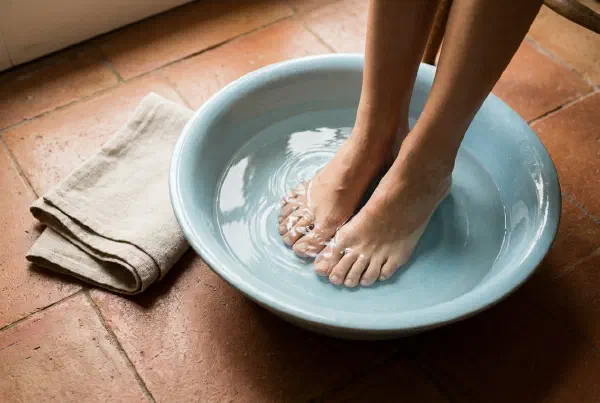
The best time to cut your toenails is after showering or a short foot bath. Softened nails splinter less and can be trimmed more cleanly. Clean your tools beforehand – ideally with alcohol – so as not to introduce germs into any tiny cracks.
2. The right tool
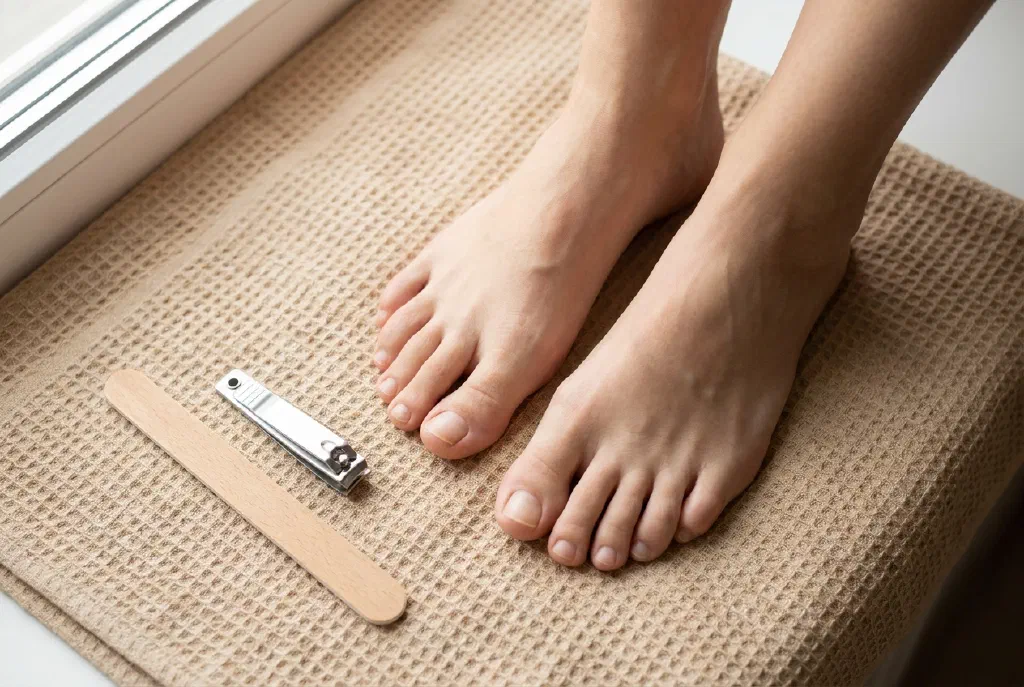
Use straight nail nippers or nail scissors with a straight blade rather than a strongly curved clipper. Curved blades automatically tempt you into a round cut shape. Nippers give you more control, especially when the nails are thicker.
3. Cut in small steps
Trim the nail across in several small bites, not in a single pass. This prevents the nail from tearing or becoming too short. Work your way from one side to the other and keep the cutting line straight.
4. Gently soften the corners
If the corners stick out sharply, you can lightly break them with a file – not cut them. File in one direction, not back and forth, as this protects the nail structure.
5. Smooth the edges
Finally, file the front edge smooth so that nothing catches on socks. A smooth edge also reduces the risk of pressure points and blisters on the feet.
Avoiding common mistakes
- Cutting too round: by far the most frequent trigger for ingrown nails.
- Cutting too short: lets the corner grow under the skin.
- Working on dry nails: increases the danger of splitting and cracking.
- Blunt or unclean tools: crush the nail instead of cutting it cleanly.
- Trimming around ingrown corners: often makes the problem worse, because a tiny spur is left behind.
Care around the cut
Healthy nails begin with healthy skin. If you keep the skin around the nail supple, the nail fold tears less often. Regular care with a suitable foot cream keeps the skin elastic – you can read how best to use it in the guide Using foot cream correctly.
Also pay attention to well-fitting shoes and socks. Footwear that is too tight squeezes the toes together and further encourages ingrowing. Anyone prone to dry or cracked nails benefits from a calm, regular care routine rather than hurried trimming under time pressure.
When you should not cut them yourself
In some situations caution is advised. With diabetes, circulatory disorders, or strongly thickened, discoloured, or suspected fungal nails, you should rather leave the care to medical foot care (podiatry). How to recognise an infestation and what options exist is explained in the article recognising and treating nail fungus on the foot. The same applies to an already inflamed, reddened, or suppurating nail fold: hands off self-trimming and, when in doubt, have it checked by a doctor. A professional can treat ingrown areas properly without risking new injuries.
Frequently Asked Questions (FAQ)
How often should I cut my toenails?
Toenails grow more slowly than fingernails – about every four to six weeks is a good rhythm. It is better to cut a small piece somewhat more often than to take off a lot at once only rarely.
Should the corners of the toenails not be rounded at all?
The cutting line itself stays straight. Only sharp, pointed corners may be lightly softened with the file so they do not stick out – but they should always remain visible above the skin fold and not be cut away.
What can I do if a nail starts to grow in?
At the first signs, warm foot baths, loose footwear, and patience help until the nail grows out past the critical spot. Do not trim around the ingrown corner. With pain, swelling, or inflammation, have it checked by a doctor or podiatrist.
Is a foot bath really necessary before cutting?
Not necessary, but very helpful. Softened nails splinter less and can be cut more evenly. A few minutes in warm water, or cutting right after showering, is perfectly sufficient.