Preventing athlete's foot: the most effective tips for healthy feet
In this article
Note: This article contains affiliate/advertising links. As an Amazon Associate we earn from qualifying purchases. If you click such a link and buy something, we may receive a small commission – at no extra cost to you.
Athlete’s foot is one of the most common skin infections of all – and the tricky thing about it is that it often creeps in unnoticed. Itchy, reddened or flaky skin between the toes is usually the first sign. The good news: with a few consistent habits you can dramatically lower the risk. That’s because the pathogen needs a very specific environment to feel comfortable – namely warmth, moisture and a compromised skin barrier. Take that foundation away and it barely stands a chance. In this guide you’ll learn how to protect your feet for the long term with hygiene, the right shoe choice and thorough drying.
How athlete’s foot develops in the first place
Athlete’s foot is caused by so-called filamentous fungi (dermatophytes). They feed on keratin, the protein in your outermost layer of skin. They are transmitted via tiny flakes of skin shed by infected people – for example on floors in swimming pools, saunas, changing rooms or in a shared bathroom.
For that contact to turn into an actual infection, however, several factors have to come together:
- a warm, damp environment, for example from sweaty feet in airtight shoes
- small cracks in the skin or softened skin that serve as an entry point
- a weakened skin environment, for example from frequently walking barefoot on public floors without subsequent care
Anyone who knows these conditions immediately understands where prevention has to start: with dryness, intact skin and clean shoes.
Drying: the most important step
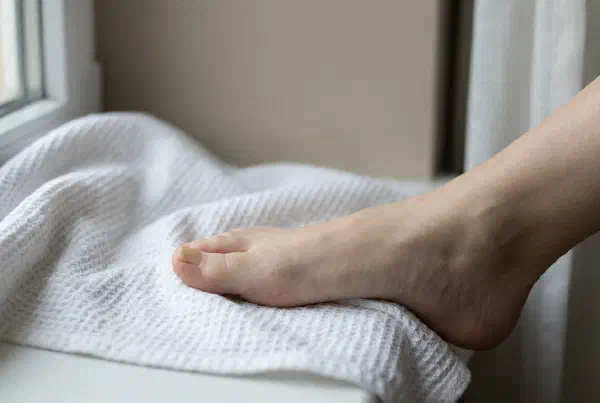
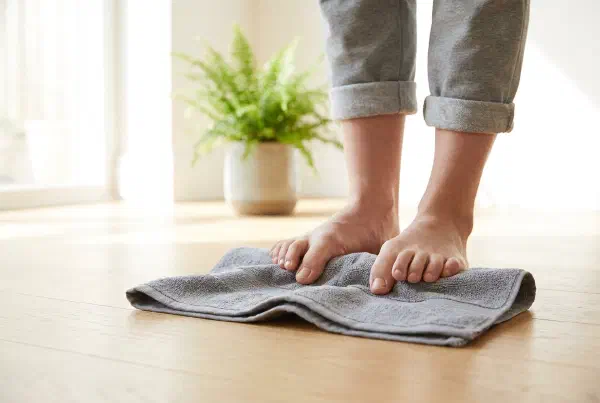
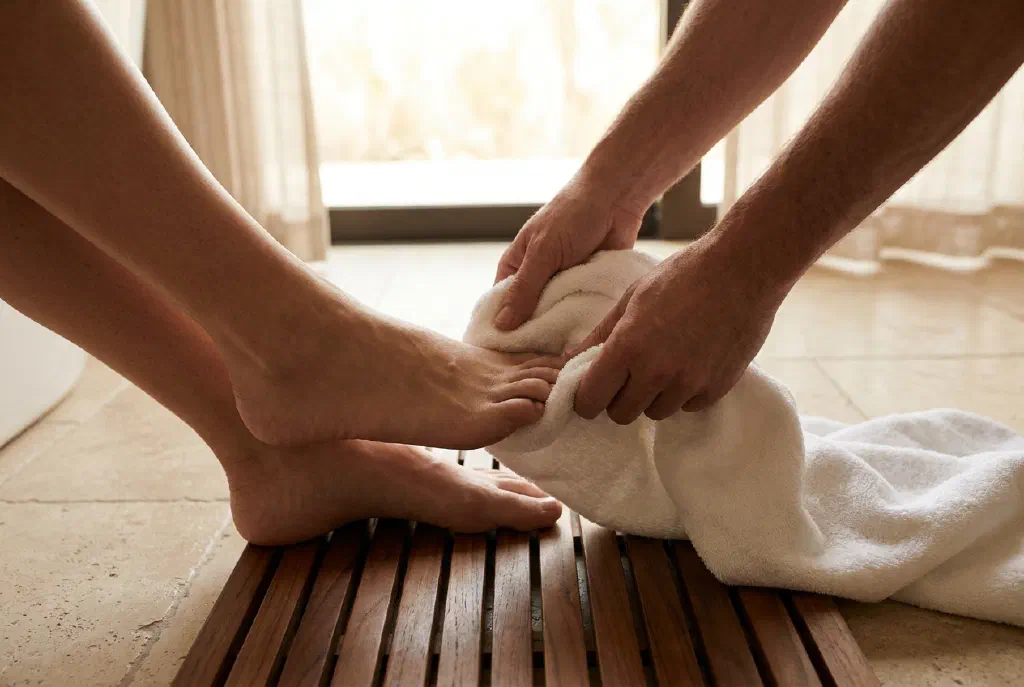
If you only want to change one single thing, then make it this: dry your feet thoroughly after every wash, shower or bath – and really everywhere, especially in the spaces between your toes. That’s where residual moisture loves to collect, and this is exactly where athlete’s foot typically begins.
Here’s how to do it right:
- Gently pat the skin between your toes dry with a clean towel rather than rubbing.
- If your feet sweat a lot, you can additionally let them air-dry for a few minutes before putting on socks.
- Use your own towel and don’t share it with others.
The same applies after a long foot bath: enjoy the pampering, but dry off especially carefully afterwards. You can read how to set up a foot bath optimally in the article Doing a foot bath right: additives, duration and effect.
Choosing the right shoes and socks
Shoes are the most common breeding ground for a warm, damp climate. So opt for breathable materials such as leather or mesh fabric instead of airtight synthetic shoes in which sweat builds up.
Also keep in mind:
- Let shoes air out after wearing and don’t wear them two days in a row – this way they can dry out completely.
- Wear socks made of breathable fibres such as cotton or functional blended fabrics and change them daily, more often if you sweat heavily.
- Wash socks and towels at at least 60 degrees where possible to reliably kill fungal spores.
- Make sure your shoes fit well and don’t pinch – pressure points damage the skin barrier.
Hygiene in everyday life and in high-risk areas
The risk of infection is greatest in public wet areas. A simple rule helps here: don’t walk barefoot across someone else’s damp floors. Incidentally, the virus behind a plantar wart is transmitted via exactly these floors too – how to remove a foot wart is explained in its own article.
- Always wear bathing or shower shoes in swimming pools, saunas, hotel rooms and communal showers.
- Sit on your own towel in the sauna.
- Don’t borrow other people’s shoes or socks, and don’t pass yours on either.
- Disinfect nail scissors and files regularly and use them only for yourself.
Mindfulness pays off at home too, if a family member is already affected: separate towels, regular cleaning of the bathroom floor and wearing slippers significantly reduce the risk of transmission.
Healthy skin as natural protection
Intact, supple skin is your best barrier. Dry, cracked skin, on the other hand, offers fungi an ideal entry point. So care for your feet regularly with a moisturising cream – just not between the toes, where moisture is unwelcome.
Deep cracks form especially quickly on the heels. You can find out how to get them under control in the article Cracked heels and fissures: what makes skin supple again.
It also helps to:
- remove calluses in moderation, since moisture and pathogens can collect underneath them
- cut toenails short and straight to also prevent nail fungus
- pay attention to a balanced diet and enough exercise, which supports overall skin health
If your feet itch, flake or change colour despite all precautions, you should have it checked by a doctor when in doubt. An infection caught early is much easier to treat than one that has already spread to the nails. What to do in that case is covered in the article recognising and treating nail fungus on the foot.
Frequently asked questions (FAQ)
How do I know whether I have athlete’s foot? Typical signs are itching, redness, flaky or softened skin, often starting between the toes. Sometimes small blisters or an unpleasant smell also develop. If symptoms persist, a medical examination is advisable to determine the cause reliably.
Is daily washing enough to prevent athlete’s foot? Washing alone isn’t enough – the decisive factor is thorough drying afterwards, especially between the toes. Fungi need moisture, so even the best hygiene does little good if the skin stays damp afterwards. So always combine cleanliness with dry feet and fresh socks.
Can I catch it at home from family members? Yes, transmission is possible via shared towels, floors or shoes. So use your own towels, clean the bathroom floor regularly and wear slippers if someone in the household is affected.
Are some people more prone to athlete’s foot? Anyone who sweats heavily, wears a lot of airtight footwear or is often in public wet areas has a higher risk. Dry, cracked skin also favours an infection. With consistent drying, breathable shoes and good skin care, however, the risk can be significantly reduced.