Swollen feet: causes, home remedies and when to see a doctor
In this article
Note: This article contains affiliate/advertising links. As an Amazon Associate we earn from qualifying purchases. If you click such a link and buy something, we may receive a small commission – at no extra cost to you.
By evening your shoes feel tight, your ankles look puffy, and when you press a finger onto the top of your foot a small dent stays behind? Most people know swollen feet – after a long day on your feet, on hot summer days or during long journeys. Usually a harmless cause is behind it that clears up on its own. Sometimes, though, swollen feet are a warning sign that needs medical attention. In this guide you’ll learn what’s behind the swelling, which simple remedies help and how to tell when it’s more serious.
What’s behind swollen feet?
Swelling occurs when fluid builds up in the tissue – doctors call this an oedema. Normally the veins and lymphatic vessels carry blood and tissue fluid back towards the heart. Your feet are the lowest point, so the blood has to be pumped upwards against gravity. If this return transport works more slowly than usual, fluid sinks down and collects in the ankles, the top of the foot and the lower legs.
A simple test: if you press a finger onto the swollen area for a few seconds and a dent stays behind, it’s called a “pitting” oedema. What matters most is whether one or both feet are affected and whether the swelling hurts – this helps tell harmless apart from serious.
Harmless causes: usually no reason to worry
The most common triggers are completely everyday and disappear on their own:
- Heat: On warm days the veins widen and the return flow of blood slows down. Many people know “puffy feet” in summer or on holiday.
- Long standing or sitting: If the calf muscles barely move, the “muscle pump” that moves blood upwards is missing. Typical after a day at the office or a long flight.
- Salty food: A lot of salt binds water in the body. After a salty meal, feet and hands can look slightly bloated the next morning.
- Pregnancy: During pregnancy the body retains more water, and the growing weight makes the return flow harder. Mild swelling in both feet is common and usually normal – but sudden, severe swelling should always be discussed at a check-up.
- Hormonal fluctuations: Some women retain more water before their period.
- Certain medications: Some blood pressure, hormone or pain medicines can encourage fluid retention. When in doubt, ask at the pharmacy or your practice.
This kind of swelling typically affects both feet evenly, isn’t painful and improves as soon as you put your legs up or move around.
Serious causes: when there’s more behind it
Sometimes swollen feet are a sign of a condition that should be treated. These causes belong in medical hands:
- Vein weakness: With chronic vein weakness the venous valves no longer close properly and blood pools in the legs. Often spider veins or varicose veins show up as well.
- Heart weakness: If the heart no longer pumps strongly enough, fluid backs up into the legs. Typical signs are swelling in both ankles, often together with shortness of breath or reduced performance.
- Kidney or liver disease: If the kidneys or liver don’t work properly, the body’s fluid balance is thrown off – which can show up as swollen legs.
- Lymphoedema: If the drainage of lymph fluid is disturbed, the tissue swells permanently. A lymphoedema often feels firm and barely lets you press a dent into it.
- Thrombosis: A blood clot in a deep leg vein usually leads to sudden, one-sided swelling with pain, warmth and redness. A thrombosis is an emergency because the clot can break loose and travel to the lungs.
Above all, remember: swelling that affects only one foot, comes on suddenly or hurts should never be dismissed as harmless.
Home remedies and self-help for swollen feet
For harmless everyday swelling you can achieve a lot with simple measures. The goal is always to support the return transport of the trapped fluid.
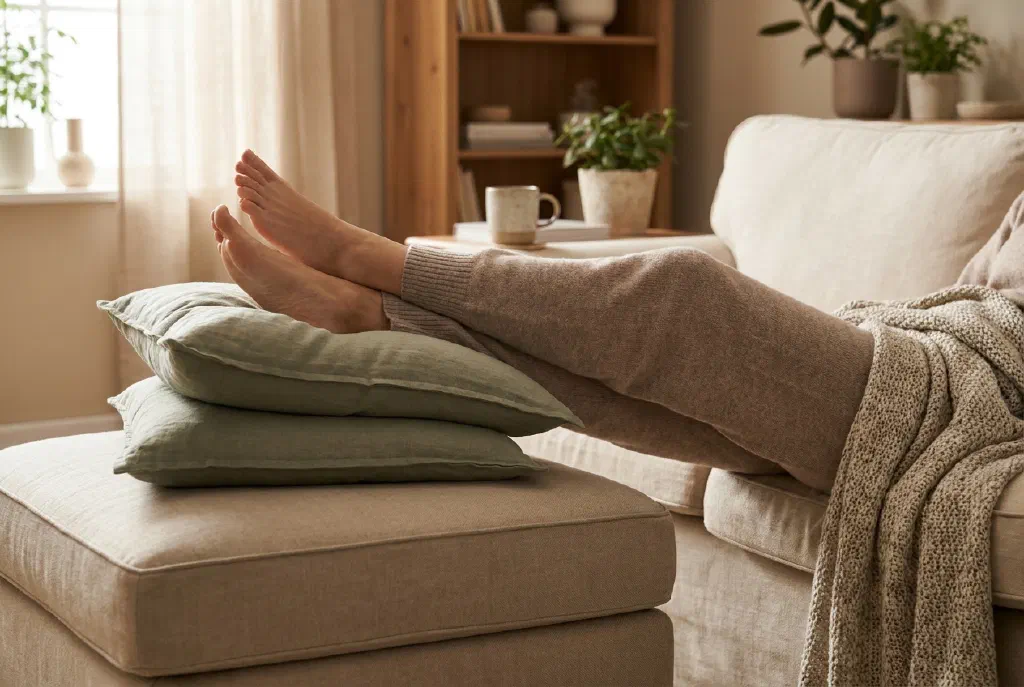
- Elevate: Put your legs up higher than your heart several times a day for 15 to 20 minutes – on a cushion, for example. Gravity then helps the fluid drain.
- Keep moving: Walks, climbing stairs or targeted exercises activate the calf muscles, which act as a natural pump. You’ll find ideas in our foot gymnastics exercises for strong, mobile feet.
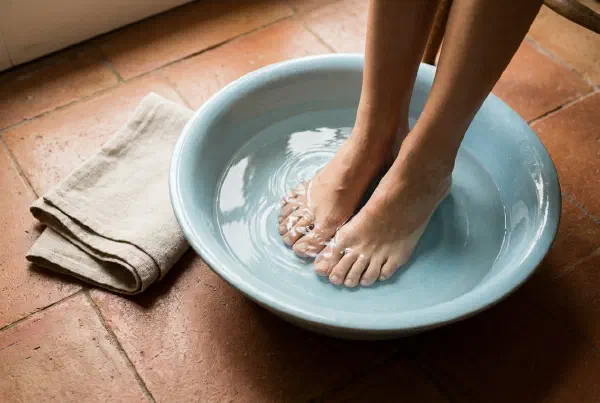
- Cool: Cool water or a cool foot bath makes the vessels contract and can ease the swelling. How to get a foot bath just right is shown in our guide how to do a foot bath properly: instructions, tips and additives.
- Compression: Support or compression stockings press gently from the outside and aid the return flow – especially useful with long standing or while travelling. If there’s a medical need, it’s best to get advice.
- Drink enough: It sounds contradictory but it’s true: if you drink too little, your body is more likely to hold on to water. Water and unsweetened teas are ideal.
- Reduce salt: Less heavily seasoned and processed food eases the fluid balance.
A gentle foot massage also feels good and boosts circulation. How it works in a targeted way is explained in our article on the foot reflexology massage and its effects. If foot complaints concern you in general, it’s also worth a look at the opposite – constantly cold feet: causes and what helps. If hot, tingling sensations come on top of the swelling, the guide to burning feet and what really helps takes you further. If, on the other hand, a single painful spot presses on the sole, a foot wart could be behind it.
Warning signs to watch for
Pay attention to accompanying symptoms that argue against a harmless cause. You should be alert if:
- the swelling affects only one foot or one leg,
- it appears suddenly and for no obvious reason,
- the area hurts, feels warm or is reddened,
- the skin turns bluish or feels tight and shiny,
- there is additional shortness of breath, chest pain or a feeling of tightness,
- the swelling doesn’t go down over several days, even after elevating.
These signs can point to a thrombosis or a heart or kidney problem and should not be waited out.
When you should see a doctor immediately
Go at once to a practice or the emergency service if a foot or leg suddenly swells, hurts and feels warm or reddened – this can be a thrombosis. Call the emergency number immediately if swelling comes together with shortness of breath, chest pain or sudden breathlessness, because then a pulmonary embolism may be suspected.
Even without an emergency: if swelling in both feet persists for a long time, keeps coming back, or you are pregnant and notice sudden severe swelling, have the cause checked by a doctor. This guide does not replace a medical diagnosis – when in doubt, a visit to your practice is always the safe choice.
Frequently asked questions (FAQ)
Why are my feet swollen in the evening but normal again in the morning?
That’s a typical pattern with harmless swelling. Over the day, while standing and sitting, fluid sinks down into the feet. At night you lie flat so the blood flows back more easily and the swelling subsides overnight. If it no longer disappears in the morning, you should look more closely.
What helps fastest against swollen feet?
Elevating works fastest: put your legs up higher than your heart for 15 to 20 minutes. Add a little movement to activate the calf pump and cool the feet if needed. Drinking enough and eating less salt help in the long run.
Are swollen feet normal during pregnancy?
Mild, two-sided swelling of the feet and ankles is common in pregnancy and usually harmless. Elevating, moving and drinking help. However, sudden, severe swelling – especially together with headaches or vision problems – should always be checked promptly at a check-up.
When are swollen feet dangerous?
Be careful if only one foot is affected and the swelling comes on suddenly, hurts, or is warm or reddened. This can point to a thrombosis. If shortness of breath or chest pain occur as well, call the emergency number at once – then a pulmonary embolism may be suspected.
Do compression stockings really help?
Yes, compression stockings exert gentle pressure from the outside and support the return flow of blood – especially useful with long standing, while travelling or with vein weakness. If there’s a medical need, you should get advice on the strength and fit.