Hammer toe: causes, exercises and what really helps
In this article
Note: This article contains affiliate/advertising links. As an Amazon Associate we earn from qualifying purchases. If you click such a link and buy something, we may receive a small commission – at no extra cost to you.
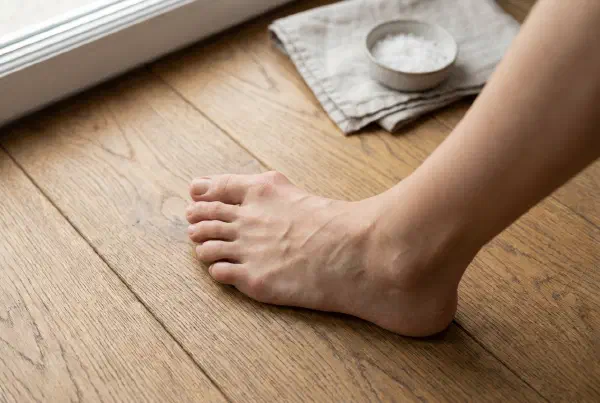
A hammer toe is one of the most common toe deformities: the affected toe is permanently bent at the middle joint so that it points downward like a claw. At first it can often still be straightened by hand, but over time the deformity can become rigid and cause pressure points or corns. This article explains factually how a hammer toe develops, which conservative measures are possible and when medical advice is sensible. It is not a substitute for a medical examination.
What is a hammer toe?
With a hammer toe, the middle toe joint is permanently bent while the end segment points downward. The second to fourth toes are often affected. A distinction is made between:
- Flexible hammer toe: The toe can still be straightened by hand – at this stage, conservative measures are most likely to help.
- Rigid hammer toe: The joint is stiffened and can no longer be extended passively.
At the highest point of the bent toe, pressure points, calluses or a corn often develop because the toe rubs against the shoe.
A hammer toe should be distinguished from similar deformities such as the claw toe, in which the base joint is additionally overextended, or the mallet toe. For everyday purposes, the exact name matters less than the question of whether the toe is still flexible and whether there are complaints – which, in case of doubt, a medical practice should assess.
Possible causes
A hammer toe rarely has a single cause. Often several factors come together:
- Unsuitable footwear: Shoes that are too tight, too pointed or high-heeled force the toes permanently into an unfavourable position.
- Other foot deformities: A splay foot or fallen arch changes the load and favours toe deformities.
- Muscular imbalance: When the flexor and extensor muscles do not work in balance, the toe can be pulled into flexion.
- Predisposition: The individual foot shape and connective tissue weakness can also play a role.
- Accompanying deformities: A hammer toe often occurs together with a bunion (hallux valgus), because the big toe pushes the neighbouring toes aside.
- Age and lifestyle: Over the years, the tone of the connective tissue declines; long periods of standing or being overweight also increase the constant load on the forefoot.
Possible complaints
A hammer toe does not necessarily cause problems, but it can lead to various complaints:
- Pressure pain on the upper side of the bent toe, especially in tight shoes.
- Calluses and corns from the constant friction – how to treat calluses in general is described under Removing calluses.
- Pressure points on the tip of the toe when the end segment is pressed onto the floor.
- An altered gait, because the affected toe is relieved – which can put additional strain on other areas of the foot.
If open or inflamed areas appear, do not press on them yourself, but seek expert advice.
Conservative measures and exercises
As long as the toe is still flexible, a lot can often be achieved with simple means. With pain or uncertainty, the measures should be coordinated with a doctor or podiatrist beforehand.
Exercises for the toes
- Stretch the toe: Gently bring the affected toe into the extended position by hand and hold briefly.
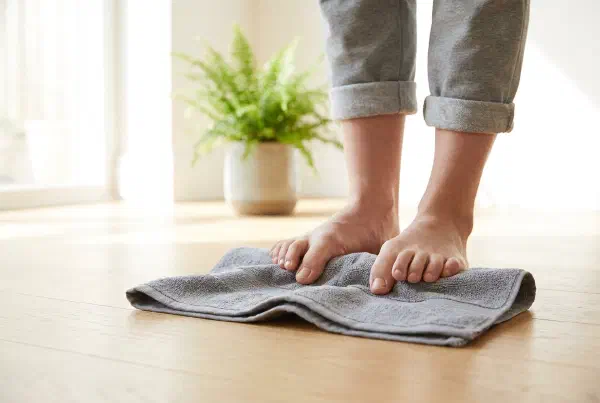
- Towel grab: Pull a towel towards you from the floor with your toes – this strengthens the foot muscles.
- Spread the toes: Consciously spread the toes apart and close them again.
- Grab a towel or marbles: Bunch up a towel or pick up small objects with your toes – this specifically trains the flexing and gripping muscles.
- Stretch the sole: Sitting down, carefully pull the toes upward by hand and hold the stretch briefly.
These exercises should be done gently and without pain, ideally daily in small units. You can find more ideas under Foot exercises: simple workouts.
Shoe choice and pressure protection
- Enough room in the forefoot: Shoes with a wide, high toe box give the toes space.
- Flat to moderate heels: High heels shift the weight forward and increase the pressure.
- Pads and cushions: Pressure protectors can reduce friction on the bent toe – have them fitted by a professional.
- Toe spreaders and splints: Small aids can bring the toe into a more favourable position in the flexible stage; their suitability should be assessed by a professional.
Caring for the strained skin
Since calluses and corns easily form on a hammer toe, regular skin care is part of it. A lukewarm foot bath softens the skin, and afterwards a cream keeps it supple. Thickened calluses should be worked on carefully and not with sharp blades; with stubborn corns or accompanying conditions, podiatric help is the safer choice.
When to see a doctor?
Medical advice is sensible when:
- the toe can no longer be straightened by hand (stiffening),
- there is severe or increasing pain,
- open or inflamed pressure points appear,
- or additional conditions such as diabetes are present. Particular caution is then required – see Foot care with diabetes.
A medical practice (e.g. orthopaedics) can assess the stage and advise on further steps.
Frequently asked questions (FAQ)
Can a hammer toe correct itself without surgery?
A flexible hammer toe can often be positively influenced with exercises, suitable footwear and pressure protection, so that complaints ease. If the toe is already stiff, conservative measures are limited – here the medical practice advises on options.
Which shoes are suitable for a hammer toe?
Shoes with a wide, high forefoot area and a flat to moderate heel that do not constrict the toes. Tight, pointed or high-heeled models increase the pressure and are unfavourable.
Do the exercises really help?
Exercises can strengthen the foot muscles and maintain mobility, especially in the flexible stage. They are not a promise of a cure and, with complaints, do not replace medical assessment.
Is a hammer toe dangerous?
As a rule it is mainly uncomfortable and can cause pressure points. It becomes problematic with open areas or accompanying conditions such as diabetes. In these cases, the foot should be examined medically promptly.
Can I prevent a hammer toe?
It cannot be prevented entirely, since predisposition also plays a part. However, shoes with enough room in the forefoot, a rather flat heel and regular foot exercises that strengthen the muscles and keep the toes mobile are beneficial. Walking barefoot at home additionally challenges the foot muscles.
When is surgery necessary?
Surgery is mainly considered when the toe is stiffened, there is severe pain or conservative measures are not enough. Whether and which procedure makes sense is decided by the medical practice after examination – this article cannot replace such advice.