Removing a Corn: What Helps and When to See a Podiatrist
In this article
Note: This article contains affiliate/advertising links. As an Amazon Associate we earn from qualifying purchases. If you click such a link and buy something, we may receive a small commission – at no extra cost to you.
A corn is small, but it can press or sting uncomfortably with every step. It develops from constant pressure or friction at a specific spot on the foot, where the callus thickens inward and forms a hard core. The good news: in many cases, you can treat a corn yourself with a little patience and the right care. In this guide, you’ll learn what really helps, which methods you’re better off avoiding and when it’s wiser to put the corn in expert hands.
What exactly is a corn?
A corn (medically clavus) is a circular, hardened thickening of the skin with a horny core pointing inward. This core presses on the underlying tissue and, in unfavourable cases, even irritates nerve endings – which explains the often stabbing pain. Typical spots are the tops of the toes, the spaces between the toes and the sole of the foot.
A corn is often confused with a wart. The difference: a wart is caused by viruses, often shows small dark dots and tends to hurt under sideways pressure. A corn, on the other hand, is your skin’s reaction to mechanical strain and hurts mainly under direct pressure from above. If it turns out to be a plantar wart after all, our guide on how to remove a foot wart will help you further.
The most common causes
For treatment to succeed in the long term, you need to know the trigger. The most common causes include:
- Shoes that are too tight or too pointed, pressing on toes and the ball of the foot
- High heels, which shift weight forward
- Foot deformities such as hammer toes, hallux valgus or a splayfoot
- Dry skin prone to calluses
- Friction from seams, folds in socks or poorly fitting insoles
As long as the pressure persists, the corn often returns after removal. That’s why the rule is: eliminate the cause first, then treat.
Removing a corn gently yourself
With an uncomplicated corn that isn’t inflamed, there’s plenty you can do at home. The important thing is to proceed patiently and carefully.
Step by step
- Take a foot bath: Soak your foot in warm water for 10 to 15 minutes. This softens the hardened skin and makes it easier to remove.
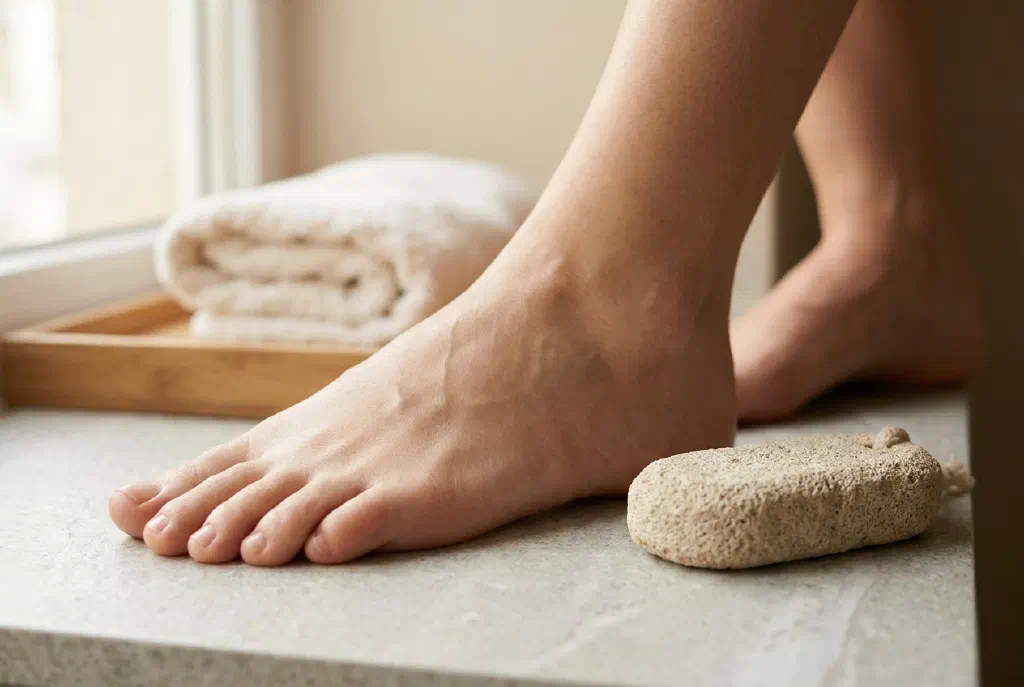
- Remove gently: Then carefully remove the softened callus with a pumice stone or a fine file. Never tear or cut.
- Care for it: Apply a moisturising care product containing urea (Urea) to your foot. It keeps the skin supple and prevents new calluses.
- Relieve the pressure: A pressure-protection plaster or a soft foam ring distributes the strain and gives the skin time to calm down.
Special corn plasters with salicylic acid can additionally soften the horny layer. But use them exactly as instructed and only on healthy, non-inflamed skin – the acid can irritate surrounding tissue.
What you should avoid
- No cutting with a blade or scissors: The risk of injury is high, and infection can follow.
- No force: If nothing comes loose, it’s better to stop and give the skin time.
- No salicylic acid with diabetes or circulatory problems without consulting a doctor.
Anyone who cares for their feet regularly prevents calluses and corns in the first place. You’ll find a good routine in our guide Doing a Pedicure Yourself: Well-Groomed Feet in a Few Steps.
When you should see a podiatrist or doctor
Self-treatment has clear limits. In these cases, the corn belongs in professional hands:
- The corn hurts badly or keeps coming back.
- The spot is red, swollen, warm or oozing – signs of inflammation.
- You have diabetes, a circulatory disorder or nerve damage in your feet.
- The corn sits deep in the space between the toes and can’t be reached.
- You’re unsure whether it’s a corn at all or actually a wart.
A podiatrist (medical foot care) can remove the horny core properly and with minimal pain, analyse pressure points and advise you on prevention. With foot deformities or stubborn complaints, an additional visit to an orthopaedist makes sense, for example to have suitable insoles fitted.
Caution is especially important with diabetes: because of the often reduced sensation of pain, small injuries can easily go unnoticed and become inflamed. Here you should always have even minor procedures professionally supervised. When in doubt, the general rule applies: better to have it checked by a doctor once than to keep tinkering with it yourself for too long.
Preventing corns in the long term
Once the area has healed, consistent prevention helps against recurrence:
- Wear well-fitting shoes with enough room for the toes
- Relieve pressure points with padding or orthopaedic insoles
- Moisturise your feet regularly to avoid dry skin
- Remove calluses early, before they harden
- Watch for deformities and have them treated early
Corns often occur together with other foot problems. If, alongside the corn, a nail is also pressing on you, read our guide Ingrown Toenail: What to Do About Pain and Inflammation.
Frequently Asked Questions (FAQ)
How long does it take for a corn to disappear?
That depends on size and depth. With consistent care and pressure relief, a small corn can improve noticeably within one to two weeks. Deeper or older corns take longer and sometimes require several treatments at the podiatrist.
Can I just cut a corn away?
This is not advisable. With a blade or scissors, you risk injuries and infections, and the horny core usually remains anyway. It’s better to soften the skin and gently remove it with a pumice stone or file, or to leave the removal to the podiatrist.
What is the difference between a corn and a wart?
A corn develops from pressure and friction and hurts mainly under direct pressure from above. A wart is caused by viruses, often shows small dark dots and reacts more to sideways pressure. If you’re unsure, a professional assessment is worthwhile.
Do corn plasters really help?
Plasters with salicylic acid soften the horny layer and can support smaller corns. However, they are only suitable for healthy, non-inflamed skin. With diabetes, circulatory problems or open areas, you shouldn’t use them without consulting a doctor.