Constantly Cold Feet: Causes and What Helps
In this article
Note: This article contains affiliate/advertising links. As an Amazon Associate we earn from qualifying purchases. If you click such a link and buy something, we may receive a small commission – at no extra cost to you.
You’re sitting on the sofa wearing thick socks and yet your feet still feel like two blocks of ice? You’re not alone. Cold feet are among the most common minor everyday complaints – women in particular know the phenomenon well. Usually there’s a harmless cause behind it, such as somewhat sluggish circulation. Sometimes, however, it’s also a sign to take a closer look. In this guide you’ll learn why your feet cool down so quickly and what you can specifically do about it.
Why do feet get cold so easily?
Your feet are the furthest away from the heart. For warm blood to reach the toes, it has to travel a long way through ever finer blood vessels. When it gets cold outside or the body comes under stress, these small blood vessels are the first to constrict – the body concentrates the warmth on vital organs in the torso. The result: feet and hands cool down first.
Initially this is a completely normal protective mechanism. It only becomes problematic when the feet stay permanently cold even in a warm environment or when further complaints are added.
The most common causes of cold feet
Not every cold toe has the same background. These factors play a role particularly often:
- Low outdoor temperatures: The most obvious reason. In the cold season the body throttles circulation to the extremities.
- Stress and tension: Stress hormones constrict the vessels. Those who are tense more often have cold feet.
- Footwear that’s too tight: Pinching shoes or constricting socks impede blood flow. Foot deformities can also play a role here – you can read more about this in the article on splayfoot and fallen arches: what helps with deformities.
- Little movement: Sitting for long periods lets the blood “pool” in the legs. The calf muscles, which pump the blood back, remain inactive.
- Low blood pressure: With low blood pressure, less blood reaches the outermost regions of the body.
- Lack of fluids and being underweight: Little body fat means less insulation, and drinking too little worsens the flow properties of the blood.
- Hormonal influences: Women often get cold faster, among other things because of a thinner layer of skin and hormonal fluctuations.
Certain illnesses too – such as circulatory disorders, an underactive thyroid or diabetes – can cause cold feet. If the issue accompanies you permanently, it’s worth looking into whether there’s more behind it. If the cold phases alternate with an uncomfortable heat sensation, the article on burning feet: causes and what helps helps you make sense of it.
What you can do about cold feet right away
The good news: in the vast majority of cases you can counteract it with simple means. The key is to stimulate circulation and retain the warmth.
Movement gets the blood flowing
Just a few minutes of movement work wonders. Wiggle your feet while sitting, circle your ankles or curl your toes and stretch them out again. Even better are a short walk, climbing stairs or targeted foot exercises. The activated calf muscles pump the blood back towards the heart and get the circulation going. If you sit a lot and also know swollen feet by evening, you’ll benefit especially from such small movement breaks.
Contrast baths and contrast showers
A tried-and-tested home remedy: alternately hold your feet in warm and cold water. Begin warm, end cold. Through the alternation the vessels contract and widen again – a real workout for your blood vessels. You achieve the same with a contrast shower of the legs.
Warm foot baths
A warm foot bath (around 37 to 39 degrees) relaxes and warms lastingly. Afterwards let your feet dry well, especially between the toes – otherwise damp warmth encourages skin problems. How to prevent this is explained in the guide preventing athlete’s foot: the most effective tips for healthy feet.
The right clothing
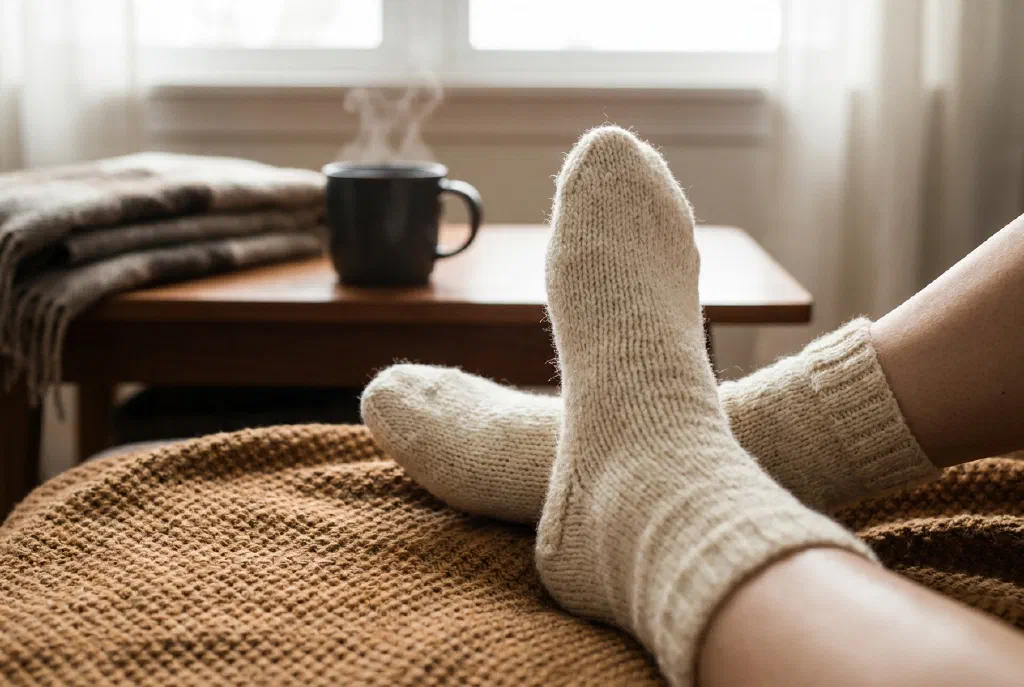
Rely on the layering principle and breathable materials. Wool warms better than cotton and wicks away moisture. Make sure that socks and shoes don’t constrict – otherwise you achieve the opposite. Warm slippers also help to keep your feet at temperature in everyday life.
Prevention: warm feet in the long run
So that cold feet don’t become a permanent state in the first place, a few habits help:
- Move regularly: Those who are active keep their circulation and vessels fit. Endurance sports such as walking, cycling or swimming are ideal.
- Drink enough: A well-hydrated body has an easier time transporting blood.
- Walk barefoot: Walking over different surfaces gently stimulates the feet and promotes circulation.
- Give up smoking: Nicotine constricts the vessels permanently and noticeably worsens circulation.
- Reduce stress: Relaxation techniques such as conscious breathing or short breaks also relieve your vessels.
Small routines built into everyday life often make the biggest difference – with no effort at all.
When you should see a doctor
Cold feet are usually harmless. In some cases, however, a medical check-up is worthwhile. Play it safe if:
- the feet stay permanently cold, even in a warm environment,
- numbness, tingling or pain additionally occur,
- the skin turns bluish or white,
- wounds on the feet heal poorly,
- you already have a condition such as diabetes.
These signs can indicate a circulatory disorder or another underlying illness. When in doubt, the rule is: better to have it checked by a doctor one time too many.
Frequently Asked Questions (FAQ)
Why do I constantly have cold feet even though I feel warm?
This is often due to sluggish circulation in the outermost regions of the body. Stress, low blood pressure, sitting for long periods or constricting shoes can cause the feet to cool down while the rest of the body stays warm. Movement and contrast baths usually help quickly.
Are cold feet a sign of an illness?
In most cases not – they are a normal reaction to cold or stress. But if the feet stay permanently cold and symptoms such as numbness, pain or skin discolouration are added, you should have the cause checked out by a doctor.
What helps fastest against cold feet?
Movement works fastest: curl your toes, wiggle your feet or take a few steps. A warm foot bath or warm wool socks also quickly bring the warmth back. Contrast showers additionally work as prevention.
Do warm socks really help against cold feet?
Yes, especially those made of wool, since it warms well and wicks away moisture. The important thing is that the socks don’t constrict – cuffs that are too tight impede blood flow and can even intensify cold feet.