Cracked Heels and Fissures: What Makes Skin Supple Again
In this article
Note: This article contains affiliate/advertising links. As an Amazon Associate we earn from qualifying purchases. If you click such a link and buy something, we may receive a small commission – at no extra cost to you.
Brittle, cracked heels are more than a cosmetic problem: when the callus becomes too thick and dry, it splits open and so-called fissures (also known as rhagades) develop. These deep cracks can be painful, bleed and, in the worst case, become an entry point for germs. The good news: with a little patience, regular care and a few tried-and-tested home remedies, you can usually get rough heels supple again. Here you’ll learn what really helps and what to watch out for.
Why heels crack in the first place
The skin on the heels is naturally thicker because it has to withstand pressure and friction every day. When it lacks moisture and oil, it loses elasticity. Under the weight of the body, the brittle callus then no longer gives way but cracks instead. Typical triggers are:
- Dry skin from too little moisture or frequent barefoot walking
- Open shoes such as sandals, where the heel pad spreads out to the sides
- Excess weight and prolonged standing, which increase the pressure on the heel
- Lack of skin movement, for example due to dry heated air in winter
- Underlying conditions such as diabetes or thyroid disorders that affect the skin
Important: first identify the cause, then care for it specifically. Anyone who constantly walks around in airy shoes will rarely achieve lasting smooth heels with cream alone.
The right care routine for cracked heels
A one-off effort won’t help against fissures; what works is a consistent three-step routine: soften, remove, care.
1. Soften with a foot bath
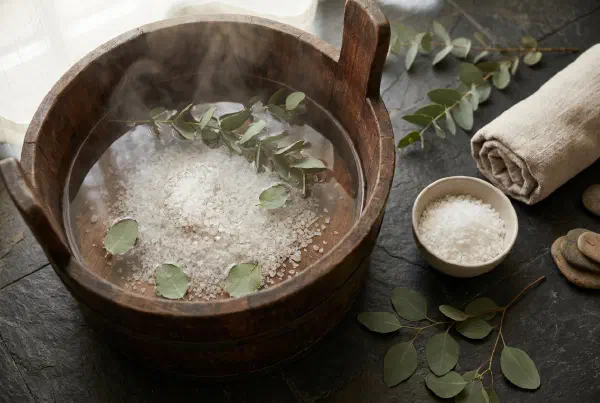
A warm foot bath softens the hard callus and prepares it for treatment. Ten to fifteen minutes are quite enough, because bathing too long dries the skin out even more. A mild additive such as a little oil or a handful of baking soda supports the effect. You can read how to dose this correctly in the article Foot baths done right: additives, duration and effect.
2. Gently remove callus
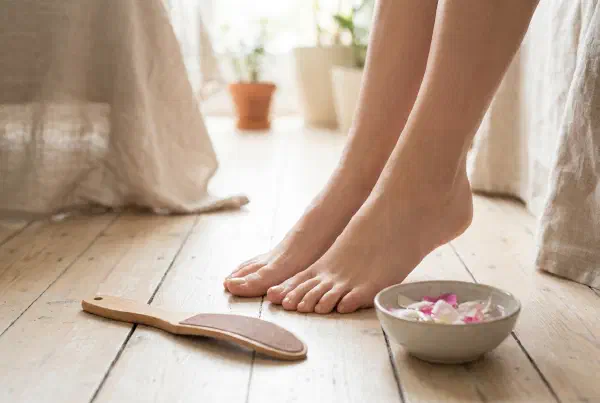
After the bath, the softened callus can be carefully reduced with a callus file, a pumice stone or a fine foot sponge. Important here:
- Always remove only a little at a time, never the entire callus at once.
- Avoid sharp planes or blades; they injure easily and irritate the skin into forming even more callus.
- It’s better to work regularly in small steps than rarely and drastically.
Completely removing the protective pad is not the goal. A thin, supple layer of callus may stay.
3. Care intensively and lock in moisture
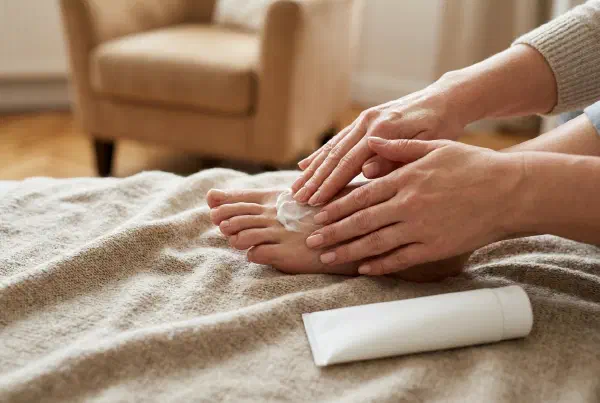
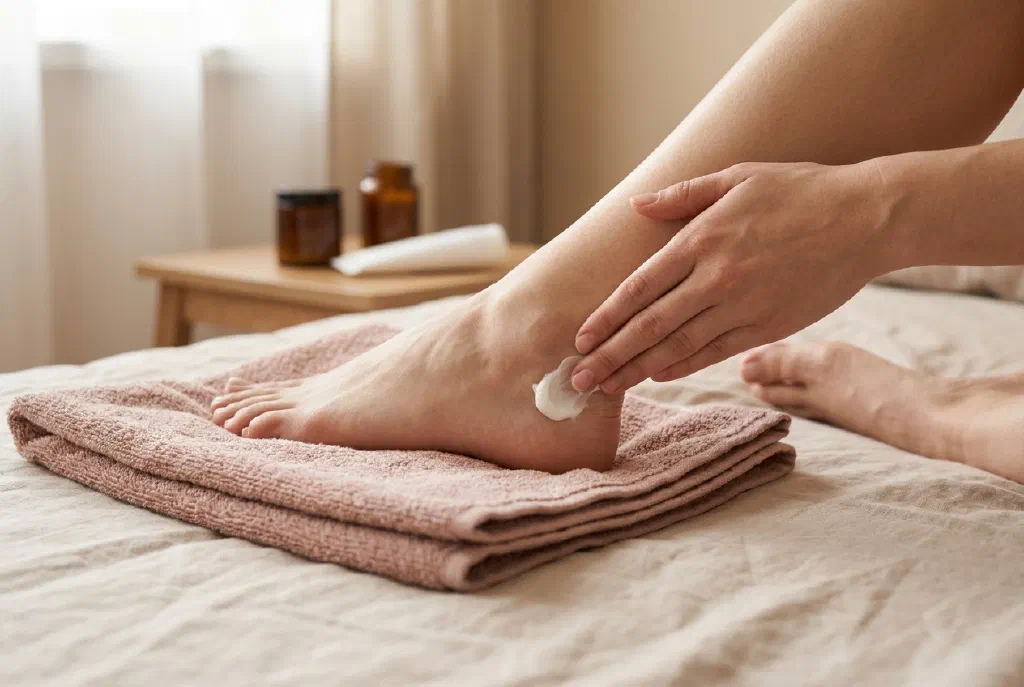
Right after removing callus, while the skin is still slightly damp, comes the rich care. Particularly effective are creams with urea, which binds moisture and makes the skin softer. For cracked heels, products with a higher urea content are suitable. Plant oils and fatty ointments also support regeneration.
A practical trick for very dry heels: apply a thick layer of cream to your feet in the evening and pull on cotton socks. Overnight, the care works undisturbed.
Home remedies that really make a difference
You don’t necessarily have to reach for special products. Some home remedies have proven their worth:
- Olive oil or coconut oil: applied thinly to damp skin, they provide oil and smooth rough patches.
- Honey: binds moisture and is often used as an additive in a foot bath.
- Quark or avocado mask: applied for a quarter of an hour, it nourishes dry skin.
- Baking soda in a foot bath: softens the callus and makes the subsequent removal easier.
These remedies don’t replace a consistent routine, but they are an inexpensive and gentle addition. With cracks that are already open and bleeding, you should avoid home remedies so as not to introduce germs.
Preventing fissures
Once your heels are smooth, you want to keep them that way. A few habits make this easy to achieve:
- Moisturise daily, ideally morning and evening, especially in the dry season.
- Wear closed, well-fitting shoes that give the heel support.
- Drink enough, because the skin benefits from a good supply of fluid from within.
- Reduce callus regularly and in moderation, before it gets too thick.
Don’t confuse a cracked heel with other pressure points on the foot. A localised, painful callus is more a case for the article Removing corns: what helps and when to see a podiatrist.
When you should seek professional advice
You can usually manage superficial dryness cracks yourself. In some cases, however, professional help makes sense. Visit a podiatry practice or a medical consultation if:
- the cracks are deep, bleeding or inflamed,
- pain, swelling or pus appear,
- the heels don’t improve despite weeks of care,
- you suffer from diabetes or circulatory disorders.
With diabetes in particular, caution is advised, because small wounds on the foot are easily overlooked and heal poorly. When in doubt: better to have it checked medically once too often than to take a risk.
Frequently Asked Questions (FAQ)
How long does it take for cracked heels to become smooth again?
That depends on how deep the fissures are. Superficial cracks often improve within one to two weeks with daily care. Deeper or long-neglected heels need several weeks of a consistent routine. It’s important to keep moisturising even after the first improvement.
Which cream works best against fissures?
Rich creams with urea are well suited, because urea binds moisture and makes the skin softer. For heavily calloused heels the urea content may be higher. Fatty ointments and plant oils have a complementary effect, intensifying the care overnight.
Can I treat cracked heels with a callus plane?
That’s better avoided. Sharp callus planes quickly remove too much and can injure the skin, which actually stimulates callus formation. Safer options are a file, pumice stone or sponge, with which you work regularly in small steps.
Can cracked heels indicate an illness?
Sometimes, yes. Persistently dry, cracking skin can be linked to conditions such as diabetes, thyroid disorders or skin ailments. If your heels don’t improve despite good care, or if further symptoms appear, you should have it checked medically.