Sweaty Feet: what really helps against odour and moisture
In this article
Note: This article contains affiliate/advertising links. As an Amazon Associate we earn from qualifying purchases. If you click such a link and buy something, we may receive a small commission – at no extra cost to you.
Damp socks in the afternoon, an unpleasant smell when you take off your shoes: sweaty feet are widespread and yet still a taboo subject. Rarely is there a hygiene problem behind them, but simply a high activity of the sweat glands. Your feet are home to a particularly large number of them, and the sweat itself is odourless at first. Only when bacteria break it down on the skin does the typical smell develop. The good news: with the right combination of hygiene, material choice and suitable remedies, the problem can be significantly reduced in the vast majority of cases.
Why do feet sweat so much?
Each foot has around 250,000 sweat glands, more than almost anywhere else on the body. They regulate temperature and protect the skin from drying out. How hard they work depends on many factors: warmth, physical exertion, stress and nervousness boost production. Hormonal fluctuations, for example during puberty or menopause, also play a role.
It becomes problematic above all when the sweat cannot escape. A warm, moist climate develops inside a closed shoe, in which bacteria and sometimes also fungi thrive. They break down the sweat, and in doing so the strong-smelling substances are produced. In some people, sweat production is abnormally increased. This hyperhidrosis often goes well beyond the normal level and can noticeably burden everyday life.
Daily hygiene as the foundation
Without consistent care, no special remedy helps in the long run. The basis against sweaty feet is a simple but regular routine:
- Wash daily: Clean your feet once a day with lukewarm water and a mild soap. Wash thoroughly between the toes as well.
- Dry carefully: Moisture between the toes is the ideal breeding ground for bacteria and fungi. Dab the spaces between the toes dry instead of just rubbing roughly.
- Reduce calluses: Bacteria particularly like to collect in thick calluses. Regular gentle removal keeps the skin healthy.
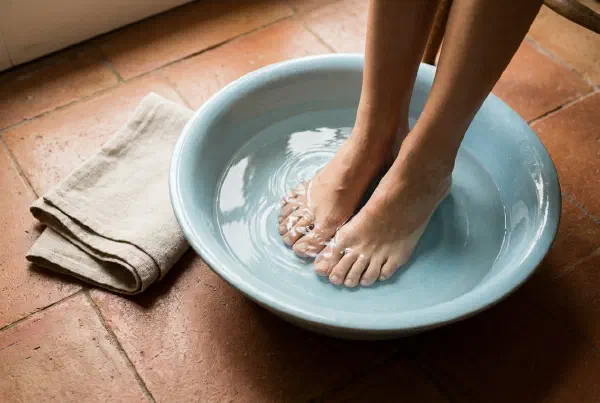
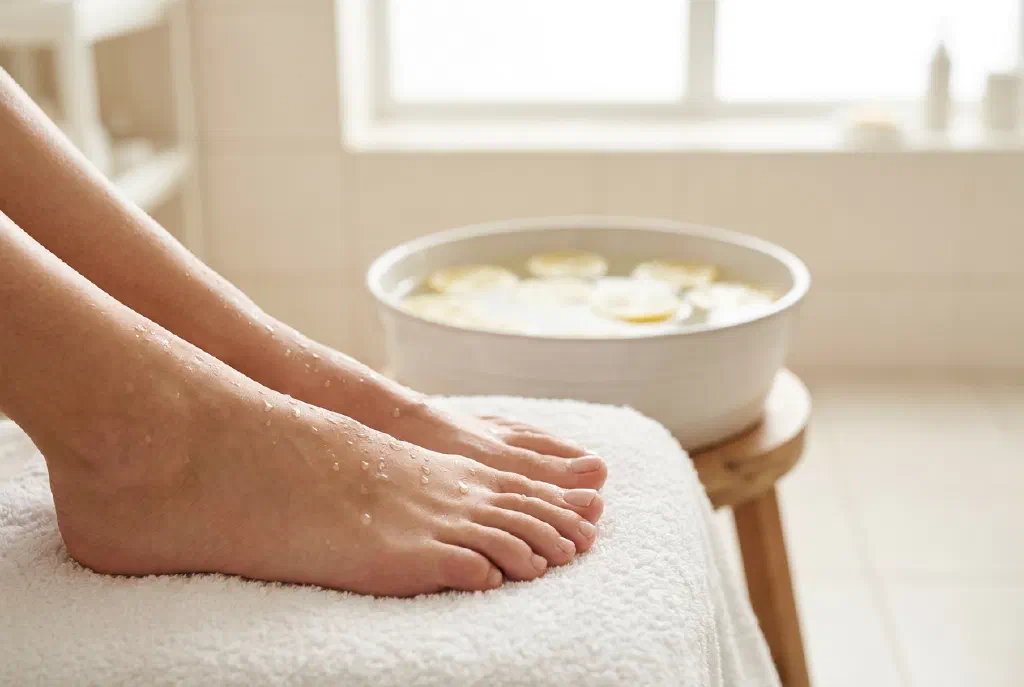
- Foot baths: A lukewarm bath with salt or black tea can be refreshing. The tannins in the tea have a slightly astringent effect on the skin.
If you have calluses, nail problems or persistent complaints, professional support can be worthwhile. You can find out which form suits you in the article Medical or cosmetic foot care: what is the difference?.
Choosing the right socks and shoes
Often half the solution lies in what you wear on your feet. Synthetic materials trap warmth and moisture, while breathable ones let them escape.
Socks
Reach for socks made of natural fibres such as cotton, wool or bamboo. They absorb moisture better than pure synthetics. There are also special functional socks that wick sweat to the outside. Important: change your socks daily, and if you sweat a lot, feel free to do so twice a day. Wash them as hot as possible to remove bacteria reliably.
Shoes
- Breathable shoes made of leather or textile materials allow the air to circulate.
- Change your shoes daily so that each pair can air out and dry for at least 24 hours.
- Removable insoles can be dried separately and replaced when needed.
- At home, let your feet breathe barefoot or in open shoes as often as possible.
Remedies against odour and moisture
When hygiene and the right materials alone are not enough, targeted products help. They work in different ways: some reduce moisture, others fight the odour-causing bacteria.
- Antiperspirants for the feet: They usually contain aluminium chloride and temporarily narrow the outlets of the sweat glands. Apply them in the evening to clean, dry skin.
- Foot powder: Powder binds moisture in the shoe and keeps the skin drier.
- Foot deodorant sprays: They mainly work against the odour by inhibiting bacteria or masking the smell.
- Shoe deodorants and insoles with activated charcoal: They absorb odours within the shoe itself.
A simple home remedy is a foot bath with baking soda, which shifts the acidity of the skin and can thus slow bacterial growth. Don’t overdo it, though, as too frequent or too aggressive use can irritate the skin barrier. Watch how your skin reacts and cut back if there is redness or burning.
When you should seek medical advice
In most cases, sweaty feet can be well controlled with the measures mentioned. There are situations, however, in which something more lies behind it. If you sweat heavily despite consistent care, are under significant distress, or also notice skin changes, itching, redness or flaky areas, you should have this checked by a doctor. Persistent complaints may be due to athlete’s foot, which needs targeted treatment.
For pronounced hyperhidrosis, too, there are further treatment options that are supervised by a doctor. When in doubt, the rule is: better to ask once too early than to endure a treatable problem for months. Anyone who often suffers from foot complaints anyway, for example pain in the heel, will find additional advice in the article Relieving heel spurs: exercises and tips against heel pain.
Frequently Asked Questions (FAQ)
Are sweaty feet a sign of poor hygiene?
No. Sweaty feet are caused by high activity of the sweat glands, not by uncleanliness. Even people with very thorough care can be affected. Hygiene helps to reduce the odour, but it is not the cause.
Why do feet only smell unpleasant inside the shoe?
Fresh sweat is odourless. Only when bacteria break it down in the warm, moist climate of the shoe do the strong-smelling breakdown products develop. That’s why breathable shoes and regular airing help so much.
Do home remedies like black tea really help?
Black tea contains tannins, which have a slightly astringent effect on the skin and can reduce sweating. As a supplementary measure alongside good hygiene, a tea foot bath is worth a try, but in cases of heavy sweating it is no substitute for targeted remedies.
At what point should I see a doctor?
If you sweat heavily despite consistent care, suffer from the odour, or also notice itching, redness or flaky skin, you should have the complaints checked by a doctor. Behind them may be, for example, athlete’s foot or a treatable hyperhidrosis.