Splayfoot and Fallen Arches: What Helps With Foot Deformities
In this article
Note: This article contains affiliate/advertising links. As an Amazon Associate we earn from qualifying purchases. If you click such a link and buy something, we may receive a small commission – at no extra cost to you.
Your feet carry you throughout your entire life and accomplish remarkable things in the process: 26 bones, countless ligaments and muscles form a flexible arch that cushions impacts and distributes your body weight. When this interplay gets out of balance, deformities such as splayfoot or fallen arches develop. They are among the most common foot problems of all and usually develop slowly and unnoticed. The good news: with targeted relief, suitable footwear and a little training, you can do a lot in everyday life to prevent discomfort or ease it.
What is a splayfoot?
With a splayfoot, the front transverse arch sinks, the arch that normally holds the metatarsal bones together like a small bow. The forefoot widens, and the pressure shifts onto the middle metatarsophalangeal joints instead of being distributed evenly. Typical signs are:
- pain or a burning sensation in the forefoot, especially after standing for a long time
- increased calluses or hardened skin under the ball of the foot
- the feeling of walking on a “hard pebble”
- shoes becoming wider and pressure points on the sides
The splayfoot is often the precursor to further deformities. If the pressure shifts permanently, the big toe can tilt outward and a hallux valgus can develop. Claw-like curled toes are another possible consequence – what matters with hammer toe and what really helps is covered in its own article.
What are fallen arches?
Fallen arches affect the inner longitudinal arch, that is, the curve that stretches from the heel to the ball of the big toe. If it sinks, the foot rolls inward more when walking. If the arch disappears entirely, this is known as flat feet. In children, by the way, a flat arch is completely normal in the first years of life and usually resolves on its own.
Typical signs of fallen arches are tired, heavy feet, pain on the inner side of the foot and an unevenly worn shoe sole. Splayfoot and fallen arches often occur together, in which case the condition is called a fallen splayfoot.
How do foot deformities arise?
A single cause is rarely to blame; usually several factors work together:
- Weak foot muscles due to predominantly sedentary work and supportive shoes
- tight or high footwear that constricts the toes and strains the arch
- excess weight, which permanently places more load on the arches
- overuse from standing for long periods, a lot of walking on hard ground or intense sport
- a hereditary predisposition to weaker connective tissue
- decreasing ligament stability with advancing age
What helps in everyday life?
Foot deformities cannot always be fully reversed, but you can strengthen the muscles, ease discomfort and slow progression.
Foot exercises and walking barefoot
The most effective self-help measure is targeted training. Try these simple exercises several times a week:
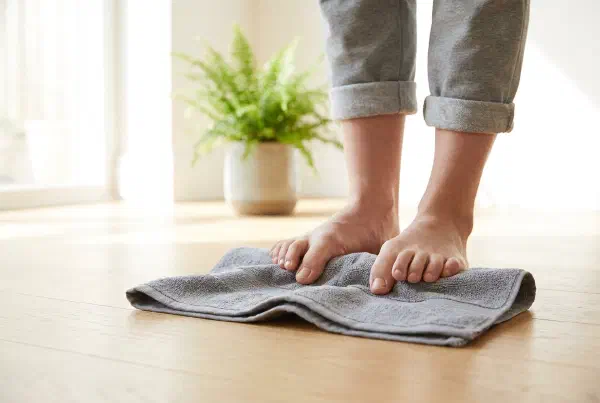
- Grip a towel: Place a towel on the floor and pull it toward you using only your toes.
- Pick up marbles: Collect small objects with your toes and set them down.
- Raise the foot arch: While standing, try to “shorten” the foot by lifting the arch without curling your toes.
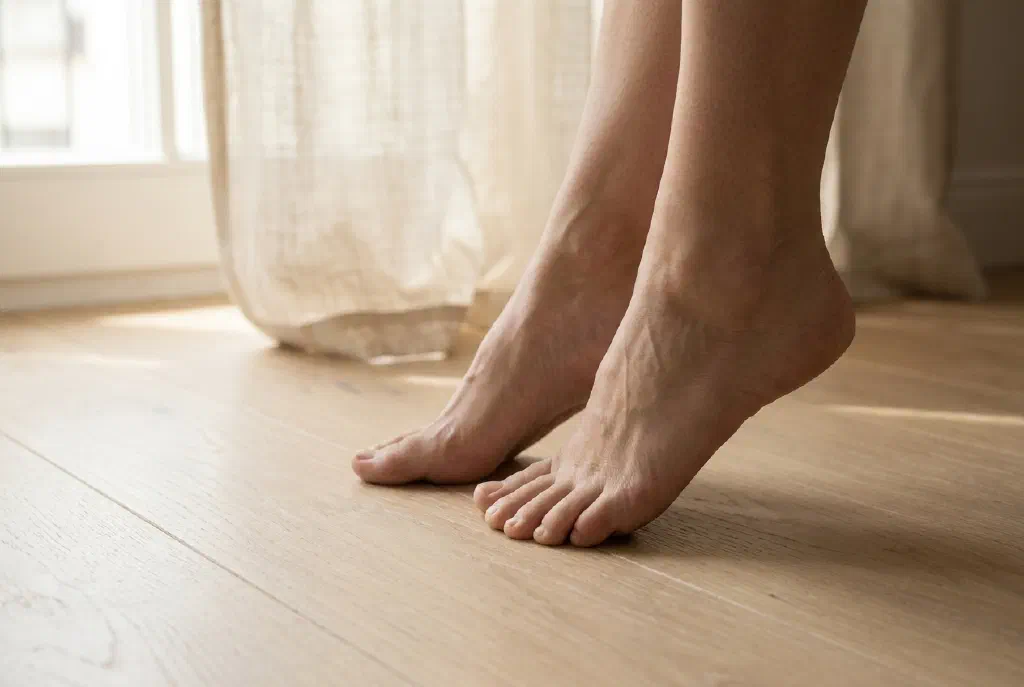
- Toe stand: Slowly rise onto the tips of your toes and lower yourself back down in a controlled way.
Regular barefoot walking on varied surfaces such as grass, sand or gravel also activates the small foot muscles that are rarely challenged in shoes.
The right footwear
Shoes should be wide enough at the front so the toes have room, and have a flexible sole that is not too thin. Very high heels permanently push the weight onto the forefoot and encourage splayfoot. Also pay attention to a good fit: pinching shoes not only promote deformities but also pressure points and calluses. If your heel skin is already cracking, you will find help in the article on cracked heels and fissures.
Insoles and relief
For pronounced discomfort, individually fitted insoles can support the arch and reduce pressure peaks. A so-called pad (pelotte) under the midfoot specifically lifts the sunken transverse arch. You should have such aids fitted by a professional, because poorly fitting insoles can do more harm than good.
Don’t forget care
Deformities change how pressure is distributed on the skin, which is why calluses and hardened skin often form more readily. Regular foot care, moisturizing and carefully reducing calluses keep the skin supple. Because tight, damp shoes also encourage infections, it is worth taking a look at the most effective tips against athlete’s foot.
When to see a specialist?
Mild discomfort can be addressed well on your own. However, persistent pain, a visibly worsening deformity, numbness or problems walking should be medically clarified when in doubt. An orthopedic practice can examine the foot precisely and recommend suitable measures. The sooner you counteract it, the better the chances of avoiding consequential damage.
Frequently Asked Questions (FAQ)
Can a splayfoot regress? A transverse arch that has already sunk can usually not be fully restored to its original state. However, through consistent foot exercises, good footwear and weight relief, you can strengthen the muscles, ease discomfort and significantly slow progression.
What is the difference between fallen arches and flat feet? With fallen arches, the inner longitudinal arch is flattened but still present. With flat feet, it has sunk completely, so that the entire sole of the foot touches the ground. Fallen arches are considered the precursor to flat feet.
Do insoles really help against foot deformities? Well-fitted insoles can support the arch, distribute pressure peaks and ease pain. However, they do not replace training of the foot muscles. They work best in combination with foot exercises and suitable footwear and should be fitted by a professional.
Is barefoot walking useful with fallen arches? Yes, moderate barefoot walking on natural, varied surfaces activates the small foot muscles and can support the arch. With severe pain or pronounced deformities, you should increase the load slowly and consult beforehand when in doubt.