Beard care: a routine for a well-groomed full beard
In this article
Note: This article contains affiliate/advertising links. As an Amazon Associate we earn from qualifying purchases. If you click such a link and buy something, we may receive a small commission – at no extra cost to you.
Growing a beard is the easy part – keeping it looking groomed is the real work. A full beard needs care, otherwise it quickly turns scruffy, itches and gets flaky underneath. The good news: beard care doesn’t mean hours of styling, but a short, reliable routine of cleansing, conditioning and shaping. This guide shows which products you actually need, how to trim, and how to calm the skin under your beard – with a plan tailored to your beard length.
Washing and cleansing your beard properly
A beard traps food, sebum and environmental grime – so cleansing is the foundation of all beard care. But don’t wash it daily with regular shampoo: hair shampoo is too harsh and strips oil from the beard hair and the skin underneath, encouraging dryness and itch.
- Frequency: Cleanse two to three times a week with a mild beard wash. On the other days, warm water is enough.
- Temperature: Lukewarm rather than hot – hot water dries you out.
- Massage, don’t scrub: Work it gently down to the skin with your fingertips and rinse well.
- Drying: Pat with a towel, don’t rub. If you blow-dry, use a low setting and comb in the direction of growth.
If you also look after the surrounding skin, you’ll find the right basics in facial care for men – beard and skin belong together.
Care products: beard oil, balm, brush and comb
You don’t need ten products. Three or four cover everything a full beard requires.
- Beard oil: The most important product. It moisturises hair and skin, coats the hairs in a fine film and makes them supple. Apply it to a slightly damp beard: a few drops into your palms, rub together, work it from the skin out to the tips. A short beard needs 2–3 drops, a long full beard can take 6–8.
- Beard balm: Richer than oil, with a little wax content. It conditions while giving light hold and taming stray hairs. Ideal for longer beards or as a styling step after the oil. Warm a pea-sized amount between your palms and work it in.
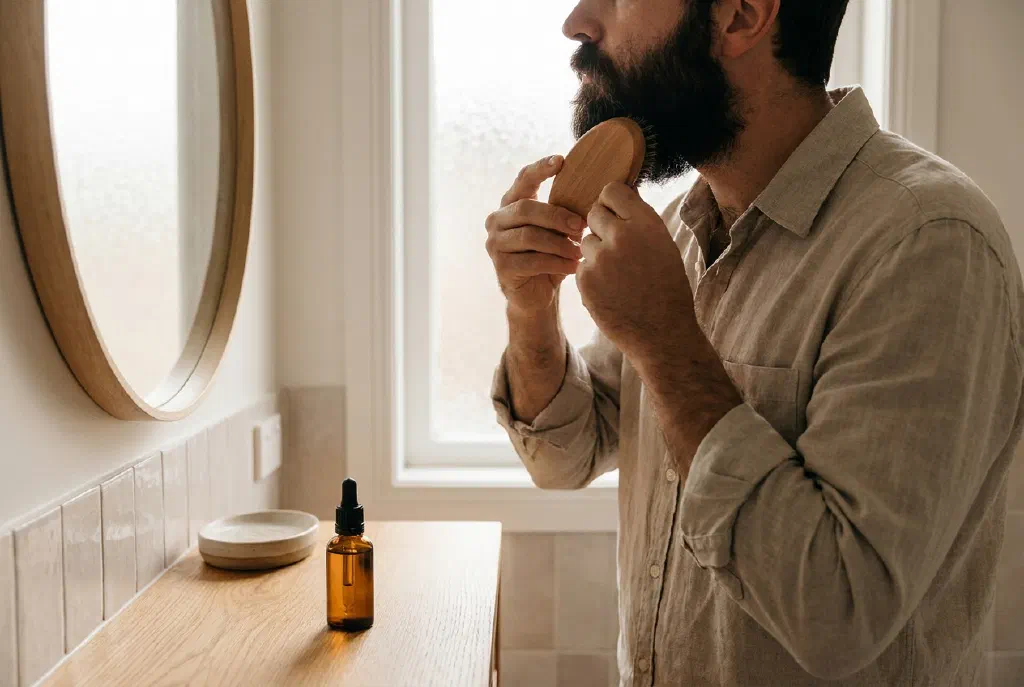
- Beard brush: Boar bristle or firm natural fibres distribute the oil evenly, remove skin flakes and train the direction of growth. A quick daily brush noticeably disciplines the beard.
- Beard comb: For longer beards, to detangle and shape. Wide teeth for the length, fine teeth for the contours.
If your beard feels too coarse or scratchy, the article how to soften your beard offers targeted tips on oil, conditioner and brushing technique.
Trimming and shaping
Regular trimming is what separates a wild beard from a groomed one – even if you want to grow it out.
- Tools: A trimmer with guard combs for the bulk, small scissors for individual strays.
- Dry beard: Always trim when dry and combed – wet hair looks longer, so you’ll otherwise cut off too much.
- Long to short: Start with a longer guard and feel your way down. You can always take more off, but you can’t glue it back.
- Contours: Set the cheek line slightly above the natural edge, and the neckline about two fingers’ width above the Adam’s apple. A neckline set too high makes the beard look short.
- Symmetry: Compare both sides in the mirror and work in small steps.
If you shave the contours and cheeks, prevent irritation – how to shave without irritation shows how. Every three to four weeks it also pays to do a shape check so the beard keeps the silhouette you want.
The skin under your beard: itch and flaking
Almost everyone knows it in the early phase: the beard itches and white flakes (beard dandruff) appear underneath. Both rarely come from the hair – they almost always come from dry, neglected skin.
- Cause of itch: In the first weeks, freshly cut short hairs scratch. Later, dryness is usually to blame. Regular beard oil worked down to the skin soothes most effectively.
- Cause of flaking: Dead skin cells and sebum gather under the beard. Gentle brushing loosens them, mild washing removes them, and oil prevents new build-up.
- Don’t scratch: Scratching irritates the skin further. Massage in some oil instead.
- Stubborn flaking: If flaking persists despite care or the skin becomes very red, it can be worth seeking dermatological advice – beard care is no substitute for a medical assessment.
The skin under your beard is and remains facial skin: whatever generally does it good applies here too – moisture, mild cleansing, no drying out.
A beard care routine for every length
How much care you need depends mostly on length.
- Stubble (up to ~1 week): Barely any effort. Cleanse your face as usual, and if it itches, add a little moisturiser or a few drops of oil on the skin.
- Short beard (1–4 weeks): Now real care begins. Beard oil every few days, wash twice a week, trim the contours once a week. This is the phase where itch is most common – oil helps.
- Medium beard (1–3 months): Brush daily, oil every other day, and use balm for shape if needed. Even out the length roughly every two weeks and tidy the contours.
- Long full beard (3+ months): Daily oil and combing are a must, otherwise it looks stringy. Balm for hold, regular trimming of the tips against split ends. This is where consistency pays off most clearly.
Well-groomed hands round off the look – a tidy beard and bitten nails are a poor match. The manicure for men shows the simple basics for that.
Frequently asked questions (FAQ)
How often should I wash my beard?
Two to three times a week with a mild beard wash is enough. Daily washing with regular shampoo dries out hair and skin and encourages itch. On the other days, warm water to rinse is plenty.
Beard oil or beard balm – which is better?
Both have their place. Oil moisturises and makes the hair supple, and suits any length. Balm conditions and adds light hold, ideal for longer or unruly beards. Many use oil daily and balm for styling – they don’t rule each other out.
Why does my beard itch and what helps?
In the first weeks the short hairs scratch; later, dry skin is usually behind it. Regular beard oil worked down to the skin, gentle brushing and mild washing relieve the itch most reliably. Don’t scratch – that only irritates the skin more.
Should I trim my beard wet or dry?
Trim it dry and combed. Wet beard hair looks longer and contracts as it dries, so you can easily cut off too much. Dry, you see the true length and work more precisely.
How do I get rid of beard dandruff?
Beard dandruff comes from dead skin cells and dryness under the beard. Brush the beard daily, wash it mildly two to three times a week, then massage beard oil down to the skin. If the flaking stays stubborn despite care, a dermatological assessment is worth it.