How to soften your beard: what helps against a scratchy beard
In this article
Note: This article contains affiliate/advertising links. As an Amazon Associate we earn from qualifying purchases. If you click such a link and buy something, we may receive a small commission – at no extra cost to you.
A beard that scratches like sandpaper is not your fate – usually it is simply missing moisture and care. To soften your beard you do not need expensive gear, just the right steps: wash it thoroughly, treat it with oil or conditioner and comb it regularly. This guide explains why beard hair turns hard and prickly, what helps right away and what a routine looks like that keeps the beard supple for good. Plus an honest home-remedy check and the most common mistakes.
Why beard hair scratches and turns hard
Beard hair is naturally thicker and coarser than the hair on your head – that comes from its higher share of firm keratin fibres. Freshly cut hairs also have a sharp, straight edge that pokes the skin like a tiny tip. That is why a three-day stubble often scratches the most: the tips are short and stand up steeply.
The second factor is dryness. Unlike the hair on your head, a beard receives little natural sebum, because the skin underneath has to supply a larger surface. Frequent washing with ordinary shower gel or soap strips the hair of even more oil, roughens the cuticle and makes it brittle. The result: prickly, unruly hair that feels scratchy and sticks out quickly. This is exactly where good beard care comes in.
What helps right away against a scratchy beard
If your beard needs to feel softer today, three steps will do – you will notice a difference after the very first time.
- Wash lukewarm: Rinse the beard with lukewarm (not hot) water. Warmth opens the cuticle and loosens dirt without drying out the hair as much as hot water does.
- A mild product instead of soap: Use a dedicated beard shampoo or a gentle conditioner. Ordinary soap is too alkaline and makes the hair even harder.
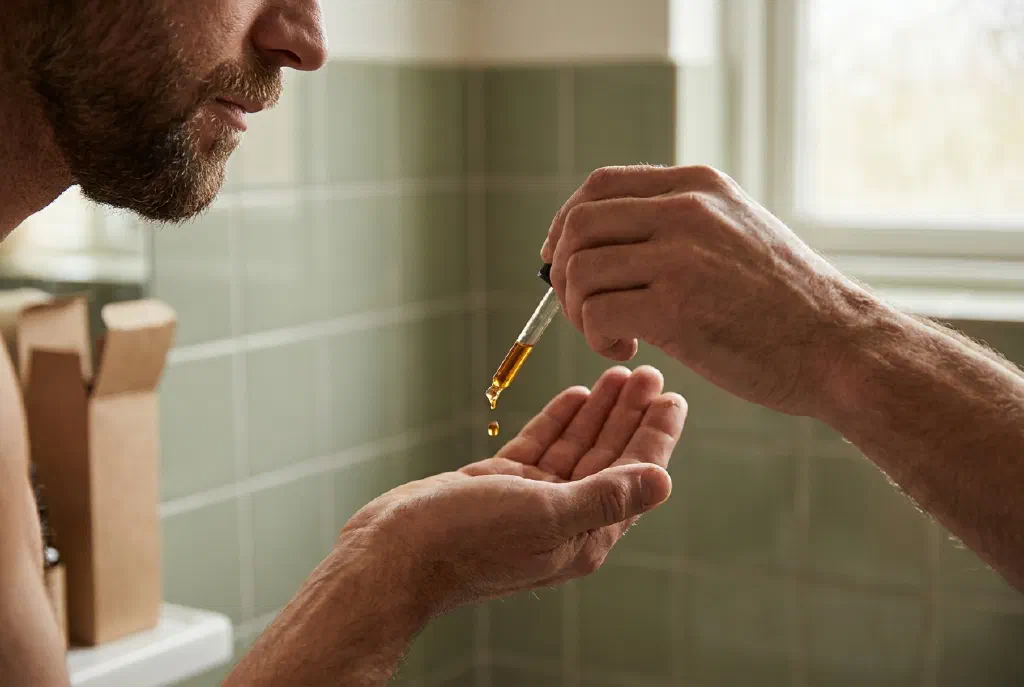
- Work in oil or conditioner: Apply a few drops of beard oil or a pea-sized amount of conditioner to the towel-dry beard and spread it down to the tips. It wraps every hair like a protective film and makes it instantly more supple.
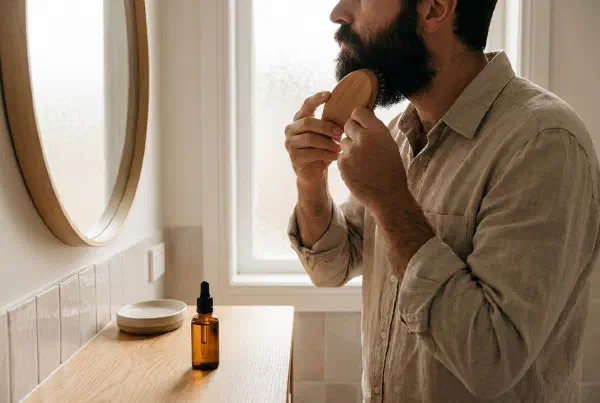
Then go through it with a beard comb or a brush. This spreads the care evenly and aligns the hairs in the direction of growth – on its own, that already takes most of the scratch out of many beards.
How to soften your beard long term
Quick fixes give you the fast effect, but a beard only stays supple for good with a small, regular routine. The most important lever is moisture, the second is mechanical care.
- Daily beard oil: A few drops of an oil based on jojoba or argan mimic the natural sebum. They nourish the hair and the skin beneath, preventing itching and beard dandruff. Best applied in the morning after washing to the still slightly damp beard. If the skin is chronically dry, the ideas in how to care for dry skin help on top.
- Balm for longer beards: From about two centimetres of length, a beard balm with a wax content adds extra suppleness and a little hold – ideal when oil alone is not enough.
- Brush regularly: A boar-bristle brush spreads oil and sebum from the root to the tips and smooths the cuticle. Once a day is enough.
- Trim instead of letting it run wild: Trimming the tips every few weeks removes split, hardened ends. For keeping length and shape clean, see the guide on how to care for and shape your beard.
Patience is part of it: a new beard almost always feels scratchy during the growth phase. After a few weeks the hairs grow longer, lie down and feel much softer as a result – provided the care is right.
Home-remedy check: what really works
Plenty of tips circulate online. Here is an honest take on what helps and what you can skip.
- Coconut oil: Works. It is nourishing and conditioning, but can feel heavy and clog the skin if applied in large amounts. Use sparingly and not daily.
- Olive oil: Conditions in principle, but smells strong and feels greasy. Okay in a pinch, but there are more pleasant oils for everyday use.
- Conditioner from the shower: A good, cheap quick fix. It softens the hair but does not replace beard oil, which also nourishes the skin.
- Aloe vera: Soothes irritated skin under the beard, but has barely any softening effect on the hair itself.
- Lemon, vinegar, baking soda: Hands off. These home remedies are too aggressive, disrupt the skin’s acid mantle and tend to make the hair more brittle.
- Keep it simple: A pure jojoba oil from the drugstore is cheap, odour-neutral and a solid base for almost any beard.
Common mistakes that harden the beard
Often the problem is not too little care, but the wrong kind.
- Washing too hot and too often: Hot water and daily shampooing dry out the hair. Washing two to three times a week is enough.
- Ordinary shower gel or soap: Both are too aggressive for beard hair and roughen the cuticle.
- Care on a dripping wet beard: Oil absorbs poorly on soaking hair. Pat it towel-dry first, then condition.
- Not combing at all: Without brushing, the care does not spread and the hairs mat, which makes the scratch worse.
- A blunt blade when trimming: It tugs and irritates the skin. If you shave the contours, follow the tips in how to shave correctly and without irritation – which also helps prevent ingrown hairs on the neck.
The skin counts too: if it is dry or irritated, the beard feels prickly sooner. A well-cared-for base pays off, as the overview on skincare for men shows.
Frequently asked questions (FAQ)
How long does it take for a beard to become softer?
With daily oil and regular brushing you will notice a difference within a few days. For a beard to naturally scratch less it usually takes three to six weeks – by then the hairs are long enough to lie down instead of standing up steeply.
How often should I use beard oil?
Once a day, ideally in the morning after washing on a towel-dry beard. With very dry skin or in winter, a second, smaller application in the evening can make sense. More important than the amount is spreading it evenly with a comb or brush.
Does an ordinary hair conditioner work too?
As a quick fix, yes – it softens the hair. For the skin under the beard, however, beard oil is better suited, because it prevents itching and beard dandruff. Conditioner and oil can also be combined.
Why does my three-day stubble scratch the most?
Because the freshly cut hairs are short and have sharp, straight tips that stand up steeply from the skin and poke when touched. As the hair grows longer, it lies down and becomes softer.
Does frequent trimming make the beard softer or harder?
Frequent full trims keep the beard in its prickly short phase. If instead you only trim the split tips of longer hairs, you remove hardened ends and the beard stays supple. So it depends on how and how much you cut.