Facial Massage at Home: Techniques for Firmer Skin
In this article
Note: This article contains affiliate/advertising links. As an Amazon Associate we earn from qualifying purchases. If you click such a link and buy something, we may receive a small commission – at no extra cost to you.
A facial massage is one of the simplest yet most soothing skincare rituals you can do right at home, without expensive devices. With just a few minutes a day, you stimulate circulation, release tension in the facial muscles, and support a fresh, even complexion. In this guide, you will learn the most important massage moves, what to watch out for during application, and how to integrate the ritual sensibly into your skincare routine.
Why a facial massage works
The skin on your face is supplied through a fine network of blood vessels. With gentle, even pressure, you stimulate microcirculation, so that more nutrients and oxygen reach the skin layers. The result is a rosy, fresh appearance and a feeling of greater firmness.
At the same time, numerous facial muscles lie beneath the skin, which can become tense from stress, concentration, or unfavorable sleeping positions. A massage helps to loosen these muscles. The lymphatic flow is also supported by stroking movements, which can ease swelling – such as under the eyes in the morning.
Important to know: A facial massage does not replace medical treatment and does not magically erase deep wrinkles. It is a supportive skincare ritual that benefits both your skin and your well-being.
The right preparation
So that your fingers glide gently over the skin without creating friction, you need a good lubricant. The following have proven effective:
- a few drops of facial oil (for example jojoba or almond oil)
- a rich moisturizer
- a light serum that is already part of your routine
Cleanse your face thoroughly beforehand and wash your hands. Then apply the product evenly. Always work with warm hands – this feels more pleasant and relaxes the muscles even more. Make sure to always work from the center of the face outward and tend to move upward, so as not to pull the skin downward.
The most important massage moves
Smoothing the forehead
Place both your middle and index fingers flat on the center of your forehead. Stroke outward toward the temples with light pressure. Repeat the movement several times. Afterward, you can massage the temples with small, circular movements – this releases the typical tension that arises from concentration.
Reviving the eye area
The skin around the eyes is especially thin, so the rule here is: only gentle pressure. Lightly tap with your ring finger along the eye contour, from the inside outward over the upper brow bone and back under the eye. This light tapping supports the lymphatic flow and can ease morning swelling.
Firming the cheeks
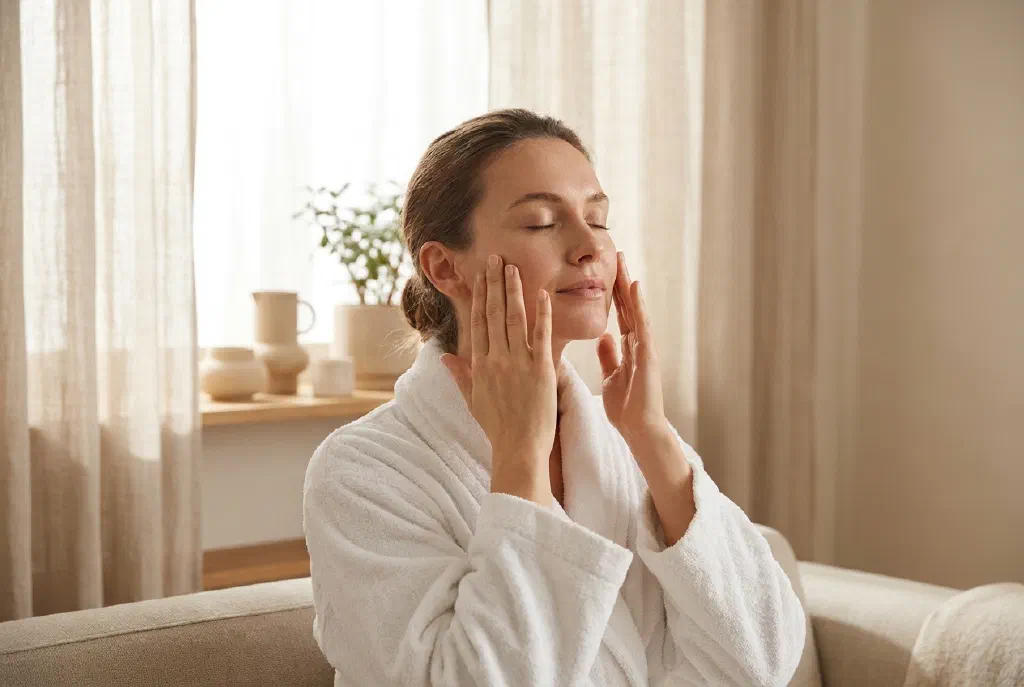
Place your palms or fingers on your cheeks and stroke with light pressure from the nose outward toward the ears. For more firmness, you can model the skin upward with small, circular movements. These moves visibly stimulate circulation.
Relaxing the jaw and neck
The jaw is a classic stress zone. Massage the muscles along the side of the jawbone with circular movements. Then stroke with your palms from the chin along the jawbone up to the ears and continue down the neck. This supports the lymphatic drainage toward the collarbone.
Tools: Gua sha and massage rollers
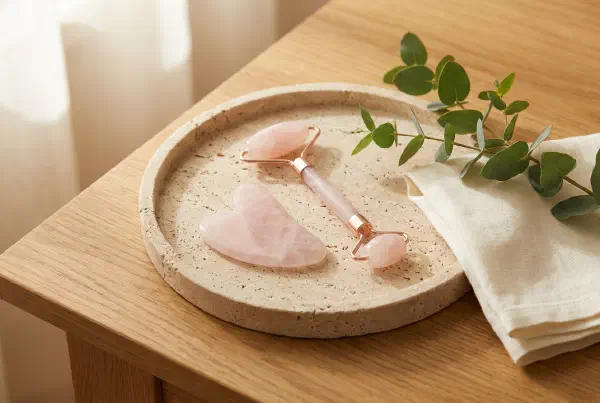
In addition to your hands, you can rely on simple tools. A gua sha stone made of jade or rose quartz is glided flat over the skin and works well for modeling the cheeks and jaw. A massage roller feels pleasantly cooling and is ideal for quick application in the morning.
Both tools do not replace a hand massage, but they complement it sensibly. Here too, what matters is: only gentle pressure, always work with enough oil, and clean the tool after each use.
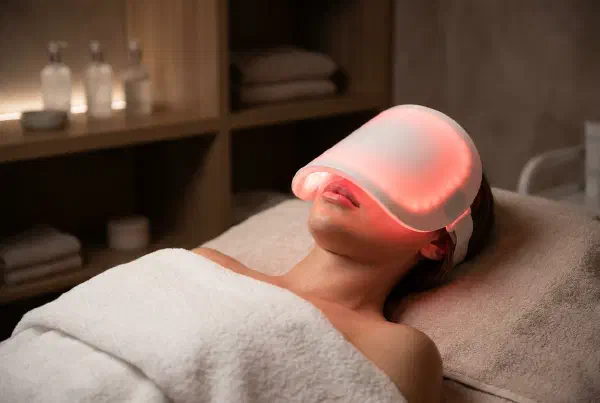
If you would like to expand your skincare routine further, our article on LED light therapy for the skin offers another gentle method that combines well with a massage.
How often and how long?
For visible effects, just five to ten minutes on several days per week is enough. A short daily massage in the morning wakes up the skin, while a longer massage in the evening relaxes you after a stressful day. Do not overdo it: too much pressure or too frequent, intense rubbing can irritate sensitive skin.
Observe how your skin reacts. With acne, inflamed areas, rosacea, or other skin conditions, you should be cautious and, when in doubt, have the massage cleared by a doctor to avoid irritation.
Integrating it into your skincare routine
A facial massage can be seamlessly built into your existing routine. Ideally, apply it when you are spreading on a serum or cream anyway – that way you save time and the product absorbs better thanks to the massage. If you also like your skin especially smooth, you can learn more about gentle exfoliating methods such as dermaplaning.
Combine the massage with a few calm breaths, and the skincare step becomes a little mindfulness ritual that relaxes both your skin and your mind. If you also want to actively engage the muscles, massage pairs wonderfully with face yoga exercises for firmer features.
Frequently Asked Questions (FAQ)
How often should I do a facial massage?
For noticeable effects, five to ten minutes on several days per week is enough. You can do a short massage daily, but make sure to use gentle pressure so as not to irritate the skin.
Does a facial massage really make the skin firmer?
A massage stimulates circulation and relaxes the facial muscles, which can make the skin look fresher and plumper. Deep wrinkles, however, cannot be removed this way – it is a supportive skincare ritual, not a medical treatment.
Do I need oil or special devices?
No, your hands and a little oil or cream as a lubricant are perfectly sufficient. Tools like a gua sha stone or a massage roller are a pleasant addition, but not a must.
Who is a facial massage not suitable for?
With acute skin inflammations, acne, rosacea, or other skin conditions, you should be cautious, as the massage can irritate the skin. When in doubt, it is best to have the application cleared by a doctor.