LED Light Therapy for the Skin: Red and Blue Light Explained
In this article
Note: This article contains affiliate/advertising links. As an Amazon Associate we earn from qualifying purchases. If you click such a link and buy something, we may receive a small commission – at no extra cost to you.
LED light therapy sounds like high tech – and that is exactly what it is. Instead of active ingredients or mechanical exfoliation, this method works with targeted light wavelengths that penetrate the skin to different depths. Depending on the color, the light is meant either to calm inflamed, blemished skin or to stimulate the skin’s own collagen production. But what is really behind it, and how does red light differ from blue light? In this guide you will learn how LED light is supposed to affect your skin, who it makes sense for and what to watch out for when using it.
What exactly is LED light therapy?
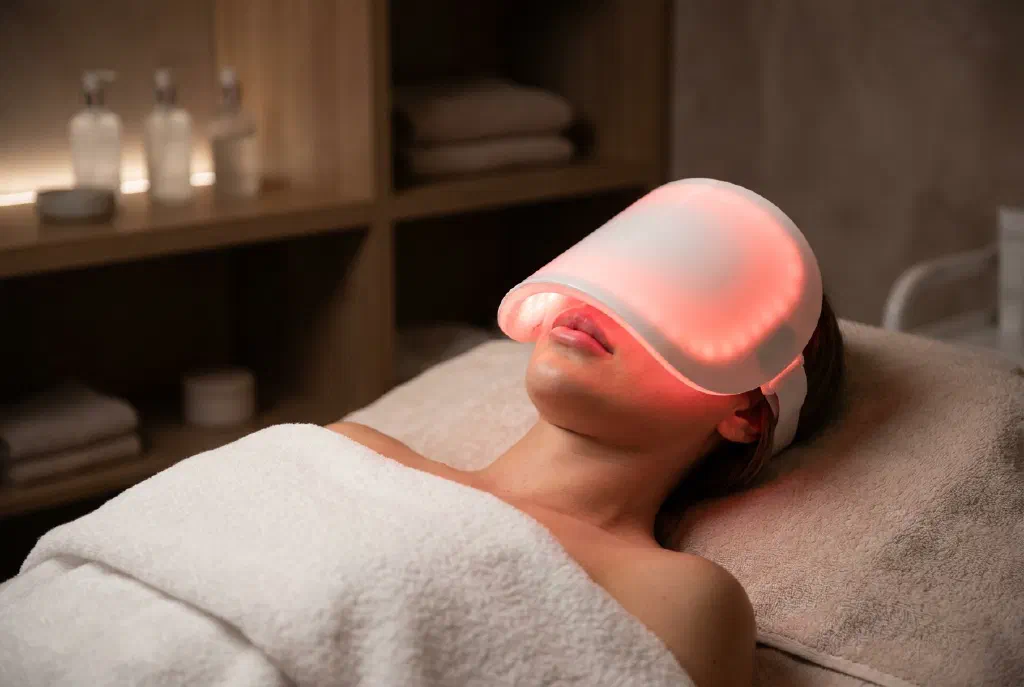
LED stands for “Light Emitting Diode”. In LED light therapy, the skin is irradiated with light of a specific wavelength. Unlike a laser, this light is not concentrated and generates no notable heat – so it does not damage the skin and requires no recovery period.
The principle is called photobiomodulation: light energy is absorbed by cell components and is meant to trigger biological processes there. The shorter the wavelength (blue light), the more superficial the effect. The longer the wavelength (red and near-infrared light), the deeper it penetrates into the skin layers. This very difference in penetration depth explains why the individual light colors are used for different skin concerns.
Blue light: the approach for acne and blemished skin
Blue light is in the short-wave range and mainly reaches the uppermost skin layers, where the sebaceous glands are located. It is precisely there that the bacteria involved in the development of acne multiply.
The idea behind it: blue light is meant to inhibit the activity of these bacteria and thereby help reduce the formation of inflammation and pimples. That is why it is often used for:
- mild to moderate acne
- oily, blemish-prone skin
- inflamed pimples and blackheads
However, blue light is no substitute for dermatological treatment. With severe, strongly inflammatory or cystic acne, you should have it medically clarified when in doubt rather than relying on light therapy alone.
Red light: the classic against signs of skin aging
Red light has a longer wavelength and penetrates deeper – down to the dermis, where the collagen-forming cells sit. This is where the anti-aging approach comes in: red light is meant to stimulate the fibroblasts to produce more collagen and elastin. These two structural proteins provide firmness and elasticity to the skin.
In addition, red light is credited with a circulation-boosting and calming effect. Typical areas of application are:
- fine lines and emerging wrinkles
- declining firmness and a tired complexion
- redness and irritated skin
Because red light tends to soothe rather than irritate, it combines well with other gentle methods. After a mild enzyme peel, for example, the skin is freed of dead skin flakes, so that the subsequent light treatment can be experienced as a pleasantly complementary step. How LED light fits into a larger care concept is also shown by our overview of anti-aging treatments.
Other light colors and combinations
In addition to red and blue, many devices offer additional colors or mixed modes:
- Mixed red-blue: often used for blemished skin, to tackle bacteria and calm inflammation at the same time.
- Near-infrared light: penetrates even deeper than red light and is used primarily for supportive regeneration; it is barely visible to the eye.
- Green or yellow light: are used less often and are associated with calming redness or a more even complexion.
Important: the scientific evidence varies in quality depending on the color. Red and blue are among the best-studied applications, while other colors are less clearly supported.
Use: what you should pay attention to
For LED light therapy to even have a chance of working, regularity matters. A single session changes little – usually several applications per week over several weeks are needed.
Keep the following points in mind:
- Clean skin: Cleanse your face beforehand and do not apply thick, light-blocking creams.
- Eye protection: Close your eyes or use the included protective goggles, especially with bright light.
- Patience: Visible effects usually only appear after several weeks of continuous use.
- Home devices vs. studio: Professional devices in the studio are usually more powerful, but good home masks can still be a worthwhile addition with consistent use.
Who is LED light less suitable for?
Caution is advised if you take medications that make your skin more light-sensitive, or if you have certain skin conditions. During pregnancy or with light-triggered conditions, you should also clarify the use medically beforehand. LED light therapy is considered a gentle method, but it is not a cure and does not replace medical treatment.
Conclusion
LED light therapy is a gentle, pain-free method that can support different skin concerns depending on the light color: blue light targets blemished, acne-prone skin, red light the signs of skin aging. You should not expect miracles – realistically, it is a supportive building block that works best with patience and regularity. With serious skin problems, the path still leads first to a dermatology practice.
Frequently Asked Questions (FAQ)
How quickly do you see results with LED light therapy? First changes usually only appear after several weeks of regular use. With blemished skin, the complexion can sometimes calm down a little sooner, while effects on wrinkles and firmness need more time and consistency.
Can I combine red and blue light? Yes, many devices offer a combined mode. This can be especially useful for blemished skin, because blue light targets bacteria and red light is meant to have a calming effect. Follow the usage instructions for your device.
Is LED light therapy safe for the eyes? The light is generally non-thermal, but bright light can be dazzling. Close your eyes or use protective goggles, especially with intense devices. When in doubt, follow the manufacturer’s safety instructions.
Does LED light replace medical acne treatment? No. With mild blemishes it can provide support, but it does not replace medical therapy. With severe or strongly inflammatory acne, you should have the treatment medically clarified.