Removing facial hair: gentle methods for the upper lip
In this article
Note: This article contains affiliate/advertising links. As an Amazon Associate we earn from qualifying purchases. If you click such a link and buy something, we may receive a small commission – at no extra cost to you.
Almost every woman has fine hairs above the upper lip, but once they become visible enough, many find them bothersome in everyday life. The skin in this area is thin, well supplied with blood and reacts sensitively to irritation. That is exactly why it pays to choose your method deliberately instead of simply reaching for the first product at hand. In this guide you will compare the common ways to remove upper lip hair, from waxing through threading to laser, and learn what really matters for the sensitive upper lip.
Why the upper lip plays a special role
The skin above the lip is significantly thinner than on the legs or underarms and sits directly over muscle and small blood vessels. It is quicker to develop redness, slight swelling and, in rare cases, small blemishes after treatment. On top of that, the face is constantly visible, so irritation cannot simply be hidden under clothing. That is why what works without problems on the body can be too aggressive on the upper lip. Here a gentle technique and good aftercare are not a luxury but a prerequisite. Large, hard-to-reach areas, in turn, follow their own rules, as the guide back hair removal methods compared shows.
Waxing: quick and thorough
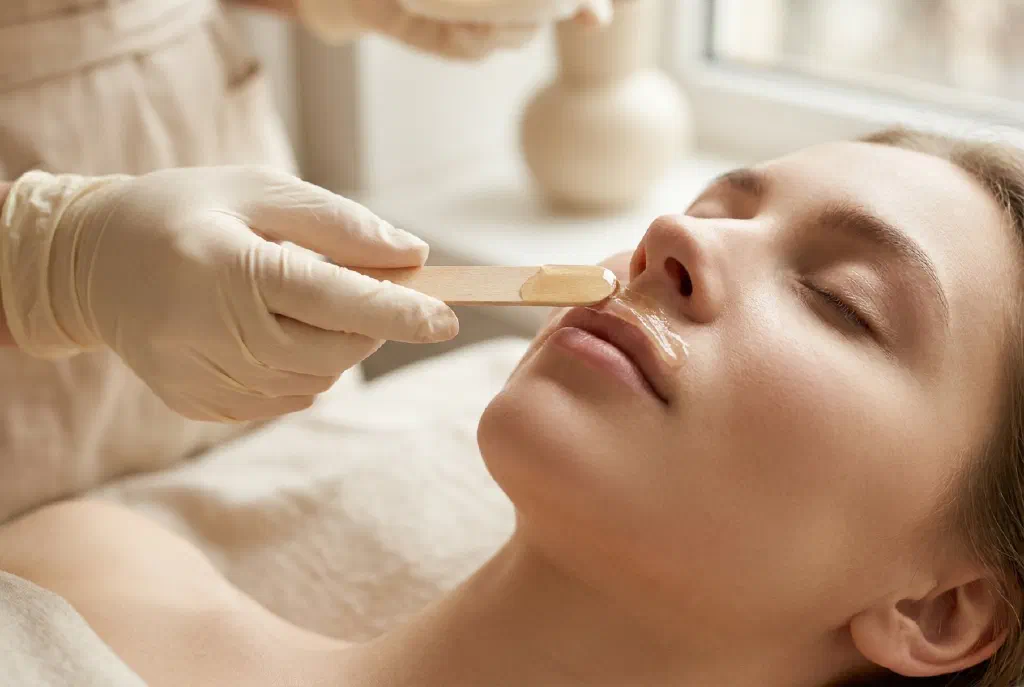
With waxing, warm or cold wax is applied to the hairs and pulled off with a sharp tug against the direction of growth. The hairs are removed along with the root, and the result often lasts two to four weeks.
Advantages:
- Several hairs are removed in one go.
- The skin stays smooth comparatively long.
- Regrowing hairs often appear finer over time.
The downsides are the brief but noticeable pain and the risk of redness. For the upper lip, a special facial wax that pulls off more gently is suitable. Important: on irritated, sunburnt or retinol-treated skin you should avoid waxing. A wax that pulls the hair out by the root can increase the risk of ingrown hairs; regular gentle exfoliation helps prevent this.
Threading: precise and without chemicals
Threading comes from oriental beauty care and works solely with a twisted cotton thread. It catches the hairs and pulls them out, entirely without wax, cream or heat.
This method is especially interesting if your skin reacts sensitively to wax or creams. Since no substances come into contact with the skin, the risk of allergic reactions is low. Threading is also very precise, making it ideal for catching only the bothersome hairs and keeping the contour clean. The result lasts about as long as waxing. However, skilled hands are crucial, which is why threading often feels better in a studio than on your first attempt at home.
Epilating and plucking: for a few hairs
For just a few coarser hairs, tweezers are often enough. This is inexpensive, targeted and causes little pain with few hairs. If there are more, a small epilator with a facial attachment can be useful, grasping several hairs in succession at the root.
- Tweezers: pinpoint precise, ideal for touch-ups.
- Epilator: for more widespread fuzz, slightly uncomfortable at first.
- Both remove the root, so the result lasts several weeks.
Make sure to keep the tools clean and not to work too hastily, otherwise you will irritate the skin unnecessarily.
Creams and shaving: the gentle surface
Depilatory creams dissolve the hair chemically at the skin’s surface. They are painless, but the result lasts only a few days, since the root remains. For the face, you should only use products that are expressly labelled for it, and test on a small area beforehand. Shaving with a fine facial razor is likewise gentle and quick, but lasts the shortest. The myth that hair grows back thicker afterwards is not true; the straight cut edge merely makes it look a little more angular for a short time.
Laser and IPL: reducing for the long term
Laser and IPL rely on light energy that is absorbed by the pigment in the hair and weakens the root. Over several sessions, hair growth can be significantly reduced. This makes these methods the most convenient long-term solution for upper lip hair for many people.
Important to know:
- Several sessions a few weeks apart are needed.
- It works best on dark hair on lighter skin.
- Very light, blonde or grey hairs often respond hardly at all.
Especially in the sensitive facial area, this treatment belongs in qualified hands. Get advice beforehand, clarify your skin type and suitability professionally and mention any pre-existing conditions or medications. Which technique suits you best overall is something you can also read up on in our method comparison.
The right aftercare
No matter which method you choose, the skin needs rest after treatment. Skip make-up on the spot for a few hours, avoid direct sun and apply a light, soothing care product. You should pause aggressive active ingredients such as high-dose acids or retinol around the treatment. In the case of persistent redness, severe irritation or unclear skin reactions: when in doubt, have it checked by a doctor or a cosmetic professional.
Frequently asked questions (FAQ)
Which method is the gentlest for the upper lip? Threading is considered especially gentle because no heat or chemicals come into contact with the skin. A fine facial razor is also very gentle, but lasts only a short time. Which method feels best for you depends on your skin type.
How often do I have to remove upper lip hair? That depends on the method. Shaving and cream last a few days, while waxing, threading and epilating usually last two to four weeks. Laser and IPL aim for a permanent reduction over several sessions.
Does the hair grow back thicker after removal? No. Neither shaving nor waxing changes the hair thickness at the root. With methods that remove the root, regrowing hairs tend to appear finer over time.
What can I do about redness after treatment? Cool the area briefly, apply a soothing care product and avoid sun and make-up for a few hours. If the redness lasts longer or swelling occurs, have it checked professionally.