Laser Hair Removal: Permanently Hair-Free Explained
In this article
Note: This article contains affiliate/advertising links. As an Amazon Associate we earn from qualifying purchases. If you click such a link and buy something, we may receive a small commission – at no extra cost to you.
Smooth skin without constant shaving, epilating or waxing sounds tempting, and this is exactly where laser hair removal comes in. It is considered one of the most effective methods for reducing hair in the long term. But how does the procedure actually work, how many sessions are realistic and is it suitable for every skin type? In this guide, we explain step by step what lies behind the treatment and what you should pay attention to so that you can make a well-informed decision.
How does laser hair removal work?
The basic principle is called selective photothermolysis. Put simply, the laser emits concentrated light of a specific wavelength that is absorbed by the dark pigment melanin in the hair. The light energy is converted into heat and conducted along the hair down to the hair root (follicle).
If the follicle is heated sufficiently, it loses its ability to produce new hair. The surrounding tissue remains largely untouched, because the light targets the pigment in the hair specifically and not the skin. It is precisely this difference in melanin content between hair and skin that is crucial for a good result.
Important to understand: only hairs that are currently in their active growth phase (anagen phase) are affected. Since your hairs are never all in this phase at the same time, it is never possible to treat everything in a single session. This explains why several appointments are necessary.
How many sessions do you need?
A single treatment is not enough to become permanently hair-free. Typically, 6 to 10 sessions are required, sometimes more. There are usually four to eight weeks between appointments, depending on the body region treated and the individual hair cycle.
Exactly how many sessions you need depends on several factors:
- Body region: Legs, underarms, bikini zone and face have different growth cycles.
- Hair color and density: Dark, strong hairs respond better than fine or light ones.
- Hormonal influences: With hormonally driven hair growth, more effort may be necessary.
- Skin type: It helps determine which laser setting is safe and effective.
Even after completing the series of treatments, occasional touch-up sessions can make sense, since the body can activate new follicles over the years. In technical terms, “permanent” here means a long-term, significant reduction in hair growth, not necessarily complete and forever-guaranteed hairlessness.
Who is the method suitable for?
Laser hair removal works best with a clear contrast between hair and skin, that is, with dark hair and light to medium skin. In this case, the melanin in the hair can absorb the light energy optimally while the skin is protected.
It becomes more difficult in two cases:
- Light, gray, red or blond hairs contain little melanin and barely respond to the light.
- Very dark skin itself contains a lot of melanin, which increases the risk that the skin will also absorb heat.
Modern laser types with longer wavelengths can now also treat darker skin types, but here an experienced professional is especially important. In general: have your skin type and your suitability professionally assessed in advance during a consultation. With certain skin conditions, during pregnancy, when taking photosensitizing medication or with fresh tan, caution is advised or the treatment should be avoided.
How a treatment proceeds
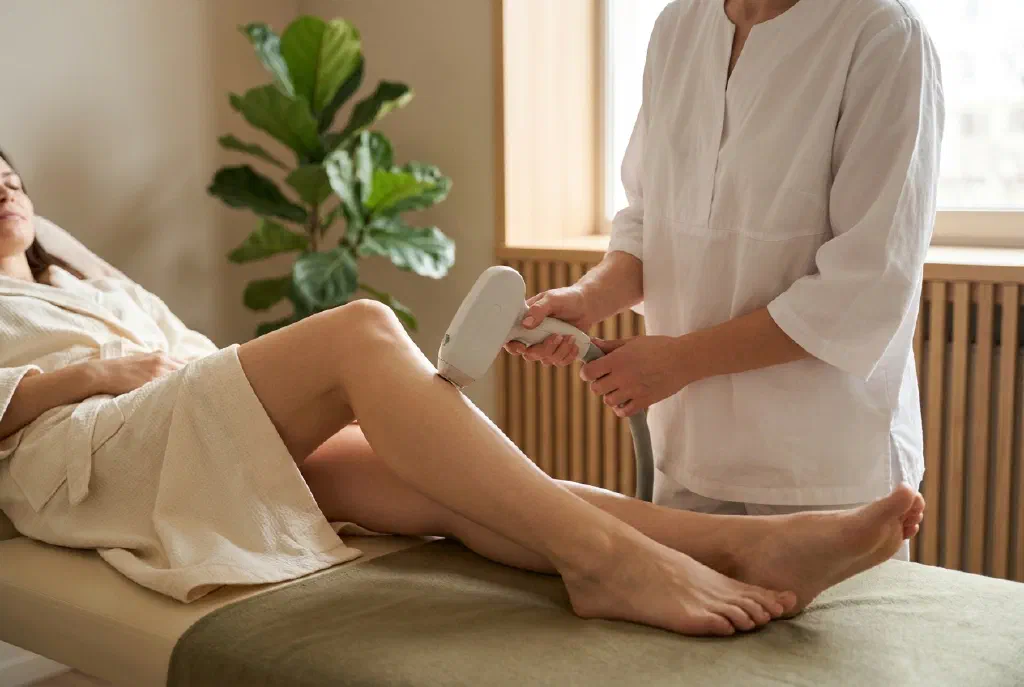
Before the first session, there is usually a consultation and test appointment. The area to be treated should be shaved, but not waxed or epilated, since the hair root must be present in the follicle. During the treatment you wear protective goggles, and the professional moves the laser head over the skin. Many experience the pulses as a slight pinch or warm snap; cooling additionally eases the sensation.
After the session, the skin may be slightly reddened, similar to a mild sunburn. This reaction usually subsides within hours to a few days. In the weeks afterward, you should avoid direct sun and tanning beds and use a high sun protection factor.
Advantages and disadvantages at a glance
Whether the method is worthwhile for you depends on your expectations and your budget. How much the price comes to per body zone is laid out in detail in the guide on laser hair removal costs. These points help with weighing it up:
- Advantage: Long-term, significant reduction in hair growth and smooth skin without daily care.
- Advantage: Large areas can be treated comparatively quickly.
- Disadvantage: Several sessions mean a time investment and higher costs.
- Disadvantage: With light hair or very dark skin, the results are less reliable.
If you prefer to work at home and at your own pace, IPL hair removal: light pulses against hair at home can be a gentler, though often less intense, alternative. If you want to achieve long-lasting smooth skin in the short term without investing in a device, you will find helpful tips in the article Epilating: a less painful route to long-lasting smooth skin.
What to look for when choosing a studio
Since the treatment works with heat and light, quality is crucial. Look for a thorough consultation, a preliminary skin test and trained staff who correctly assess your skin type. Reputable providers inform you about realistic results, possible side effects and the likely number of sessions, instead of promising complete hairlessness. If you have any uncertainties or pre-existing conditions, consulting a doctor, such as a dermatologist, is always the safest route.
Frequently Asked Questions (FAQ)
Is laser hair removal really permanent?
It provides a long-term, significant reduction in hair growth. However, no one can reputably promise complete and forever-guaranteed hairlessness, since the body can activate new follicles. Touch-ups are sometimes advisable.
Does the treatment hurt?
Most people experience the pulses as a slight pinch or warm snap on the skin. Integrated cooling makes the sensation more comfortable. The perception is individual and also depends on the body area being treated.
Does the laser work on blond or gray hair?
Probably not. Light, gray, red or blond hairs contain hardly any melanin to absorb the light energy. As a result, the outcome is significantly weaker than with dark hair. It is best to have your suitability professionally assessed in advance.
How do I prepare for a session?
Shave the area before the appointment, but avoid waxing or epilating for a few weeks beforehand, since the hair root must be present. Also avoid sun and tanning beds so that your skin is not pre-tanned.