Waxing: long-lasting smooth skin with hot and cold wax
In this article
Note: This article contains affiliate/advertising links. As an Amazon Associate we earn from qualifying purchases. If you click such a link and buy something, we may receive a small commission – at no extra cost to you.
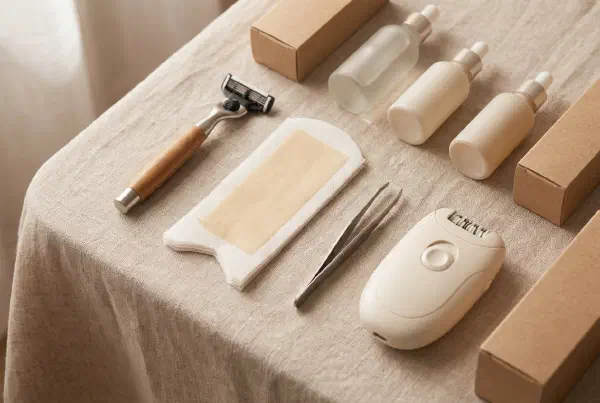
Waxing is one of the most popular methods if you want smooth skin for as long as possible. Unlike shaving, wax removes hair not only at the surface but pulls it out of the hair canal along with the root. As a result, the treated area stays free of stubble much longer, and regrowing hair often appears finer. In this guide, you’ll learn exactly how waxing works, which types of wax there are, and how to carry out the treatment with as little pain and as much hygiene as possible.
How does waxing work?
During waxing, a sticky wax is applied to the skin and wraps firmly around the individual hairs. When you pull the wax off in one quick motion, the hairs are released from the follicles together, against their direction of growth. Because the hair is removed at the root, it takes longer for a new hair to grow back to the surface.
The key advantage over shaving is how long the smooth result lasts. While shaving often shows the first stubble after just one or two days, waxed skin usually stays smooth for two to four weeks. Over time, regular waxing can also lead to hair growing back finer in some areas.
For the wax to grip properly, the hair should be about five millimetres long. Hairs that are too short won’t be captured reliably, while hairs that are too long make the pulling more painful.
Hot wax or cold wax?
The two most common variants differ mainly in their application and intended use.
Hot wax
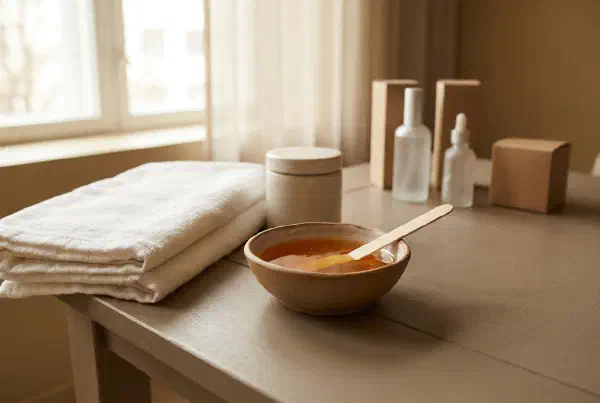
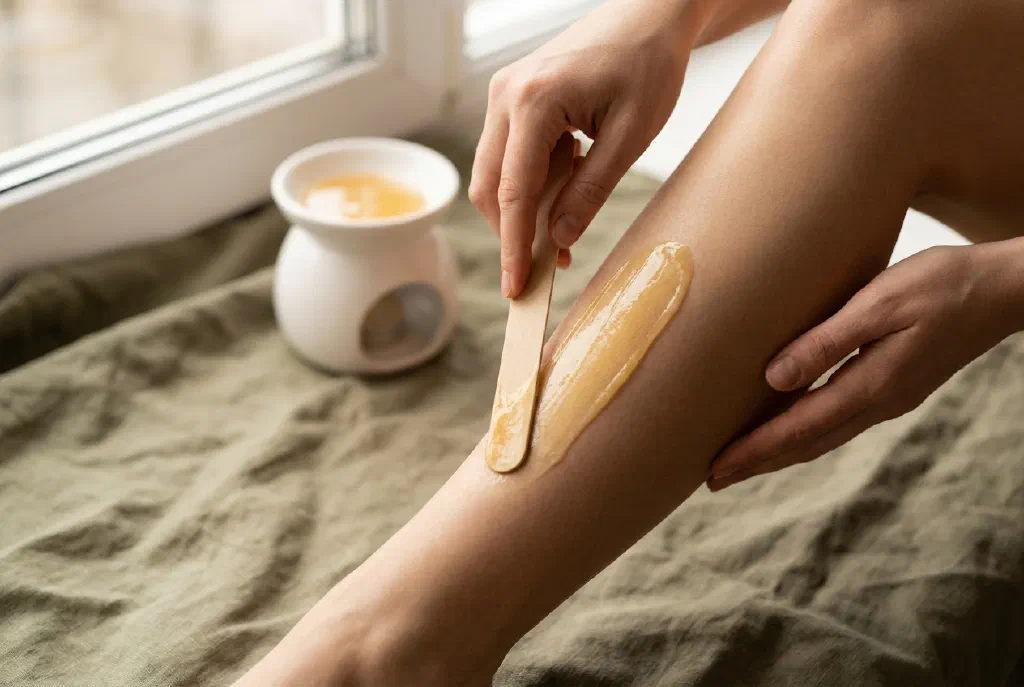
Hot wax is heated in a wax warmer or the microwave to a pleasantly warm, easily spreadable temperature and applied thinly with a spatula. The warmth opens the pores slightly, so the hairs come out a little more easily. There are two types:
- Strip wax: You apply a thin layer, place a fabric or paper strip over it, and pull the strip off. Ideal for large areas such as the legs.
- Hard wax (film wax): A thicker layer hardens on the skin and is pulled off directly without a strip. Especially gentle for sensitive zones such as the underarms or intimate area.
The right temperature is important: the wax should be warm, but never hot. Always test it first on a small spot on your wrist to avoid burns.
Cold wax
Cold wax strips already come coated with wax and ready to use. You warm them briefly between your hands, press them onto the skin, and pull them off against the direction of growth. They are handy for travelling and for smaller areas, but they capture short or very fine hairs less reliably than hot wax.
If the classic wax method feels too involved overall, sugaring with sugar paste can also be a gentler alternative that works on a similar principle.
Step by step: applying wax correctly
Careful preparation is half the battle. Here’s how to proceed:
- Clean and dry the skin: Remove creams, oil, and sweat. The skin must be completely dry so the wax adheres. A little powder can absorb residual moisture.
- Prepare the wax: Heat hot wax and test the temperature on your wrist; warm up cold wax strips.
- Apply in the direction of growth: Always apply the wax in the direction of hair growth.
- Pull off against the direction of growth: Stretch the skin with your free hand and pull the strip off quickly and flat – not upwards – against the direction of growth.
- Aftercare: Pressure with the palm of your hand relieves the pain, then a non-irritating lotion or aloe vera soothes the skin.
Always work in small sections and don’t go over the same spot twice, to avoid skin irritation.
How to make waxing less painful
Waxing isn’t entirely pain-free, but with a few tricks the sting can be significantly reduced:
- Tighten the skin: Well-stretched skin gives the hairs less room, making the pulling more effective and less painful.
- Pull quickly and flat: A hesitant pull hurts more and breaks hairs off.
- The right timing: Right before or during menstruation, the skin is more sensitive. Plan your waxing for after instead.
- Exfoliate beforehand: A gentle exfoliation one to two days earlier frees the skin of dead cells and exposes ingrown hairs.
- Take a warm shower: Warm skin with open pores makes it easier for the hairs to release.
Aftercare and avoiding ingrown hairs
After waxing, the skin is irritated and especially sensitive. For about 24 hours, avoid the sauna, sunbathing, the tanning bed, and tight clothing that rubs. You should also avoid perfumed products or deodorant right after the treatment.
To prevent ingrown hairs, regular, gentle exfoliation starting a few days after the treatment helps. It keeps the skin’s surface clear so regrowing hairs break through more easily. A light, moisturising care routine provides additional support.
If you want to do away with regrowth permanently, it’s worth looking into laser hair removal, which aims for a long-term hair-free result. Waxing, by contrast, is a recurring method that you repeat at regular intervals.
If your skin is heavily irritated, inflamed, or prone to varicose veins, or if you have diabetes or are taking certain skin medications, you should, when in doubt, have waxing cleared by a doctor or a professional cosmetician.
Frequently asked questions (FAQ)
How long does the result last after waxing? As a rule, the skin stays smooth for two to four weeks, since the hairs are removed at the root. Exactly how long depends on your individual hair growth and the body area treated.
How long do the hairs need to be for waxing? About five millimetres is ideal. If the hairs are shorter, the wax can’t grip them reliably; very long hairs make the pulling unnecessarily painful.
Which is better: hot wax or cold wax? Hot wax captures even short and fine hairs more reliably and is more comfortable for large areas and sensitive zones. Cold wax strips, on the other hand, are more straightforward and well suited for travelling or small areas.
What helps against the pain of waxing? Tighten the skin, pull off quickly and flat, and briefly press the spot with the palm of your hand after pulling. Exfoliating beforehand and the right timing in your cycle further reduce the sting.