Cellulite Treatment: Which Methods Really Help
In this article
Note: This article contains affiliate/advertising links. As an Amazon Associate we earn from qualifying purchases. If you click such a link and buy something, we may receive a small commission – at no extra cost to you.
Cellulite is not a flaw but a completely normal characteristic of female skin: in most women, dimples show through on the buttocks, thighs or hips as soon as the connective tissue gives way. The market promises a lot, from suction massage to radiofrequency. But what really lives up to its promise, and where is a sober dose of realism needed? In this guide you will compare the common methods of cellulite treatment, get to know how they work and learn how to combine them sensibly.
Why Cellulite Develops in the First Place
Cellulite has little to do with hygiene or discipline. Anatomy is responsible: in women, the connective tissue fibers in the subcutaneous layer run largely parallel and perpendicular to the skin’s surface. When the fat cells beneath them enlarge, they bulge upward between these chambers and press against the skin, creating the typical wavy pattern. In men, the connective tissue runs in a net-like, more stable structure, which is why they are hardly affected.
Contributing factors include hormones (especially estrogen), a genetic predisposition, weaker connective tissue with increasing age, as well as sluggish lymph and blood flow in the tissue. This also explains why no treatment can completely eliminate the cause, it always works on the visible result.
Methods Compared
Massage and Mechanical Procedures
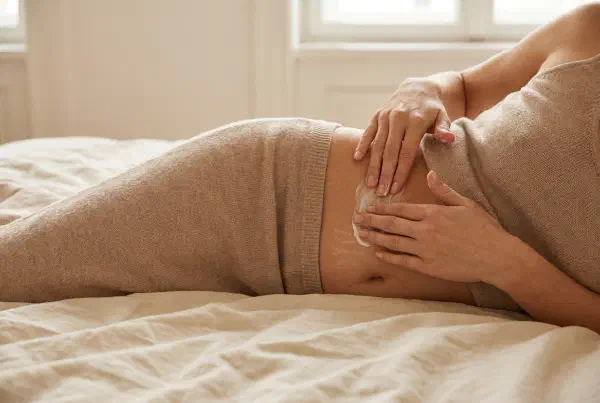
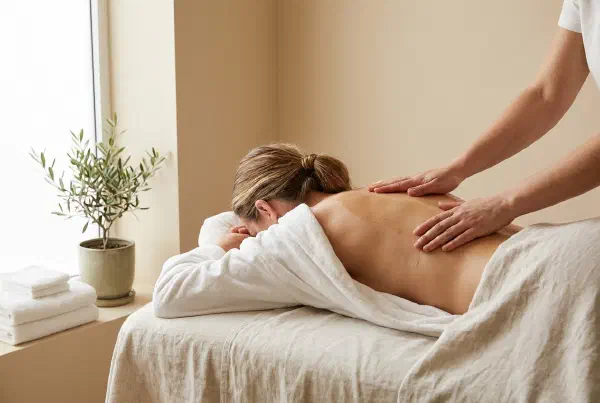
Manual massages, dry brushing and apparatus-based suction massages stimulate circulation and lymph flow. Afterwards, the tissue appears smoother and firmer in the short term because stored fluid is drained away. The effect is real, but temporary: without regularity, it disappears again.
- Dry brushing: inexpensive, can be used daily before showering, promotes microcirculation.
- Fascia roller/roller: loosens the tissue, supports at-home care.
- Apparatus-based suction massage: more intensive in the studio, but requires a series of treatments.
Massage is the lowest-threshold option and a good starting point if you first want to begin without investing in equipment.
Radiofrequency and Heat
Radiofrequency (RF) heats the deeper layers of the skin in a targeted way. The controlled heat is intended to stimulate collagen production and firm the connective tissue so that the skin’s surface appears more even. The results vary from person to person and only last with repeated sessions.
Other heat-based approaches also rely on this mechanism. You can read in detail about how deep-acting heat affects the skin in our article on infrared treatment: using heat deep within the skin. Heat applications do not replace exercise, but they can sensibly complement it.
Current-Based Applications
Procedures using microcurrent or EMS (electrical muscle stimulation) aim to activate the muscles beneath the affected area and tone the tissue. Firmer muscles can visually support the appearance of the skin. You can find an overview of how these techniques work under electrotherapy in cosmetics: microcurrent and EMS explained. Here, too, the rule applies: current is a supplement, not a substitute for active movement.
Creams and Active Ingredients
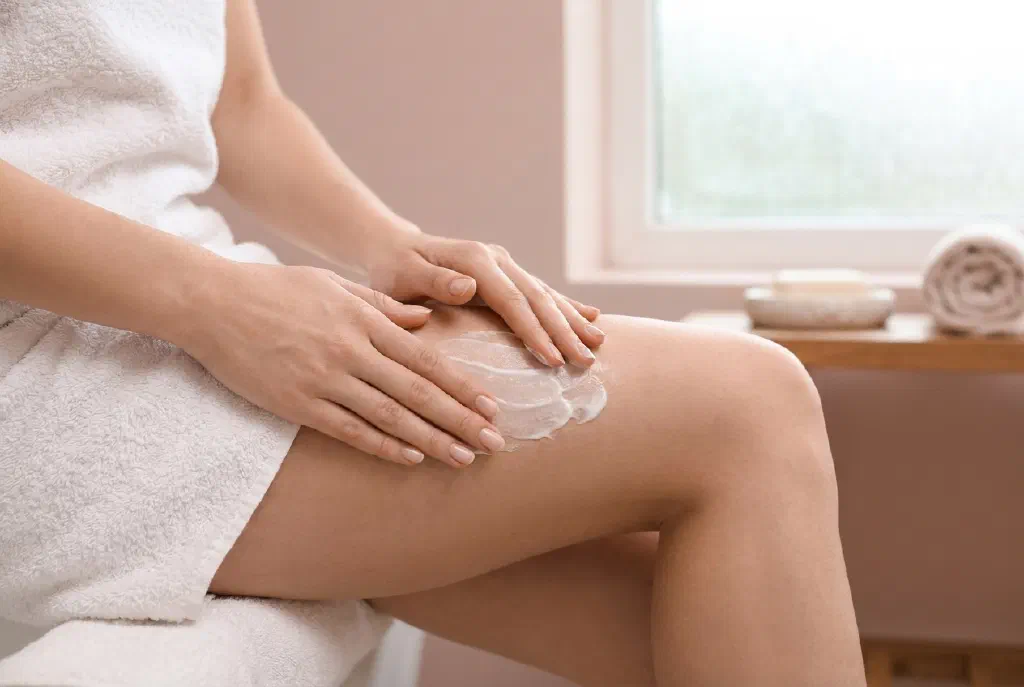
Care products with caffeine, retinol or circulation-promoting ingredients can make the skin appear firmer and smoother in the short term. However, they do not reach the deep connective tissue structures responsible for cellulite. Their greatest benefit lies in the regular massaging in, which stimulates circulation, the product alone achieves little.
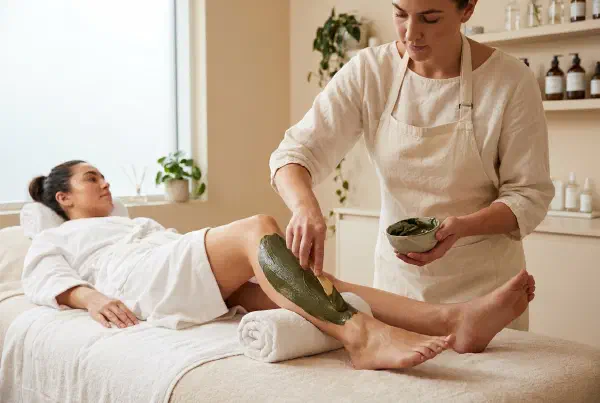
Wrap treatments with algae or clay work in a similarly short-term, supporting way. You can read what to realistically expect from them in our article on body wrapping for skin firming.
What Really Makes the Difference
You achieve the most lasting effect not through a single device, but through your everyday habits. The decisive factors are:
- Strength training: More muscle mass in the legs and buttocks fills the tissue from within and smooths the surface.
- Endurance exercise: improves circulation and metabolism in the affected tissue.
- A balanced diet: a moderate body fat percentage reduces the bulging of the fat chambers.
- Drinking enough and little salt: prevents water retention, which intensifies dimples.
- Not smoking: nicotine worsens microcirculation and weakens the connective tissue.
Cosmetic treatments work best as an amplifier of this foundation. Those who combine exercise, nutrition and care and additionally use targeted massage or radiofrequency are more likely to see results than someone who relies on a device alone.
Realistic Expectations
Be skeptical of promises like “cellulite-free in two weeks”. Reputable providers speak of a visible improvement in the skin’s appearance, not of complete elimination. Plan treatments in series, give each method several weeks’ time and assess the result using photos in the same lighting, not on the first day after the treatment.
If you have pre-existing health conditions, are pregnant, or have an implant or pacemaker, you should have apparatus-based procedures such as radiofrequency or EMS medically or professionally cleared beforehand. This also applies if you have vein problems or skin conditions in the treatment area.
Frequently Asked Questions (FAQ)
Can cellulite be completely eliminated? No. Cellulite is built into the structure of the female connective tissue and cannot be permanently removed. However, you can make the skin appear noticeably smoother and firmer through training, nutrition and cosmetic procedures.
Which method works fastest? Massage and circulation-promoting applications show the fastest, but also the shortest, effect because they mainly shift fluid. For more lasting results, you need muscle building and regular repetition over weeks.
Does losing weight help against cellulite? A moderately reduced body fat percentage shrinks the fat chambers and can soften the dimples. However, very rapid or significant weight loss can also worsen the skin’s appearance when skin tension decreases, so always combine weight management with strength training.
Are expensive studio devices better than at-home care? Not automatically. Studio procedures such as radiofrequency can have a more intensive effect, but never replace the foundation of exercise and nutrition. Consistent at-home care with dry brushing, a fascia roller and exercise often achieves more than individual expensive sessions without an everyday routine.