Oily Skin: What Helps Against Shine and Large Pores
In this article
Note: This article contains affiliate/advertising links. As an Amazon Associate we earn from qualifying purchases. If you click such a link and buy something, we may receive a small commission – at no extra cost to you.
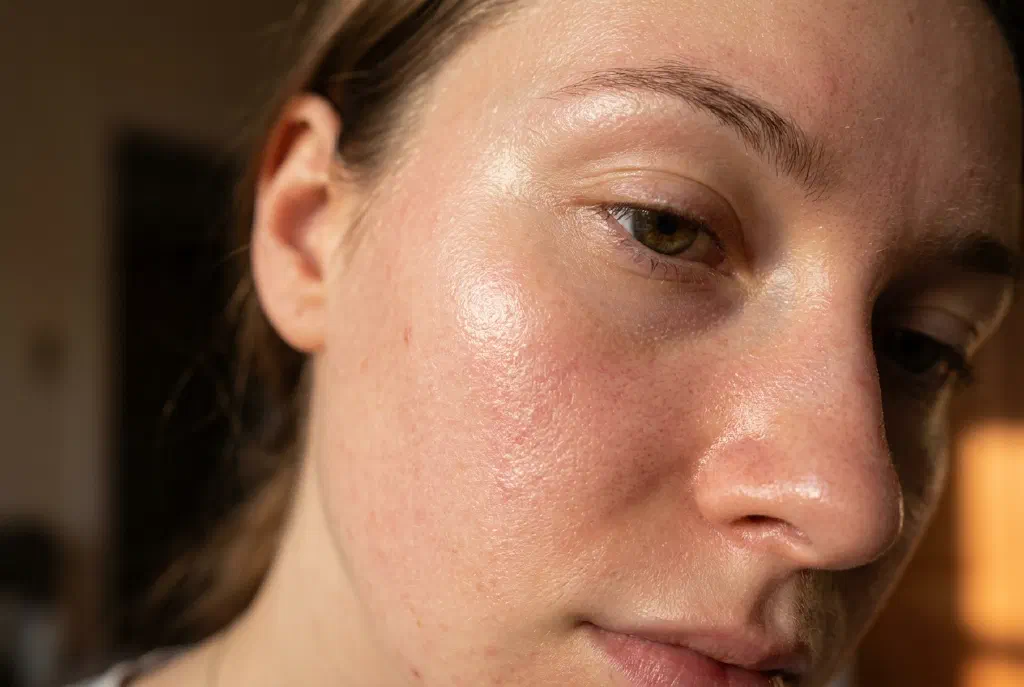
A shiny T-zone by midday, enlarged pores and a complexion that quickly looks impure: if this sounds familiar, you probably have oily skin. The cause lies in increased sebum production. This is not a skincare mistake and not a sign of poor hygiene, but a characteristic of your skin type that you can manage well with the right strategy. The key is to calm the sebaceous glands rather than irritate them, because aggressive treatment usually makes the problem worse. In this guide, you’ll learn why your skin produces so much sebum and which care routine reduces shine and visually refines pores.
Why Your Skin Produces Too Much Sebum
The sebaceous glands sit in the dermis and produce an oily secretion. This sebum is actually useful: it keeps the skin supple and, together with sweat and the skin’s microbiome, forms a protective film. With oily skin, however, these glands work in excess. The result is visible shine, especially in the T-zone of forehead, nose and chin, where particularly many glands are located.
The most common triggers for overproduction are:
- Hormones: Androgens stimulate the sebaceous glands. That’s why oily skin is often more pronounced during puberty, before menstruation or during hormonal transition phases.
- Predisposition: How active your sebaceous glands are is largely genetically determined.
- Wrong care: Strongly drying cleansers and too much alcohol on the skin strip it of oil – it reacts with even more sebum to compensate for the loss.
- Environment and stress: Heat, humidity and stress hormones can further drive up production.
Enlarged pores are the direct consequence: the more sebum is transported outward through the pore channel, the wider the pore stretches. If it becomes clogged with sebum and dead skin cells, blackheads and blemishes develop. For a targeted approach to the pore problem, read our guide on minimising large pores: what actually helps. Against inflamed pimples, zinc for pimples, internally and externally can offer additional support.
The Right Cleansing as a Foundation
The most important step is consistent but gentle cleansing – morning and evening. The goal is to dissolve excess sebum and dirt without damaging the skin barrier.
Gel or foam cleansers with a skin-friendly pH value are well suited. Ingredients like salicylic acid penetrate the pores and dissolve sebum from within, while mild surfactants cleanse without drying out. Avoid the widespread misconception that oily skin should feel “squeaky clean” and tight after cleansing. This feeling of tightness is a warning sign that the barrier has been attacked.
Once or twice a week, you can use a chemical exfoliant with BHA (beta-hydroxy acid, i.e. salicylic acid) or AHA. It removes dead skin flakes, keeps the pores clear and refines the complexion. Coarse mechanical scrub exfoliants, on the other hand, are less advisable because they can irritate and cause micro-injuries.
Moisture Yes, Oil No
A classic mistake is to stop moisturizing oily skin altogether. But moisture and oil are two different things. Even oily skin needs water, otherwise it dries out subtly and produces even more sebum to compensate. If only the T-zone shines while your cheeks stay normal or dry, the routine for combination skin with T-zone and dry areas will help you further.
Reach for light, oil-free textures labeled “non-comedogenic” – this means the ingredients don’t additionally clog the pores. Proven active ingredients are:
- Niacinamide: regulates sebum production and refines the appearance of pores.
- Hyaluronic acid: provides moisture without an oily film.
- Zinc: has a mattifying and soothing effect.
- Light gel creams: absorb quickly and leave no shine.
Whether you choose plant-based formulas or classic textures is a matter of taste. You’ll find an honest overview of the pros and cons in the article Natural or conventional skincare: an honest comparison.
Mattifying Shine in Everyday Life
Despite good care, the skin can shine over the course of the day – that’s normal. Instead of constantly washing your face, it’s better to blot excess sebum with blotting papers. They absorb oil without ruining your make-up.
With the make-up itself, the right choice matters: mattifying, oil-free foundations hold back shine longer, and a light setting powder on the T-zone supports the effect. The guide Choosing the right foundation: foundation for every skin type explains which texture and coverage suit your skin type.
Don’t Forget Sun Protection
Oily skin needs UV protection too. Look for formulations explicitly marketed as light, mattifying or “for oily skin.” Mineral or fluid-like textures often feel more comfortable than rich creams.
What You’d Better Avoid
Some well-meant measures are counterproductive for oily skin:
- Washing too often: More than twice a day irritates the skin and drives up sebum production.
- High-percentage alcohol in toners: dries temporarily, but in the long term the rebound effect follows.
- Squeezing pores: This can worsen inflammation and leave scars.
- Too many products at once: A lean, consistent routine works better than constantly changing products.
If severe oily skin persists stubbornly, comes with pronounced acne or changes suddenly and noticeably, you should have it checked by a doctor or dermatologist if in doubt. Sometimes there are hormonal causes behind it that need targeted treatment.
Frequently Asked Questions (FAQ)
Does oily skin disappear with age? For many people, sebum production decreases somewhat over the years as hormone levels change. Oily skin also has an advantage here: the sebum keeps the skin supple, which is why it often shows first fine lines somewhat later than dry skin.
Am I even allowed to moisturize oily skin? Yes, absolutely. You just need the right texture: light, oil-free and non-comedogenic moisturizing care. If you skip care entirely, the skin can dry out subtly and react with even more sebum.
Do home remedies like lemon or baking soda help against shine? You should refrain from these. Such remedies disrupt the skin’s natural pH value and can irritate the protective barrier. Gentle products tailored to your skin type are considerably more tolerable and effective.
Why does only my T-zone shine, but not the rest? The T-zone of forehead, nose and chin contains particularly many sebaceous glands, while the cheeks and eye area are often drier. This combination is called combination skin – you can treat the zones slightly differently.