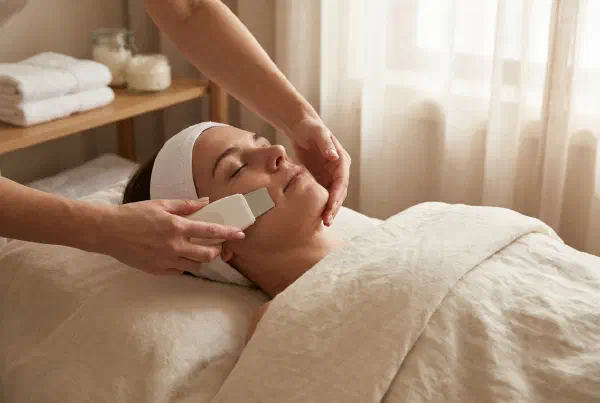
Radiofrequency Treatment: Tightening Skin with Heat
In this article
Note: This article contains affiliate/advertising links. As an Amazon Associate we earn from qualifying purchases. If you click such a link and buy something, we may receive a small commission – at no extra cost to you.
Over the years, the skin loses its firmness: the connective tissue becomes looser, fine lines deepen and the contours lose their definition. The radiofrequency treatment addresses exactly this. It uses high-frequency electromagnetic waves to heat the skin from within and thereby trigger the body’s own building processes. In this guide, you’ll learn how the deep heat works, which skin areas it is suited to and what to keep in mind during the treatment.
How does the radiofrequency treatment work?
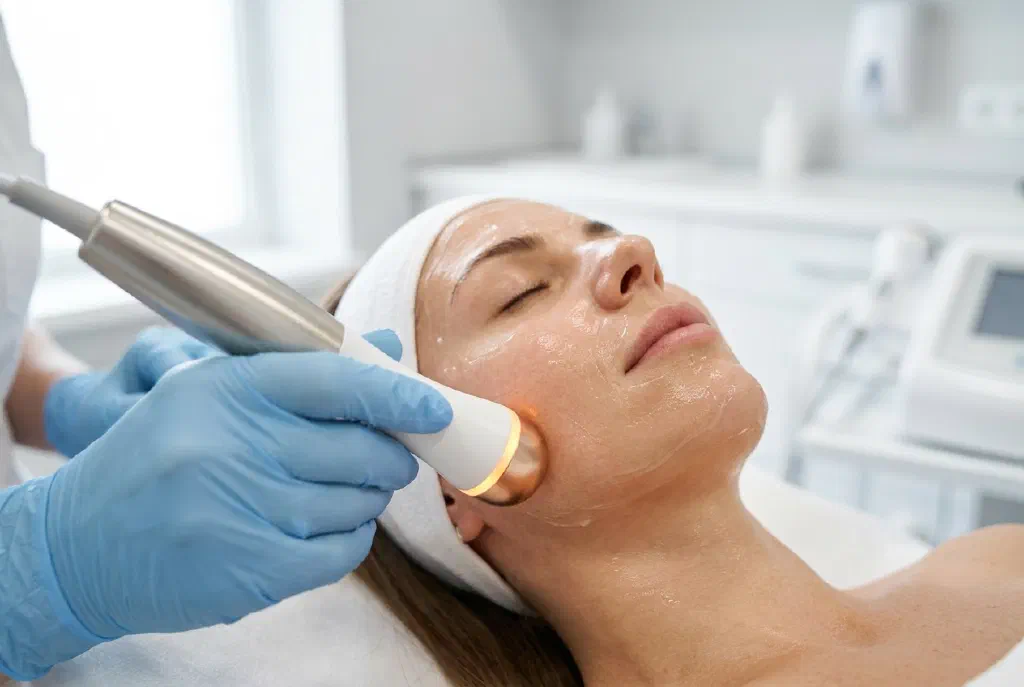
With radiofrequency, high-frequency waves are channelled into the skin via a handpiece. In the deeper layers of skin – above all in the dermis – these create a controlled heat stimulus. The temperature rises there in a targeted way, while the skin’s surface usually stays pleasantly warm and is protected.
This heat stimulus has two effects. On the one hand, the existing collagen fibres contract immediately due to the heat, which can produce an instant, slight tightening effect. On the other hand, the body interprets the warming as a stimulus to which it responds with repair: the fibroblasts – the cells responsible for building connective tissue – are stimulated to produce new collagen and elastin. This remodelling process takes place over weeks and is the reason why the result only fully unfolds gradually.
Which skin areas is the treatment suitable for?
Radiofrequency is versatile and can be used on many parts of the body. It is especially sought after where the skin is beginning to sag:
- Face: Tightening of the cheeks and chin area, smoothing of fine lines on the forehead and around the eyes.
- Neck and jawline: Firming of the often sensitive skin, definition of the contours.
- Décolleté: Smoothing of fine crinkly lines.
- Abdomen: Tightening after weight changes or a pregnancy.
- Upper arms and thighs: Firming of slack areas of skin, often in combination with anti-cellulite applications.
Which method and penetration depth makes sense for your area depends on the skin’s condition and your goal. A reputable consultation beforehand clarifies whether the treatment is suitable for you.
What a session involves
A typical treatment is structured into several steps:
- Cleansing and consultation: The skin is thoroughly cleansed, and the area to be treated is determined together.
- Applying a gliding agent: A conductive gel or cream ensures that the handpiece glides evenly over the skin and the energy is transferred well.
- The actual application: The handpiece is guided over the area in circular movements. You feel an increasing, pleasant warmth as this happens.
- Care to finish: After the treatment, a soothing, moisturising care follows.
A session lasts about 20 to 60 minutes depending on the area. So that the building process can fully unfold, radiofrequency treatments are usually carried out in a series of several appointments a few weeks apart. To maintain the result, individual refresher appointments are common later on.
What does the treatment feel like?
Most people find a radiofrequency treatment pleasant – similar to a warm massage. The warmth builds up slowly and should never be felt as uncomfortably hot. This is precisely an important point: an experienced professional controls the intensity so that the deep heat works without overloading the skin. So speak openly about your sensations during the application.
In contrast to applications with cooling or mineralising active ingredients, such as you might know from a mud treatment with fango and healing earth, radiofrequency focuses on targeted warming. Both approaches pursue different goals and can complement each other depending on the skin’s needs. Another current-based method for facial contours is electrotherapy with microcurrent and EMS, which uses weak impulses instead of heat.
What to keep in mind afterwards
A major advantage of radiofrequency is that, as a non-invasive method, it usually involves no significant downtime. Nevertheless, there are a few recommendations for the time afterwards:
- Moisture: Drink enough and care for the skin with moisturising products – this supports the skin’s metabolism.
- Sun protection: Protect the treated skin with a high sun protection factor. For the time being, you should avoid intensive sunbathing and tanning beds.
- Gentle care: Avoid aggressive exfoliants or strongly irritating active ingredients for one to two days.
Slight redness or a feeling of warmth directly after the session is normal and usually subsides quickly. Anyone wishing for a fresh complexion in the short term occasionally combines skin tightening with a gentle spray tan without the sun – this avoids putting any UV strain on the skin.
Who is the treatment less suitable for?
A radiofrequency treatment is not advisable in every case. Caution is warranted, among other situations, with acute skin inflammation in the treatment area, with electronic implants such as a pacemaker, with metal implants in the treatment area as well as during pregnancy. Fresh filler materials or certain pre-existing conditions can also speak against an application. If you are unsure or have health concerns, have this clarified by a doctor or specialist when in doubt before you arrange an appointment.
Frequently Asked Questions (FAQ)
When do you see results from a radiofrequency treatment? A slight immediate effect from the contraction of existing collagen fibres can be visible right away. The actual result, however, builds up over several weeks, since the formation of new collagen takes time. Over the course of a treatment series, the skin’s appearance usually improves step by step.
How long does the tightening effect last? That depends on the skin’s condition, age and lifestyle. The result often lasts several months. Since the natural skin ageing process continues, regular refresher appointments are advisable to maintain the effect.
Is the treatment painful? Usually not. Most people find the deep heat pleasant and comparable to a warm massage. The intensity is adjusted individually so that the warmth is noticeable but not uncomfortable.
Does radiofrequency replace a surgical lift? No. Radiofrequency is a gentle, non-invasive method for skin tightening and cannot replace a surgical lift. With mild to moderate sagging, however, it can visibly improve the skin’s appearance, without surgery and without long downtime.