Redness and Rosacea: gentle care for sensitive skin
In this article
Note: This article contains affiliate/advertising links. As an Amazon Associate we earn from qualifying purchases. If you click such a link and buy something, we may receive a small commission – at no extra cost to you.
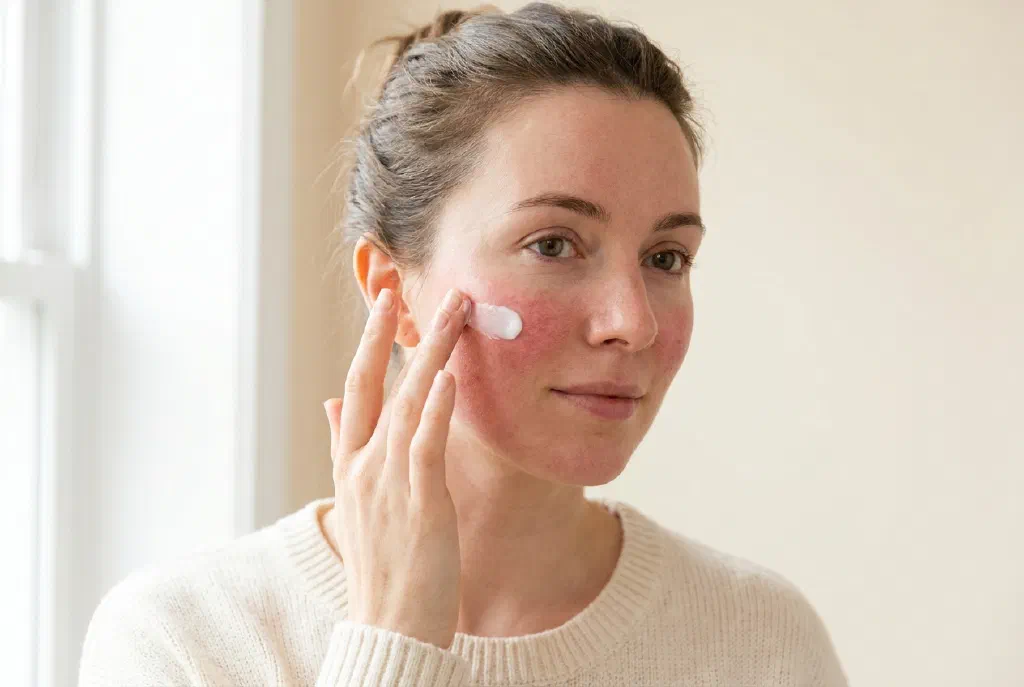
If your skin flushes red quickly, feels tight or reacts immediately to every glass of red wine and every hot bath, you are one of the many people with a tendency towards redness. In more pronounced cases – with visible veins, burning or small pustules – this is called rosacea, a chronic inflammatory skin condition. The good news: with the right, gentle care and a little mindfulness towards typical triggers, you can noticeably calm your skin. In this guide, you will learn which ingredients are beneficial, what is better avoided and what a low-irritation routine looks like.
Why does sensitive skin react so strongly?
In cases of redness-prone skin and rosacea, the skin barrier is often weakened. It can hold moisture less well and fend off irritants less effectively, which allows active ingredients and environmental influences to penetrate more easily and trigger inflammatory reactions. At the same time, the fine blood vessels in the skin react more sensitively: they dilate more quickly, which leads to the typical heat and redness, especially on the cheeks, nose, forehead and chin.
The goal of skincare is therefore clear: strengthen the barrier, minimise irritation and avoid provoking the skin further. What matters is not a single miracle product, but an overall gentle approach. If you’re dealing with an acute flush right now, the article on calming facial redness with quick relief offers concrete first steps.
Soothing ingredients that do good
When choosing products, it is worth taking a look at the ingredient list. These substances are considered particularly well tolerated and soothing:
- Niacinamide (vitamin B3): Supports the skin barrier and can reduce the appearance of redness.
- Panthenol (provitamin B5): Provides moisture and promotes the regeneration of irritated skin.
- Allantoin and bisabolol: Classic soothing ingredients that relieve feelings of tightness.
- Ceramides: Building blocks of the skin barrier that help retain moisture.
- Hyaluronic acid: Binds water in the skin and creates a plumped, calmed skin feel.
- Centella asiatica (cica): A plant extract valued for its irritation-relieving properties.
Another active ingredient often considered well tolerated by redness-prone skin is azelaic acid against redness and blemishes – valued for its mild character, though it should be introduced slowly on sensitive skin.
If you want to dig deeper into the topic of moisture, our article Plumping skin from within: storing moisture for the long term offers complementary tips that are particularly helpful when the barrier is weakened.
What you should rather avoid
Some popular ingredients are too irritating for sensitive skin. Caution is advised with:
- Alcohol (alcohol denat.) in high concentration, which can be drying
- Fragrances and essential oils, which frequently trigger reactions
- harsh scrubs and strong acids in high doses
- strongly irritating active ingredients such as high-percentage retinol without slow acclimatisation
A gentle routine for redness-prone skin
With sensitive skin, the rule is: better a few well-coordinated steps than an overloaded programme. A minimalist approach reduces the risk of overwhelming the skin – the article Minimalist skincare routine: fewer products, more effect shows how to build such a routine.
This is what a low-irritation base can look like:
- Gentle cleansing: Use a mild, soap-free cleanser and lukewarm – not hot – water. Pat the skin dry instead of rubbing.
- Moisture and soothing: A light, barrier-strengthening cream with niacinamide, panthenol or ceramides forms the centrepiece.
- Sun protection during the day: UV radiation is one of the strongest triggers for redness. A mineral sunscreen with a high sun protection factor is therefore indispensable – even in winter and under an overcast sky.
It is best to introduce new products one at a time and slowly. That way you immediately notice if something is not well tolerated.
Recognising and avoiding triggers in everyday life
Skincare is only half the battle. Many flare-ups of redness have to do with lifestyle. Typical triggers are:
- Heat and sudden temperature changes – such as a sauna, hot baths or moving from the cold into a warm home
- Alcohol, especially red wine
- spicy foods and very hot drinks
- Stress and strong emotions
- intense UV radiation
It helps to keep a small trigger diary: note when your skin is particularly red and what you ate, drank or experienced beforehand. This way you gradually identify your personal triggers and can reduce them in a targeted manner – entirely without strict bans.
When to see a dermatologist?
Gentle care can achieve a lot, but it has its limits. If redness persists permanently, gets worse, or is accompanied by pustules, nodules or burning eyes, you should have it checked by a dermatologist. Rosacea is very treatable, but the right therapy belongs in expert hands. Skincare and medical treatment complement each other ideally.
Frequently asked questions (FAQ)
Can I get rid of rosacea with skincare alone?
No. Skincare can relieve redness and strengthen the skin barrier, but it is no substitute for medical treatment. With pronounced rosacea, a dermatological assessment makes sense, as there are targeted therapies. When in doubt, you should always have your skin examined by a specialist.
Which ingredients soothe redness best?
Well tolerated and soothing options include niacinamide, panthenol, allantoin, ceramides and centella asiatica. They support the skin barrier and provide moisture. It is important to introduce new products slowly and to avoid fragrances and irritants as much as possible.
Do I need sun protection in winter too?
Yes. UV radiation is one of the most common triggers for redness and is active all year round – even when it is cloudy. A mineral sunscreen with a high sun protection factor should therefore be part of your daily routine, regardless of the season.
Does a minimalist routine really help?
Often yes. The fewer different products and active ingredients that meet sensitive skin, the lower the risk of irritation. A pared-down routine of mild cleansing, soothing moisturising care and sun protection is the best base for many redness-prone skin types.