Snail mucin (snail secretion filtrate): benefits and how to use it
In this article
Note: This article contains affiliate/advertising links. As an Amazon Associate we earn from qualifying purchases. If you click such a link and buy something, we may receive a small commission – at no extra cost to you.
Few ingredients have shaped Korean skincare quite like snail mucin. Behind the slightly off-putting name sits a filtrate made from snail secretion, celebrated for its burst of hydration, its glow and its soothing effect. In this guide you’ll learn what snail mucin actually is, where it comes from, how it works, how it is harvested, and what to watch for when it comes to quality and animal welfare. That way you can decide for yourself whether this K-beauty classic belongs in your routine.
What is snail mucin?
Snail mucin is the processed secretion of snails, usually described in cosmetics as snail secretion filtrate. On the ingredient list (INCI) you’ll find it as Snail Secretion Filtrate. So it isn’t raw slime but a cleaned, filtered concentrate used in essences, serums and creams.
The ingredient became famous through the Korean skincare routine, which centres on nourishing, hydrating layers. Snail mucin fits this philosophy perfectly because it makes skin look plump, soft and even without weighing it down. It is exactly this combination that turned it into one of the best-known K-beauty exports.
Where does snail mucin come from? (K-beauty)
Snail mucin originally comes from K-beauty, the Korean beauty culture known worldwide for innovative, gentle care. Centuries ago, people noticed that the skin on hands that handled snails a lot looked particularly smooth. Modern cosmetics picked up the idea and developed standardised filtrates that are now sold around the globe.
In a good product, the filtrate usually sits at the very top of the ingredient list, often paired with humectants such as hyaluronic acid. This combination is typical of the Korean approach, in which actives are seen not in isolation but as a coordinated system.
How snail mucin works
Snail mucin is a cocktail of many components that together create its popular effect. These include glycoproteins, hyaluronic acid, glycolic acid and various peptides.
Hydration and glow
Perhaps the most important effect is its hydration. Snail mucin binds water in the upper skin layer and leaves a plump, supple feeling. Many love the subtle, healthy glow it creates, a look that comes very close to the ideal of the glass skin routine.
Soothing and regeneration-supporting
Snail mucin is considered soothing and can make irritated, reddened skin feel more comfortable. It is also said to support the regeneration of the skin’s surface. That makes it a gentle choice when your skin needs a little calm after sun, cold wind or a more intensive treatment. One caveat: snail mucin is cosmetics, not medicine, and is no substitute for medical advice with genuine skin problems.
How is snail mucin harvested? Animal welfare and vegan alternatives
A fair question is how the secretion is collected. The snails are placed in an environment where they secrete mucin naturally, and this secretion is then gathered and filtered. Reputable producers stress that the animals are not killed and that gentle methods are used. Exactly how this is done, and how well animal welfare is actually preserved, is hard to verify from the outside, and methods differ from brand to brand.
For anyone who wants to avoid animal-derived ingredients, snail mucin is therefore not vegan. The good news: there are vegan alternatives that aim for similar effects.
- Hyaluronic acid: for hydration and a plump feeling.
- Beta-glucan: a soothing, hydrating active, often marketed as a plant-based snail mucin substitute.
- Polyglutamic acid: binds a great deal of water and keeps skin supple.
- Plant-based snail mucin dupes: some brands use blends of plant extracts designed to mimic the signature glow.
How to use snail mucin correctly
Snail mucin is most often used as an essence or serum and slotted into the hydrating step of your routine. A typical order looks like this:
- Cleanse: clean your face with a mild cleanser.
- Toner: apply a toner to prepare the skin.
- Snail mucin: apply the filtrate after the toner and before the cream onto still slightly damp skin and gently pat it in.
- Moisturise: finish with a moisturiser to seal everything in.
- Protect: don’t forget sunscreen in the morning.
You can use snail mucin morning and evening. It combines well with mild actives, for instance with niacinamide for a more even complexion. As with any new product: start slowly and watch how your skin reacts.
How to spot good quality
The most important quality marker is the percentage of filtrate. Good products often advertise levels of around 90 to 96 percent snail secretion filtrate and list it accordingly near the top of the ingredients. If the snail secretion appears far down the list, there is usually only a little of it inside.
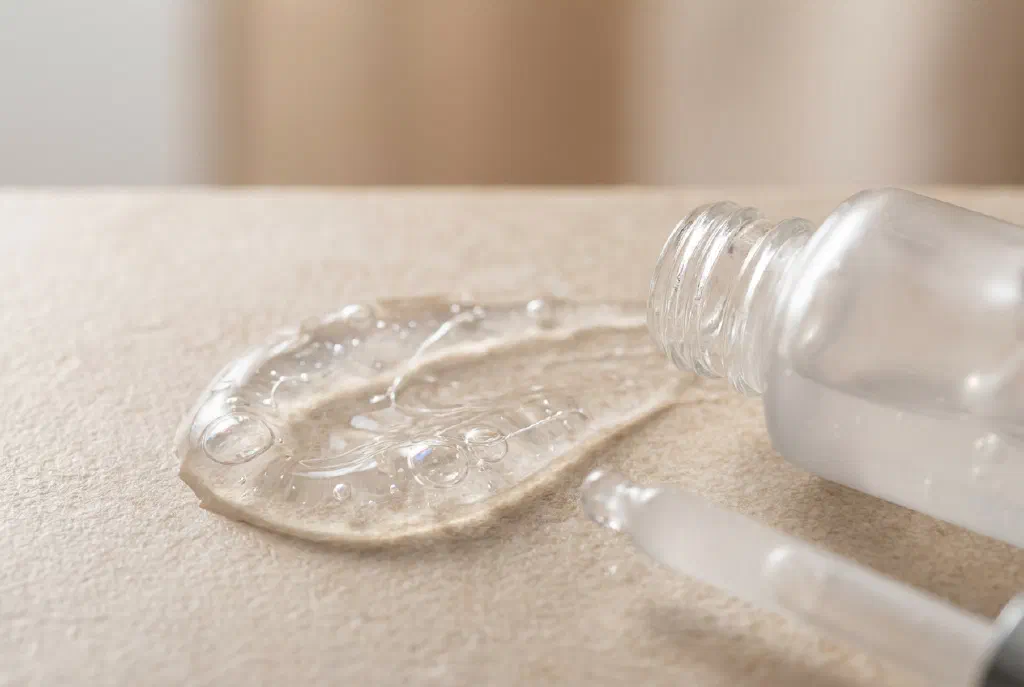
Also look for a short, sensible ingredient list without unnecessary fragrance, especially if your skin is sensitive. The texture is typically light and slightly gel-like. A high-quality product absorbs pleasantly and leaves no sticky film. If you like, layer it K-beauty style with further hydrating steps.
Frequently asked questions (FAQ)
What exactly is snail mucin? Snail mucin is filtered snail secretion, listed on ingredients as snail secretion filtrate. It is a well-known K-beauty active that hydrates, soothes and creates a healthy glow.
Is snail mucin vegan or cruelty-free? Snail mucin is animal-derived and therefore not vegan. Reputable producers stress that the snails are not killed, but it is still not a plant-based ingredient. Vegan alternatives include beta-glucan, hyaluronic acid or plant-based snail mucin dupes.
Where does snail mucin go in the routine? Snail mucin belongs in the hydrating step: after the toner and before the moisturiser. Apply it onto still slightly damp skin and then seal with your cream.
Can I use snail mucin every day? Yes, it is considered mild and is suitable for daily use morning and evening. Start cautiously with sensitive skin and build up slowly once you see your skin tolerates it well.
How do I recognise a good product? By the percentage. High-quality products often contain 90 to 96 percent snail secretion filtrate, listed near the top of the ingredients. A short ingredient list and a light, non-sticky texture also point to good quality.