Babyboomer Nails: the soft colour gradient simply explained
In this article
Note: This article contains affiliate/advertising links. As an Amazon Associate we earn from qualifying purchases. If you click such a link and buy something, we may receive a small commission – at no extra cost to you.
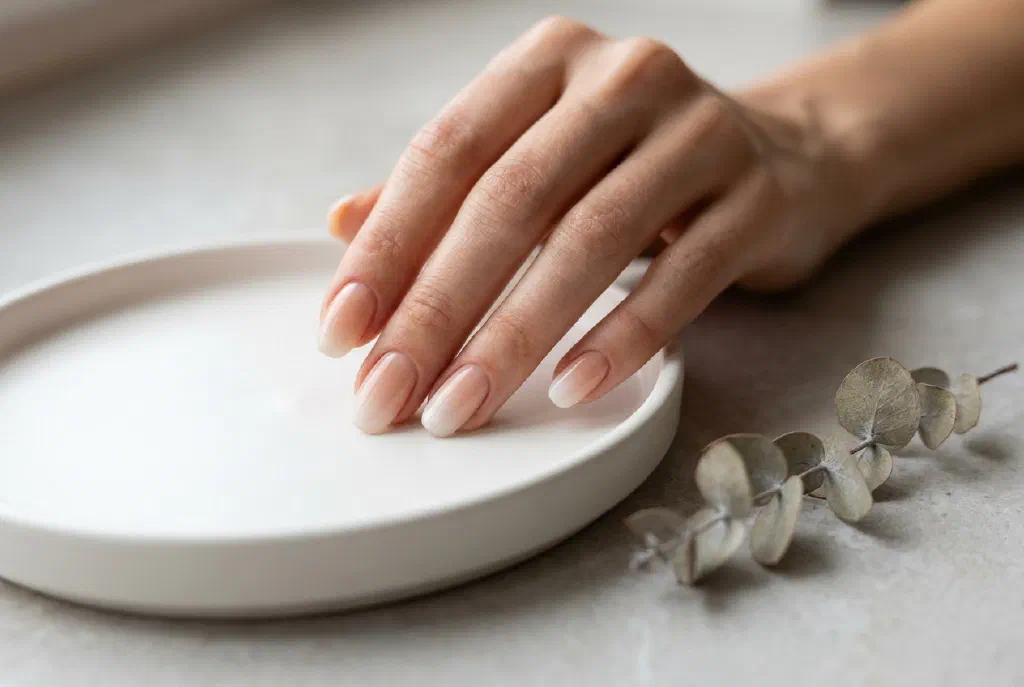
Babyboomer nails are among the most popular looks in the studio – and for good reason. Instead of a sharp dividing line like the classic French, this style shows a soft, flowing transition from a delicate nude tone to a milky white at the nail tip. The result looks natural, well-groomed and at the same time refined. In this guide you will learn what defines the babyboomer look, how it differs from French and what matters so that the gradient really succeeds.
What are babyboomer nails?
The babyboomer look is a modern evolution of the classic French manicure. Instead of a clearly defined white tip, the white here flows softly into the underlying nude or rosé tone. The two colours blur into one another, so that no clear separation point is recognisable anymore. It is precisely this ombré effect that gives the style its understated elegance. To find your base shade, see these subtle nude shades for every skin tone.
The name alludes to the timeless, classic-elegant character that suits almost any occasion. Babyboomer nails look subtle enough for everyday life and the office, but at the same time are festive enough for weddings or special appointments. They flatter the nail shape, make the hands look well-groomed and conceal the regrowing natural white at the nail bed particularly well.
Babyboomer vs. French: the decisive difference
Both styles work with the combination of nude and white – the difference lies in the transition:
- French: clear, sharply drawn line between the nude base and the white tip (the so-called smile line).
- Babyboomer: soft, gradient transition without a visible edge.
- Effect: French looks graphic and accentuated, the babyboomer looks gentle and natural.
- Care in everyday life: With the babyboomer the growing-out is less noticeable, because no hard line shifts.
If you like it particularly natural and growing-out edges are a thorn in your side, the babyboomer is usually the more straightforward choice.
How to achieve the soft colour gradient
The gradient is the heart of the look – and this is precisely where it is decided whether the result looks high-quality or patchy. These steps will help you:
- Prepare the surface: File the nails into shape, lightly matte the surface and push back the cuticle cleanly. A well-groomed base is half the battle – you can read more about this under Caring for cuticles correctly: pushing back instead of cutting.
- Apply the nude base: Cure a thin layer of the base tone as a foundation.
- Place the white: Apply the milky white in the upper third of the nail – not too deep.
- Blend: Using a sponge or a dry, clean brush, dab and blur the transition zone while the gel has not yet cured.
- Build up layers: Better several thin layers than one thick one – this keeps the gradient soft and even.
- Seal: Finally, a top gel or top coat for shine and durability.
Avoiding common mistakes
- Too much product: Thick layers make the gradient look hard and untidy.
- Blending too late: If the gel has already started to dry, visible edges appear.
- Wrong shade of white: Pure opaque white quickly looks unnatural – a slightly milky white provides the soft effect.
- Uneven starting point: Set the white at the same height on all nails so that the overall image stays calm.
Which technique suits you?
Babyboomer can be implemented with both gel and acrylic and works on natural nails just as well as on sculpted nails. On the natural nail the look is particularly gentle and suitable for everyday wear. If you want more length or stability, a build-up with a form or tip is a good foundation.
The prerequisite in any case: a healthy, load-bearing natural nail. If your nails tend to splinter or tear, it is worth taking a look at the causes beforehand – you will find notes on this under Brittle nails: causes and what really helps. Even the most beautiful design does not last long on an unstable base.
Care and durability
How long your babyboomer look stays beautiful depends on technique, nail growth and care. These points prolong the enjoyment:
- Regularly massage nail oil into the cuticle and surrounding skin so that nothing dries out.
- Wear gloves during housework or contact with aggressive cleaners.
- Do not use nails as a tool – no prying or scratching.
- Plan a refill in good time as the nails grow out, instead of picking at the material.
Since the gradient is soft, regrowing natural nail is far less noticeable than with French. Nevertheless, the rule applies: never tear off chipped layers, but have them removed professionally to protect the natural nail. Should you notice persistent changes to nails or cuticles, have them checked by a doctor when in doubt.
Frequently asked questions (FAQ)
What exactly is the difference between babyboomer and French?
With French there is a clearly drawn line between the nude base and the white tip. With babyboomer, nude and white blur into a soft gradient, so that no visible edge appears. Babyboomer therefore looks more natural and more subtle.
Does babyboomer also work on short natural nails?
Yes. The look works on short as well as on long nails. On short natural nails you should set the white just a little more sparingly in the upper area, so that the gradient does not look squeezed and the nail does not appear too small visually.
How do I get the gradient without streaks?
The key is blending while the gel is still soft. Blur the transition zone by dabbing with a sponge or a dry brush and work in thin layers. Several fine layers produce a more even gradient than one thick layer.
How long does the babyboomer look last?
With clean workmanship and good care the design usually lasts several weeks, until regrowth makes a refill sensible. Regular nail oil and avoiding knocks and pressure noticeably prolong the durability.