BIAB nails: what builder gel in a bottle can do
In this article
Note: This article contains affiliate/advertising links. As an Amazon Associate we earn from qualifying purchases. If you click such a link and buy something, we may receive a small commission – at no extra cost to you.
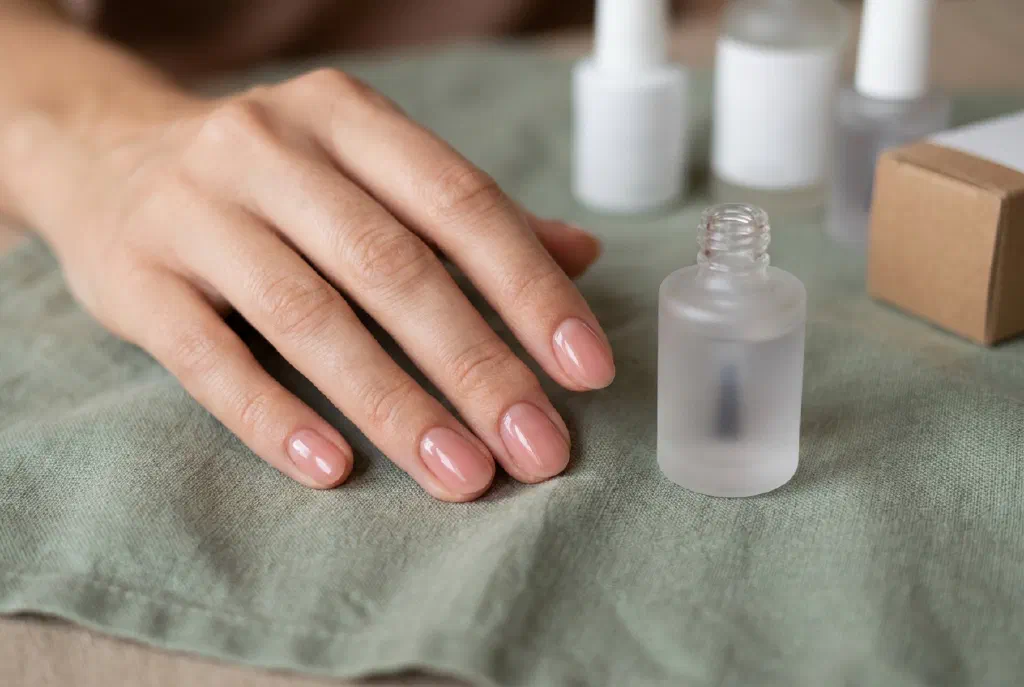
BIAB nails are one of the biggest manicure trends of recent years – and one of the most practical. The abbreviation stands for “Builder in a Bottle”, meaning builder gel in bottle form. Instead of coming in a pot that requires a separate brush and spatula, the builder gel is applied straight from a small bottle with a polish brush, almost as easily as a gel polish. The result: a thin yet sturdy gel overlay that reinforces the natural nail without making it look thick or artificial. In this article you will learn what BIAB really is, how it differs from gel polish and a classic gel extension, how the application works step by step and who BIAB nails are best suited for.
What is BIAB – builder gel in a bottle?
Builder gel is a structure gel: a UV/LED-curing gel with a firm consistency that gives the nail shape and stability. Traditionally it comes in a pot and is sculpted with a separate brush. The BIAB version puts exactly this gel into a polish bottle with a built-in brush – hence the name “Builder in a Bottle”.
That mainly changes the handling:
- Applies like polish: You work with the familiar bottle brush instead of a pot and a sculpting brush.
- Self-leveling: Good builder gels flow out gently and smooth over small unevenness on their own before curing under the lamp.
- Medium viscosity: The consistency sits between runny gel polish and thick sculpting gel – firm enough for stability, fluid enough for a clean application.
- Natural shades: BIAB usually comes in milky white, rosy pink, nude and clear versions – perfect for the polished “my nails, but better” look.
Good to know: BIAB is first and foremost an overlay for the natural nail. Small extensions are possible with practice, but long sculpted nails remain the territory of a classic gel set.
BIAB vs. gel polish vs. classic hard gel
The three systems are often confused, yet they differ clearly – in strength, application and purpose:
- Gel polish (Shellac & co.): A runny, pigmented color applied in wafer-thin coats and cured. It delivers color and shine, but hardly any support. On soft nails it flexes along with the nail and chips faster. You can read more about this system in the comparison of Shellac vs. gel nails.
- BIAB/builder gel: Considerably firmer than gel polish, it gives the nail a supportive layer with a slight apex (the stabilizing high point in the middle of the nail). Ideal as a strengthening overlay on natural nails.
- Classic hard gel/sculpted set: A thick gel from a pot used to shape nails and extend them significantly – over forms or tips. Maximum stability, but also more material, more filing and more practice required.
You could sum it up like this: gel polish is color, BIAB is reinforcement, a sculpted set is construction. If you are looking for something in between, polygel nails offer another hybrid – there a firm gel-acrylic putty is sculpted, while BIAB flows straight from the bottle.
The benefits of BIAB nails
The success of BIAB is no accident. The most important advantages:
- Strengthens soft nails: The firm gel layer acts like a shield. Nails that would otherwise tear or split get support – an effect that pure gel polish simply cannot deliver. On top of that, you can strengthen your nails with simple home remedies to keep the base healthy.
- No bulky build-up: BIAB nails look like very well-groomed natural nails – thin, softly glossy, with a natural shape. Nothing looks thick or “done”.
- Grow out your length: Under the sturdy overlay, brittle nails can grow out undisturbed. That also makes BIAB popular for rebuilding the natural nail after a gel set.
- Infillable: Instead of removing everything, only the regrowth area is filled in as the nail grows. That saves time and is gentler on the nail.
- Flexible to combine: BIAB works on its own in nude shades, as a base under gel polish color or as a foundation for French designs and nail art.
Application step by step
This is how a BIAB manicure works – at the salon or at home:
- Prep: Gently push back the cuticles, file the nails into shape and lightly buff the surface. Then dehydrate the nail with a cleanser.
- Primer/base: Depending on the system, an acid-free primer or a thin base layer goes on first so the gel adheres well.
- First thin layer of BIAB: Apply the builder gel thinly like a polish and cure it under the UV/LED lamp.
- Structure layer with apex: Place a second, slightly thicker bead of gel in the center of the nail and distribute it with the brush. Hold the nail upside down for a moment so the gel self-levels and a flat apex forms – then cure.
- Shaping: After curing, refine small unevenness and the edges with a fine file.
- Finish: Remove the tacky layer, add color if you like and seal with top coat – done.
For beginners, the rule is: two thin layers are better than one thick one. Too much material at once cures unevenly and can cause an uncomfortable heat spike under the lamp.
How long BIAB lasts and infills
Applied properly, BIAB nails usually last three to four weeks – often longer than gel polish, because the firmer layer does not chip as easily. At some point, however, the grown-out regrowth area becomes visible and the balance point of the nail shifts forward.
That is when an infill is due: the regrowth area is lightly buffed, shine and ledges are filed away, then fresh builder gel goes over the entire nail. The big advantage: the old material does not have to come off completely, and the natural nail stays protected. How to tell that it is time is explained in the article on when gel nails need an infill.
Removing BIAB
If the BIAB needs to come off completely, there are two ways:
- Filing off: The gentlest option at the salon – the gel is carefully reduced with a file or e-file until only a wafer-thin layer remains, which can grow out.
- Soaking off: Many builder gels are acetone-soluble. The surface is filed to break the seal, then acetone-soaked pads under foil wraps or clips work for several minutes until the gel can be lifted away.
Important: never peel or pick it off – that almost always tears away layers of the natural nail. After removal, nails and cuticles will thank you for oil and a break with a nourishing base coat.
HEMA sensitization: what you should know
Many gel products – including builder gels – contain acrylate monomers such as HEMA (hydroxyethyl methacrylate). With improper use, for example when uncured gel repeatedly touches the skin, a contact allergy can develop over time. Once sensitized, the skin often reacts permanently to these substances.
So: work cleanly, avoid skin contact with uncured gel and use a sufficiently powerful lamp that matches the product, so the gel cures through completely. If you are sensitive or want to be on the safe side, there are now builder gels declared “HEMA-free”. If you notice redness, itching or blisters around the nail: stop using the product and have it checked by a doctor – this article is no substitute for medical advice.
Who is BIAB for?
BIAB nails are ideal for you if you have soft, bendy or brittle natural nails and want more stability without giving up a natural look. Builder gel is also a great choice as a transition after removing a gel set, for growing out length or as a longer-lasting alternative to plain gel polish. If, on the other hand, you want significant extensions, dramatic shapes or maximum hardness, a classic sculpted set or polygel will serve you better. If you’re having BIAB done at a salon, our checklist shows you how to spot a good nail salon.
Frequently asked questions (FAQ)
What does BIAB mean?
BIAB stands for “Builder in a Bottle” – a builder gel that comes in a polish bottle with a brush instead of a pot. It combines the stability of a structure gel with the easy application of a gel polish and is mostly used as a strengthening overlay on the natural nail.
Is builder gel the same as gel polish?
No. Gel polish is a thin, pigmented layer of color with hardly any supporting function. Builder gel is considerably firmer, builds a slight apex and noticeably reinforces the nail. Both cure under a UV/LED lamp and combine well: BIAB as a sturdy base, gel polish as color on top.
How long do BIAB nails last?
With clean prep, BIAB nails usually last three to four weeks. After that, the grown-out regrowth area is infilled instead of starting over. How to spot the right moment is covered in the article on infilling gel nails.
Can I extend my nails with BIAB?
Only to a limited extent. Small extensions of a few millimeters are possible with practice, but for noticeable length or bold shapes, classic hard gel over forms or a system like polygel is better suited. BIAB’s strength lies in the natural overlay.
Does BIAB damage the natural nail?
The gel itself does not harm the nail – the critical points are incorrect removal and overly aggressive filing. If you peel BIAB off instead of filing or soaking it, you tear away nail layers with it. Removed gently and cared for well, nails can even recover under BIAB, because they grow out protected.
What about HEMA – should I be worried?
HEMA is a common monomer in gel products and can trigger a contact allergy through repeated skin contact with uncured gel. Clean application and complete curing with a suitable lamp are key. For sensitive users there are builder gels declared HEMA-free; if your skin reacts, stop using the product and seek medical advice.