How to Spot a Good Nail Salon: Hygiene Check and Checklist
In this article
Note: This article contains affiliate/advertising links. As an Amazon Associate we earn from qualifying purchases. If you click such a link and buy something, we may receive a small commission – at no extra cost to you.
A pretty Instagram photo tells you very little about whether a nail salon works cleanly. Whether your nails stay healthy depends on unglamorous details: a fresh file, disinfected hands, a dust-free workstation and a technician who looks at your natural nails before she starts. So how do you spot a good nail salon? Here are the key hygiene and quality markers, typical warning signs, tips on reviews and a checklist for your first appointment.
Hygiene: how to recognise a clean salon
Hygiene matters most, because fungi and bacteria can travel via files, nippers and tiny cuts. Watch for these points:
- Both of you disinfect your hands: The technician sanitises her own hands and asks you to sanitise or wash yours too.
- A fresh file: Disposable files, or a file used only for you that is thrown away afterwards or handed to you to take home. A worn file pulled from a drawer is a clear minus.
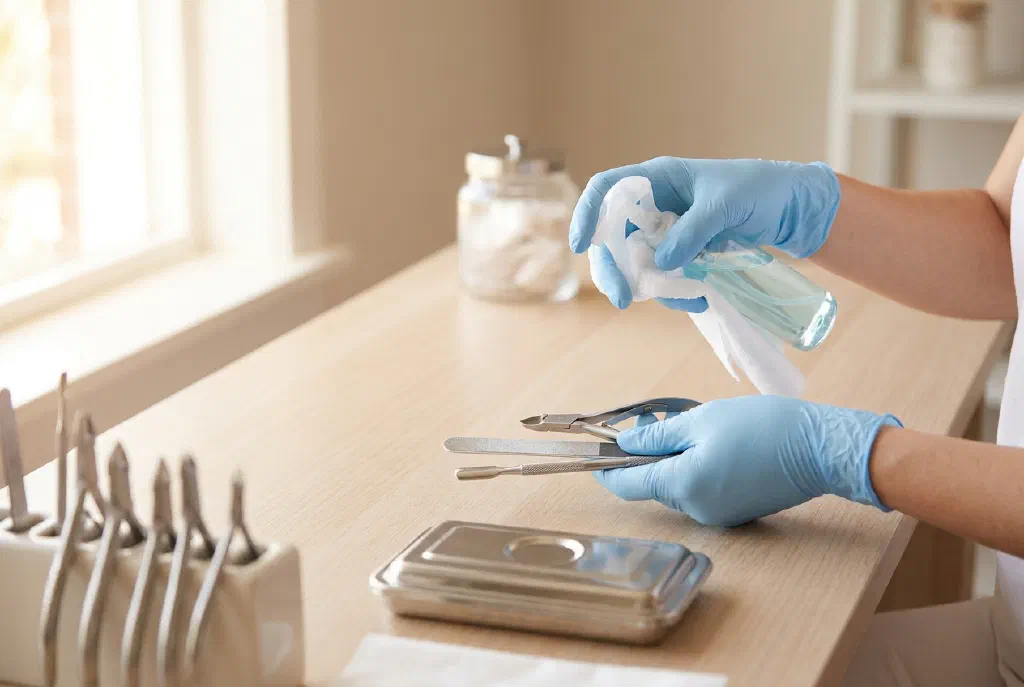
- Sterilised metal tools: Cuticle pushers and nippers are reprocessed and ideally taken out of a sealed sterilisation pouch in front of you.
- A clean workstation: No filing dust from the last client, a fresh towel, materials neatly organised.
- Dust extraction: The table has a built-in extractor so filing dust doesn’t hang in the air.
- Gloves: Many technicians wear disposable gloves. Not mandatory everywhere, but a good sign.
A particularly good sign: the salon refuses to work on nails that are inflamed or look fungal. Discoloured, thickened or crumbly nails should be checked by a doctor first. More on this in our guide spotting and treating nail fungus.
Skill and technique: consultation and clean work
A good salon doesn’t reach for the file straight away. At your first visit there should be a short chat about your everyday life and any past reactions to gel or acrylic. Then the technician looks at your natural nails and tells you honestly what makes sense. If your nails are very thin or damaged, she’ll lean towards a thin overlay such as BIAB rather than long extensions.
During the treatment, clean technique shows in these details:
- No heavy drilling of the nail plate: The natural nail is only lightly buffed, never thinned down. Pain while filing means too much pressure.
- Gentle cuticle work: Cuticles are pushed back and loose skin carefully removed, not generously cut away. Blood has no place in a manicure. See how to care for your cuticles.
- Clean edges: No gel on the skin, no ridges along the nail fold. Product on the skin raises the risk of allergies.
- A visible apex: On sculpted nails the highest point sits over the stress area, where the nail takes the most strain.
- Longevity: Gel nails or BIAB usually last three to four weeks before an infill. If corners regularly lift after a week, the prep wasn’t right.
Qualifications: what certificates tell you
In Germany, nail design is not a master craft and not a state-recognised apprenticeship of its own. Opening a salon essentially requires a business registration. Ask about training with manufacturers or academies: certificates are a plus, not a guarantee.
Products and equipment: what you can ask
You’re allowed to ask which products the salon uses. Reputable salons will name the brand and use gels in their original, labelled packaging. Unlabelled pots are a warning sign.
On the subject of allergies: many gels contain acrylates such as HEMA. Repeated skin contact with uncured product can lead to a contact allergy. Good salons therefore work cleanly along the edges, cure fully and often offer products labelled HEMA-free. The lamp also has to match the gel. The differences are explained in UV lamp vs. LED lamp.
Red flags: when to walk out
If you notice any of these, stop the treatment or don’t start it at all:
- A strong chemical smell with no ventilation or extraction: A sign of poor working conditions.
- Time pressure: If a full set is rushed through suspiciously fast, hygiene suffers.
- Rock-bottom prices: Very cheap offers have to save somewhere, often on products or hygiene. What’s realistic is shown in our overview of nail salon prices.
- Burning or pain under the lamp: Points to layers that are too thick, nails filed too thin or a lamp that doesn’t suit the gel.
- Bleeding: At the cuticle or from drilling. That’s a technique error, not bad luck.
- Reused files and buffers, or instruments lying around unprotected.
How to read reviews properly
Online reviews help if you look beyond the star rating:
- Photos: Real customer photos of fresh nails and nails after two or three weeks of wear say more than the salon’s glossy shots.
- Detail: Reviews describing hygiene, consultation or longevity are more telling than “Great, would come again”.
- Spot patterns: One outlier is normal. If several people independently mention bleeding cuticles, burning or chipping, take it seriously.
A good starting point is our nail salon finder, with salons sorted by city and customer reviews. If you need an appointment at short notice, our guide to nail salons without an appointment will help.
Checklist to tick off
- Technician and client both disinfect their hands
- New file, or one used only for you
- Metal tools come out of sealed packaging
- Clean workstation with dust extraction
- Short consultation, including a question about allergies
- Natural nails are checked, unhealthy nails are not treated
- No pain while filing, no blood at the cuticles
- Gel and products in original packaging, brand is named
- No burning under the lamp
- Clean edges, no product on the skin
- Prices are transparent and clear upfront
If something went wrong
If the gel lifts after a few days or a nail breaks for no obvious reason, contact the salon promptly. Many offer a free fix within a certain period. Important: don’t peel off lifted gel, or layers of your natural nail will come off with it.
If the skin around the nail turns red, warm, swollen or painful, see a doctor. The same goes for itching and blisters, which can point to an allergy. Between appointments, a good cuticle oil and your own clean set of tools are all you need.
Frequently asked questions
How do I recognise a good nail salon?
By visible hygiene (disinfected hands, a fresh file, sealed instruments), a consultation before your first appointment and clean technique without pain or blood. Good salons won’t treat inflamed or fungal nails.
What are the signs of a bad nail salon?
Typical warning signs are reused files, dusty workstations, a strong smell without extraction, time pressure, suspiciously low prices, burning under the lamp or bleeding cuticles.
Is it normal for it to burn under the lamp?
A brief feeling of warmth can happen, especially with thicker gel layers. Strong or repeated burning is not normal. Speak up straight away.
How much does a good nail salon cost?
As a rough guide for Germany (2026), a new full set of gel nails usually costs around 45 to 90 euros and an infill around 35 to 65 euros. Prices vary considerably by city, salon and effort. You’ll find details in our article on nail salon prices.
What should I do if my nail gets inflamed after a salon visit?
If you notice redness, swelling, warmth, pus or pain, get medical advice and avoid further treatments until then. This guide does not replace medical advice.
Do you run a nail salon yourself and work to these standards? Then you can list your salon in our directory.