Milky nails: the milky-soft nail design trend
In this article
Note: This article contains affiliate/advertising links. As an Amazon Associate we earn from qualifying purchases. If you click such a link and buy something, we may receive a small commission – at no extra cost to you.
Milky nails are the quiet star among current nail trends: a milky-translucent veil of white or soft nude that makes the nail look clean and well-groomed without covering it completely. The look is delicate, fresh and elegant – almost like a glass of milk over the nail. In this guide you will learn what defines milky nails, how they differ from babyboomer and French, how to create them with gel or polish and who they suit particularly well.
What are milky nails?
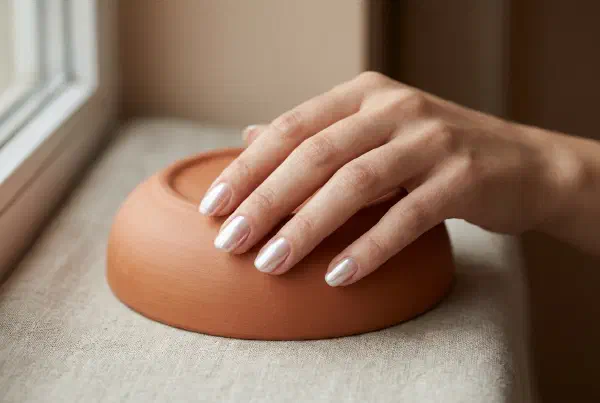
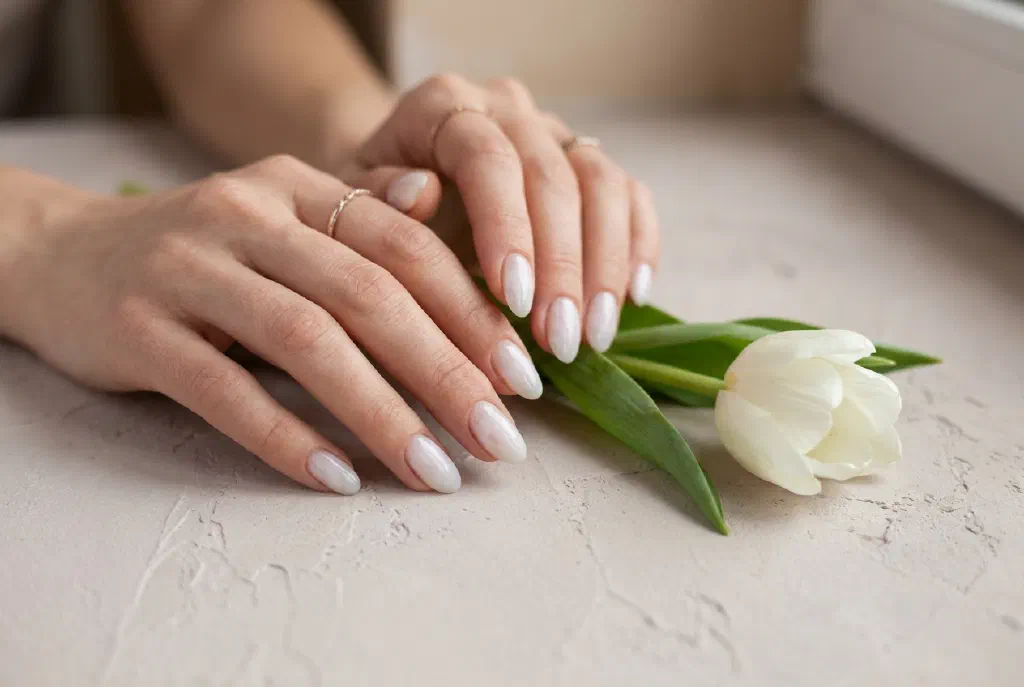
Milky nails describe a look in which a milky-translucent tone is laid over the natural nail. The result is not a bold white, but a soft, translucent veil.
- Semi-translucent: The nail shimmers through – this looks natural and never artificial.
- Soft shine: With a top coat the look gets a delicate “clean girl” shimmer.
- Versatile: Works on short and long nails and in any nail shape.
Milky white, milky French and milky nude
Within the trend there are several variations:
- Milky white: The classic – a milky white veil over the whole nail.
- Milky nude: Instead of white, a delicate, milky beige or rosé tone that looks even more natural.
- Milky French: A modern French variant in which the tip is milky rather than bright white – subtler and softer than the classic French.
- Milky with an accent: A single nail with a delicate chrome shimmer or a tiny detail – the calm milky look can take exactly one eye-catcher without becoming busy.
Which variant suits you depends above all on your skin tone: on lighter skin, milky white looks clear and fresh, while on warmer skin a milky nude or rosé is more flattering.
Combining milky nails and wearing them by season
The big advantage of milky nails: they suit practically any situation. Even so, it is worth matching tone and occasion:
- Spring/summer: A cool, clear milky white looks fresh and sets off tanned skin. More ideas under Summer nails: fresh ideas for the warm season.
- Autumn/winter: A warmer milky nude or a soft rosé veil looks softer and cosier.
- To your outfit: Because the tone is so neutral, it harmonises with any clothing style – from sporty to festive.
- With other trends: Milky nails are the ideal calm base next to a single chrome or cat-eye accent nail.
How it differs from babyboomer and French
Milky nails are often confused with other light looks. The differences:
- Classic French: Clear, opaque white tip with a sharp line. Milky French, by contrast, lets the tip fade out milky and soft.
- Babyboomer: With babyboomer nails, rosé and white blend in a flowing gradient from the nail root to the tip. Milky nails, by contrast, wear an even, milky veil without a gradient.
- Nude polish: A normal nude is opaque; milky stays semi-translucent and keeps the depth of the natural nail.
How to create milky nails
The look works with both gel and nail polish.
With gel
- Prepare the nails: file, push back the cuticles, matte the surface.
- Apply base gel and cure.
- Apply milky gel in two thin layers – building up thinly creates the translucent veil instead of opaque white.
- Cure each layer.
- Top coat for shine and durability.
With nail polish
- Create a clean base, ideally with a short manicure.
- Choose a milky-translucent polish (“sheer”/“milky”).
- Apply in one or two thin layers – the more layers, the more opaque.
- Seal with a clear top coat.
Who do milky nails suit?
- Natural fans: Those who like it subtle get a well-groomed look without bold colour.
- Working professionals: The unobtrusive tone fits into any environment.
- Brides: Milky nails are also an elegant, timeless choice for wedding nails.
- Short nails: The milky veil makes short nails look groomed and slightly longer.
Common mistakes – and how to avoid them
Milky nails look simple, but a few typical mistakes quickly spoil the delicate effect:
- Applied too thick: Too opaque a layer turns the translucent veil into a hard white. Better to work thinly and in several layers – and let each one dry briefly in between, where these proven tricks for drying polish faster help.
- Streaks in the polish: With sheer tones, uneven strokes show up. Apply with a steady hand and even pressure.
- Neglected cuticles: Because the tone is translucent, any dry or torn cuticle stands out. Caring for them beforehand pays off.
- Discoloured natural nails: Yellowish or patchy nails show through the translucent tone. A short manicure as a base remedies this.
Frequently asked questions (FAQ)
What is the difference between milky nails and a French?
With the classic French, only the tip is opaque white and emphasised with a clear line. Milky nails lay an even, semi-translucent veil over the whole nail (milky white) or shape the tip soft and milky rather than sharp (milky French).
Do milky nails look good on short nails?
Yes, particularly good. The milky tone looks clean and slightly lengthens the nail visually without adding bulk. Short, well-groomed nails in particular benefit from the delicate, natural effect.
Do milky nails last long with normal nail polish?
With polish the look lasts a few days; with a good top coat and careful handling somewhat longer. The gel version is significantly more durable. You will find general tips under making nail polish last longer.
Do I need a special tone for milky nails?
You need a semi-translucent (“sheer”) white or nude tone – not a classic opaque white. Many brands offer “milky” polishes or gels for exactly this purpose. The key is the thin, multi-layer application that lets the natural nail shine through.
Do milky nails suit long nails too?
Yes. While the milky veil visually lengthens short nails, on long nails it emphasises the elegant, clean line – especially beautiful in almond shape. A milky French also looks very refined on longer nails.
Do milky nails cover discoloured or uneven nails?
Only to a limited extent. Because the tone stays semi-translucent, it conceals small unevenness and a slight difference in shine, but not strong discolouration. For clearly yellowish nails, a slightly more opaque build-up or a caring base is advisable.