Drying Nail Polish Faster: Proven Tricks for Busy Days
In this article
Note: This article contains affiliate/advertising links. As an Amazon Associate we earn from qualifying purchases. If you click such a link and buy something, we may receive a small commission – at no extra cost to you.
You know the feeling: your nails are freshly painted, everything looks perfect, and that’s exactly when you have to dash off or instinctively reach for your keys. One quick press is enough, and an ugly dent already mars the still-soft polish. Those days are over. There is a whole range of tried-and-tested methods to dry nail polish faster without ruining the result. Here you’ll find the most effective tricks, from ice-cold water to the blow dryer to the classic drying spray, neatly sorted by effect and effort.
Why Nail Polish Needs Time to Dry in the First Place
Nail polish doesn’t dry by simply hardening; it dries as the solvents in the polish evaporate. Only then does the actual color film remain. This process happens quickly on the surface but much more slowly in the deeper layers. That is exactly why a nail can already feel dry on top while it can still be dented underneath.
This leads to the single most important lever: the thinner the layer, the shorter the path for the solvents to escape outward. Two thin coats cure faster and more durably than a single thick coat that seals on the outside while everything underneath stays soft.
Preparation Matters Too
Before you reach for tricks, it’s worth taking a look at the basics. Working cleanly saves you a lot of waiting time later on.
- Apply thinly: Two fine coats are better than one thick one. Wipe off excess polish on the neck of the bottle.
- Plan for intermediate drying: Let the first coat dry slightly before applying the second.
- Use fresh polish: Thickened, old polish contains less solvent in the right ratio and dries unevenly.
- Cool surroundings: In a warm, stuffy room the polish stays tacky longer than in cool, well-ventilated air.
If you’re just getting started with at-home manicures, a look at the right nail design basics: what you need to get started will help you work with the proper brushes and polishes from the very beginning.
The Cold Method: Cold Water and Ice Cubes
Cold is probably the best-known trick for drying nail polish faster, and it really does work. Low temperatures make the color film set more quickly.
Here’s how to do it:
- After painting, let your nails air-dry for one to two minutes so the surface doesn’t immediately blur.
- Fill a bowl with cold water and a few ice cubes.
- Carefully dip your fingertips in for about two to three minutes.
- Take your hands out and gently dab them with a lint-free cloth.
It’s important not to move the water too turbulently, otherwise waves form in the polish. Alternatively, hold your hands briefly under a gentle, cold stream of water.
Blow Dryer and Air: Cool Instead of Hot
Many people instinctively reach for the hot blow dryer, but heat is counterproductive here. Warm air keeps the solvents fluid longer and can even make the surface bubbly.
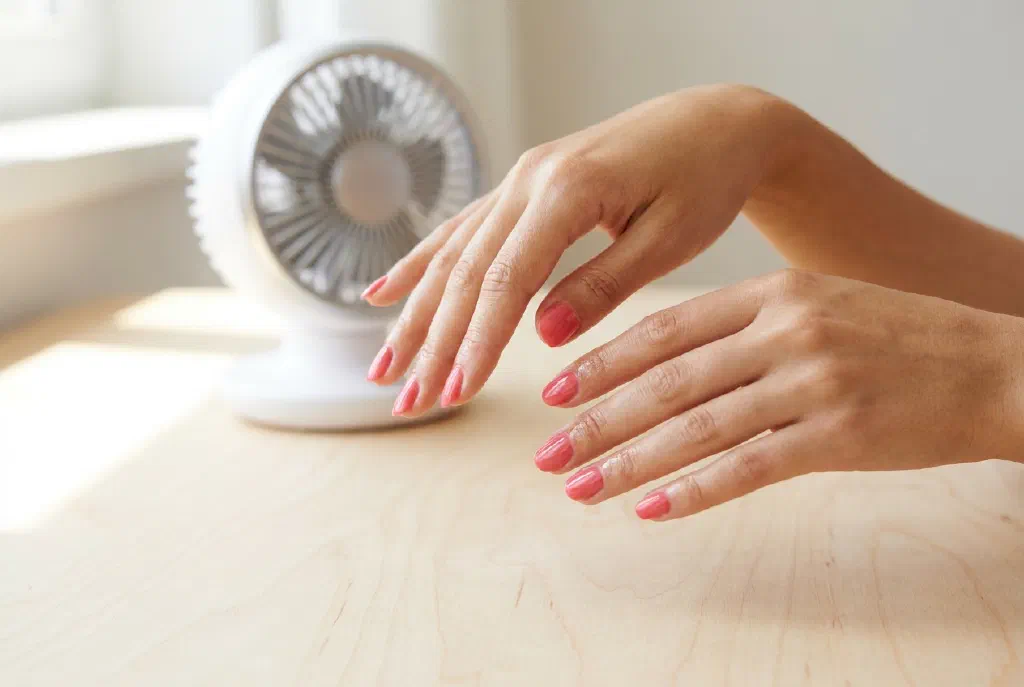
That’s why you should use the cool air setting on your blow dryer and hold it over your nails at some distance. The airflow carries away the evaporating solvents and supports curing. If you don’t have a blow dryer on hand, a small fan or simply patient blowing and fanning with your hands will do. Moving, cool air is always better than still warmth.
Drying Spray and Drying Drops
If you regularly need things to go fast, special quick-dry products are the best investment. They form a protective film that seals the surface and makes it smudge-proof within a few minutes.
- Drying spray: You spray it over the finished polished nails from a little distance. It settles on top as a fine protective film and speeds up curing.
- Drying drops: One drop per nail spreads on its own and often contains nourishing oils that condition the cuticle at the same time.
- Quick-drying top coat: A top coat with an express formula dries rapidly itself and pulls the layers underneath along with it.
These products don’t fully eliminate the waiting time, but they shorten it noticeably while protecting the color from early scratches.
What You’re Better Off Avoiding
A few common tips do more harm than good:
- Hot blow dryer: makes the polish soft and bubbly instead of firm.
- Blowing on it with too much saliva: moisture and the warmth of your breath disrupt evaporation.
- Touching too soon: even when the surface seems dry, the depths need time. Allow at least 10 to 15 minutes without any strain.
- Thick layers: the most common reason for nails that seem to stay tacky forever.
Don’t Forget Care
If you polish frequently, you should let your nails breathe in between and treat them with oil. This keeps the nail plate healthy and less prone to discoloration. If your nails ever show a yellowish tinge after intensive polishing phases, you’ll find help in the article Yellow fingernails: causes and how to make them bright again. If discolorations or changes to the nail persist stubbornly, have them checked by a doctor when in doubt.
Frequently Asked Questions (FAQ)
How long does it really take for nail polish to dry completely? The surface often feels dry after just a few minutes, but the polish isn’t fully cured until about an hour later. Only then can it withstand stronger pressure. With cold, air, and a quick-dry product, you can especially shorten the smudge-proof phase considerably.
Does the cold-water trick work with every nail polish? With most classic solvent-based polishes, yes. It’s important to let the nails dry slightly beforehand and to keep the water calm so no waves form. With UV or gel polishes, cold water does nothing, since these cure under light rather than through evaporation.
Can I use olive oil or baby oil instead of drying spray? A drop of oil on the finished polished nail can make the surface a bit smoother and less sensitive, but it doesn’t replace a real quick-dry product. Oil does little to speed up the actual curing. It’s more suited to caring for the cuticle.
Why does my nail polish stay tacky despite all the tricks? Usually it comes down to coats applied too thickly or to old, thickened polish. Apply thinner layers, give each coat some intermediate drying time, and check whether your polish is still fresh enough. A cool, well-ventilated environment helps too.