Abhyanga: the Ayurvedic full-body oil massage explained
In this article
Note: This article contains affiliate/advertising links. As an Amazon Associate we earn from qualifying purchases. If you click such a link and buy something, we may receive a small commission – at no extra cost to you.
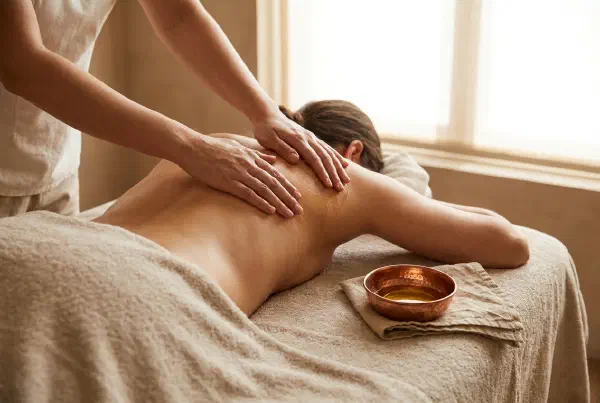
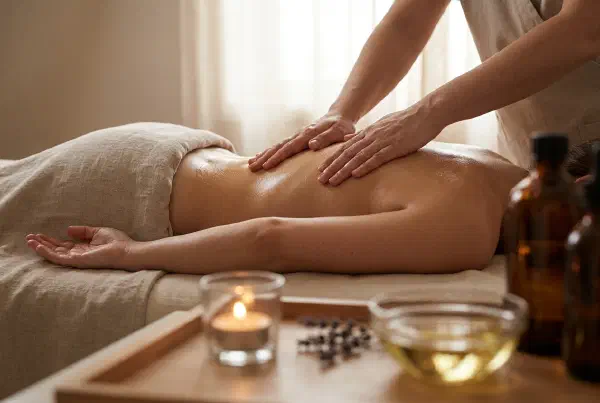
If you long for deep relaxation and at the same time a ritual for your skin, it is worth taking a look at the Ayurvedic tradition. The Abhyanga is a warm full-body oil massage that has been part of daily self-care in Ayurveda for centuries. Unlike a classic wellness massage, the focus here is not on vigorously kneading the muscles, but on generously working in tempered oil with calm, flowing movements. The result is a feeling of warmth, grounding and suppleness that often lingers for a long time.
What does Abhyanga actually mean?
The term comes from Sanskrit and describes oiling and gently massaging the entire body. In Ayurveda, the traditional Indian system of health, Abhyanga is part of the so-called Dinacharya, the recommended daily routine. Ideally it is performed in the morning before showering, but it can also be used in the evening to wind down.
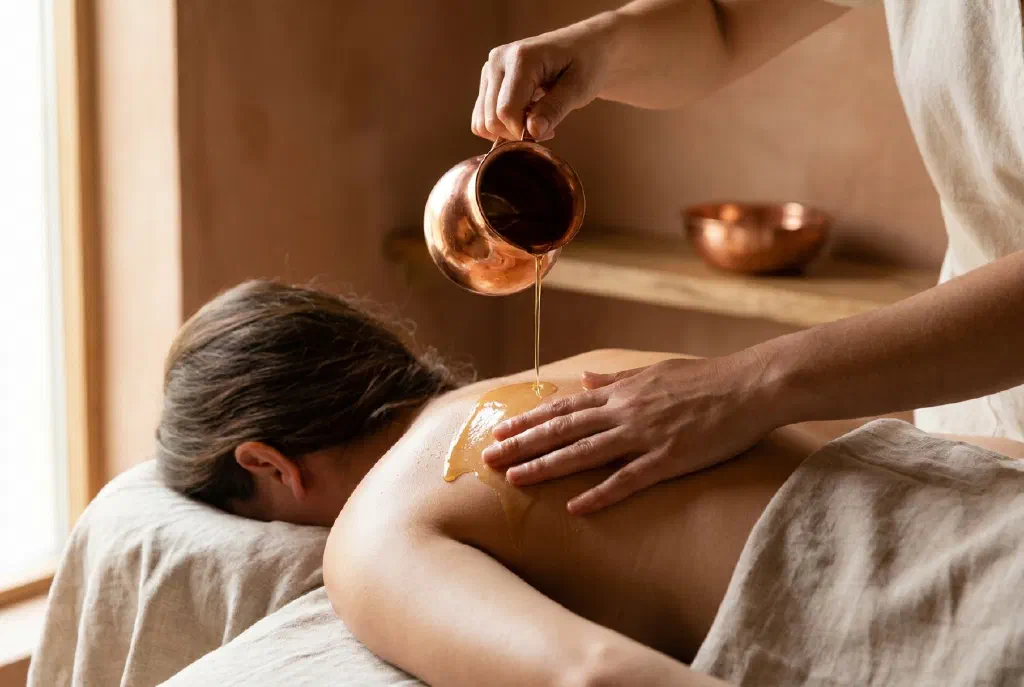
The use of warm oil, which is generously applied to the skin, is characteristic. The massage itself works with long strokes along the long bones and circular movements over the joints. The focus is on calm and mindfulness, not performance or maximum pressure. You will find these long, flowing strokes with warm oil in the Hawaiian temple massage Lomi Lomi as well.
The effect of the warm oil massage
The combination of warmth, oil and even touch is associated in Ayurveda with numerous beneficial effects. From today’s perspective, these aspects in particular are easy to understand:
- Skin care: The warm oil penetrates the upper layer of the skin and leaves a supple, well-cared-for feeling.
- Relaxation: Slow, predictable touches help many people find a calmer state.
- Body awareness: You perceive your body more consciously and give attention to areas that often get too little in everyday life.
- Ritual character: The fixed sequence creates a moment of self-care that fits well into the daily rhythm.
Important: Abhyanga is a feel-good and care application, not a substitute for medical treatment. In case of acute complaints, skin diseases, fever or during pregnancy, you should, if in doubt, have the application clarified by a doctor or specialist.
Which dosha goes with which oil?
In Ayurveda, a person is described through three doshas: Vata, Pitta and Kapha. They represent different constitutional types. The choice of oil for the Abhyanga ideally depends on your dominant dosha.
Vata
Vata is considered dry, cool and mobile. Here, warming, rich oils such as sesame oil are popular because they counteract dryness. Gentle, even pressure and a warm environment are especially good for this type.
Pitta
Pitta is associated with warmth and intensity. Rather cooling oils such as coconut or sunflower oil are recommended. The massage may well be calm here and not too demanding.
Kapha
Kapha is considered rather heavy and sluggish. Here, lighter oils and somewhat livelier, stimulating movements are used to promote a feeling of freshness.
If you do not know your type, a neutral, well-tolerated oil such as sesame or coconut oil is a solid starting point. Always make sure that you tolerate the oil well, and test it beforehand on a small area if you have sensitive skin.
How an Abhyanga proceeds
A complete Abhyanga follows a clear structure. You can experience it in a studio or carry it out at home as a self-massage. This is what the typical procedure looks like:
- Warm the oil: Place the bottle in a warm water bath until the oil is pleasantly tempered – never too hot.
- Head and face: Start gently at the scalp and work your way over the face with light movements.
- Long bones, long strokes: On the arms and legs you work with long, straight strokes.
- Joints in circles: Over the shoulders, elbows, knees and ankles you use circular movements.
- Abdomen and chest: Here you move gently and clockwise.
- Hands and feet: These areas get special attention. A detailed hand massage and the targeted pampering of tired legs in the style of a foot massage can be wonderfully integrated.
- Let it soak in and finish: Let the oil work for a few minutes and then shower with warm water.
Allow around 15 to 30 minutes for the complete application. Even a shortened version, for example only on the feet and legs, already produces a noticeable effect.
Tips for use at home
So that the ritual succeeds and no mess is created, a few simple preparations help:
- Place an old towel underneath, as oil can leave stains.
- Ensure a warm, draft-free environment so that you do not get cold.
- Take your time consciously and avoid rushing – the calm is part of the effect.
- When showering afterwards, watch out for a non-slip surface, as oil makes the tiles slippery.
If you incorporate the Abhyanga into your routine regularly, it quickly becomes a firm anchor in everyday life. Just two to three times a week is enough for many people to feel the nourishing and relaxing effect.
Frequently asked questions (FAQ)
How often should I do an Abhyanga? In Ayurveda it is considered a daily ritual, but that is not strictly necessary. Two to three times a week is a good rhythm to experience the nourishing and relaxing effects without it becoming a duty.
Which oil is best suited? That depends on your constitutional type and your skin tolerance. Sesame oil is considered a classic all-rounder, coconut oil is perceived as rather cooling. Test new oils beforehand on a small patch of skin.
Can I also perform Abhyanga myself? Yes, the self-massage is even a central component of the Ayurvedic daily routine. You only need warm oil, an old towel and a little time for the calm movements.
Are there situations in which I should refrain from it? In case of fever, acute inflammation, open skin areas or during pregnancy, you should refrain from the massage or have it clarified in advance by a doctor or specialist.