Floating in a Float Tank: Process and Effects of Floating
In this article
Note: This article contains affiliate/advertising links. As an Amazon Associate we earn from qualifying purchases. If you click such a link and buy something, we may receive a small commission – at no extra cost to you.
Drifting weightlessly on the surface of the water, without sounds, without light, without your body having to do anything: that is exactly what floating is. In a tank filled with concentrated saltwater, the solution carries you effortlessly so that you float on the surface as if in the Dead Sea. Many people seek out this experience to switch off deeply, release tension and escape the sensory overload of everyday life for a while. In this guide you will learn how floating works, how a session unfolds and what you should pay attention to.
What is floating, exactly?
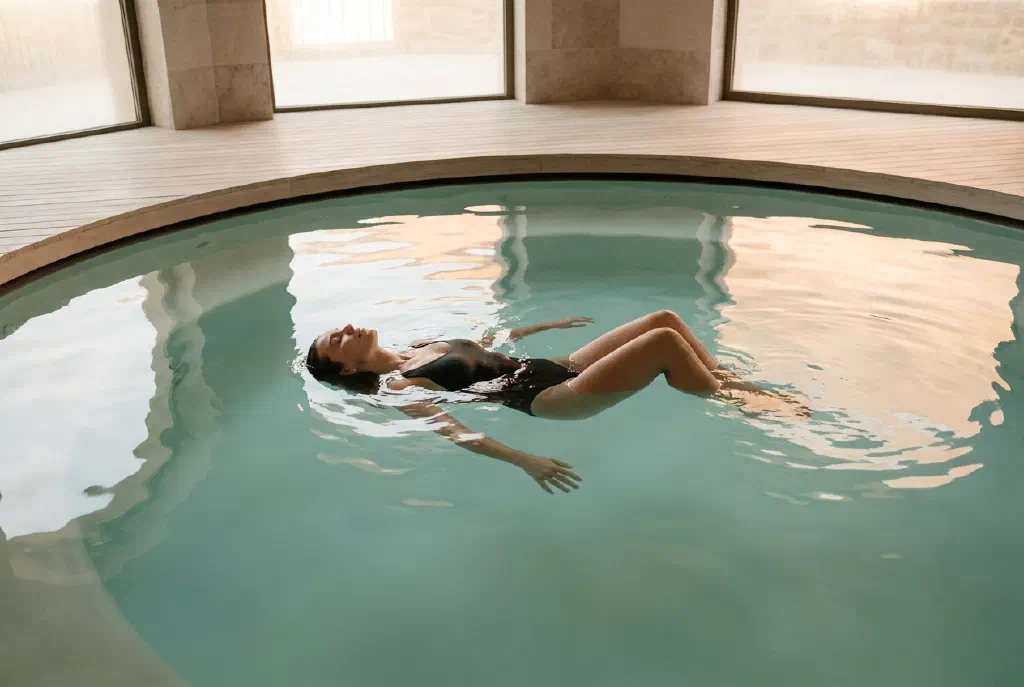
Floating simply means “drifting”. You lie down in a so-called float tank or float pool that is filled with about 25 to 35 centimeters of water. In this water, large amounts of magnesium sulfate (Epsom salt) are dissolved, often several hundred kilograms. Due to the high density of the solution, you automatically drift on the surface, entirely without any effort of your own. Your neck, shoulders and back are fully supported by the water.
The water is at roughly skin temperature (around 35 degrees). As a result, the boundary between body and water blurs over time, and you barely notice where you end and the water begins. This combination of weightlessness and reduced sensory stimuli is the actual core of floating.
The effect: Why floating is so relaxing
In everyday life, your body is constantly busy counteracting gravity. Muscles hold you upright, support your head and stabilize your joints. In the float tank, this effort is almost entirely eliminated. This can have a pleasant effect on your well-being:
- Muscle relaxation: Without the work of holding posture, many muscle groups can let go, which is perceived as beneficial for tension.
- Mental calm: The low-stimulus environment gives the mind a chance to wind down and calm the flow of thoughts.
- Body awareness: Some people experience a more intense sense of their own body and breath.
- Recovery: The feeling of simply being, without having to do anything, is often experienced as a small time-out.
Important: Floating is a relaxation offering, not a medical treatment. Anyone suffering from health complaints should, when in doubt, have these clarified by a doctor instead of relying solely on wellness applications.
Floating and magnesium
The Epsom salt used consists of magnesium sulfate. Magnesium plays a role in the body in muscle and nerve function. Whether and how much of it is absorbed through the skin is not clearly proven. You should therefore attribute the relaxing effect of a session primarily to the weightlessness and the calm environment, not to a specific promise.
How a floating session unfolds
A typical session lasts between 45 and 60 minutes. The process is similar in most studios:
- Briefing and preparation: You receive an introduction to the tank’s technology and the procedure. Open areas of skin are covered with a little petroleum jelly so that the salt does not sting.
- Showering beforehand: You shower thoroughly so that no cosmetics or creams get into the water.
- Getting in and floating: You lie down in the tank, close the lid or door as you prefer and let yourself drift. You can usually control light and music yourself; many prefer complete darkness and silence.
- The resting phase: You float for about 30 to 50 minutes. At first, the body often needs a few minutes to truly let go.
- Gentle signal for the end: Usually quiet music or light announces the end.
- Showering afterwards: You rinse the salt thoroughly out of your hair and skin.
After floating, many people feel deeply relaxed, sometimes also a little dazed. It is therefore best to plan some time to rest afterwards and drink a glass of water.
Tips for your first time
- Eat only lightly beforehand; a stomach that is too full or too empty can be distracting.
- Avoid coloring your hair or shaving just before, as the salt can irritate.
- Let go of the expectation of relaxing deeply right away. The first time, the unfamiliar feeling is often more present than the calm.
- Place your hands relaxed above your head or beside your body, whichever feels more comfortable.
Who is floating suitable for?
Floating particularly appeals to people who experience a lot of stress in everyday life or want to deliberately find calm. Even after intense physical exertion, some find floating a pleasant form of recovery. If you like to combine various wellness applications, floating pairs well with heat treatments, for example a visit to the infrared cabin or sauna. Those who want to focus on the head and relaxation will also find a similarly calm time-out in the Head Spa.
You should be cautious with certain pre-existing conditions or uncertainties. In the following cases, it makes sense to consult beforehand:
- with claustrophobia, since the closed tank can initially feel confining (many studios offer open pools or the option to leave the lid and light open)
- with open wounds or acute skin irritations
- with pregnancy, contagious diseases or unclear complaints, here clarify with a doctor when in doubt
Frequently Asked Questions (FAQ)
Can I sink or drown while floating?
No, due to the high salt concentration the water carries you on the surface by itself. You don’t have to do anything to stay on top, it happens entirely automatically. The water is also only shallow. Nevertheless, you should not get the saltwater in your eyes or mouth.
How often should I float?
That depends entirely on your needs. Some enjoy floating as an occasional time-out, others incorporate it regularly into their relaxation routine. There is no fixed schedule, listen to your own feeling.
What do I wear when floating?
As a rule, you float without clothing, since the tank is a private space just for you and wet clothing would disrupt the feeling of weightlessness. However, if you feel more comfortable, you can also wear swimwear in many studios.
Is floating also helpful for back problems?
Many find the relief on the spine pleasant because the body is carried weightlessly. However, this does not replace treatment. With persistent or severe back complaints, you should have these clarified by a doctor.