Scalp scrub: how it works and how to use it
In this article
Note: This article contains affiliate/advertising links. As an Amazon Associate we earn from qualifying purchases. If you click such a link and buy something, we may receive a small commission – at no extra cost to you.
Flakes, a greasy root area shortly after washing or a tight, uncomfortable feeling on the scalp: often the cause is not the hair itself, but a scalp where dead skin cells, sebum and product residue build up. A scalp scrub dissolves exactly these deposits and creates a clean base for healthy hair growth and effective care. In this guide you will learn what a scalp scrub does, which variants exist and how to use it correctly and gently.
What is a scalp scrub?
The scalp is skin like any other – it is just often forgotten under the hair. Here, too, the uppermost cells constantly renew themselves, die off and should actually shed on their own. Sebaceous glands produce oil that keeps hair and scalp supple. Add styling products, dry shampoo and environmental influences, and over time a layer of flakes, sebum and residue forms right at the roots.
A scalp scrub is a special treatment that targets and removes this layer – much like a body scrub for smooth skin from head to toe frees the rest of the body. It is applied to the damp scalp before or instead of shampoo, massaged in and rinsed out again. Unlike a shampoo, which mainly cleanses, a scrub works deeper at the level of the uppermost skin layer.
How a scalp scrub works
The benefits of a good scalp scrub can be summed up in a few points:
- It loosens flakes: Dead skin flakes that would otherwise end up visibly in the hair or on your clothes are loosened and rinsed away.
- It removes product residue: Silicones, waxes and dry shampoo settle around the roots. The scrub frees the scalp from this film so care products can absorb again.
- It regulates sebum: When excess sebum is removed, the roots often grease up more slowly – the hair stays fresh for longer.
- It boosts circulation: Massaging the product in stimulates blood flow to the scalp and feels pleasantly invigorating.
One important point: a scrub cleanses and cares for the surface of the skin. It is not a remedy for hair loss and no substitute for medical advice if you have persistent heavy flaking, itching or bald patches. If you want to look more closely at thinning hair, the guide on hair loss in women and what helps offers a level-headed overview of the causes.
Mechanical or chemical: the variants
Mechanical scrubs
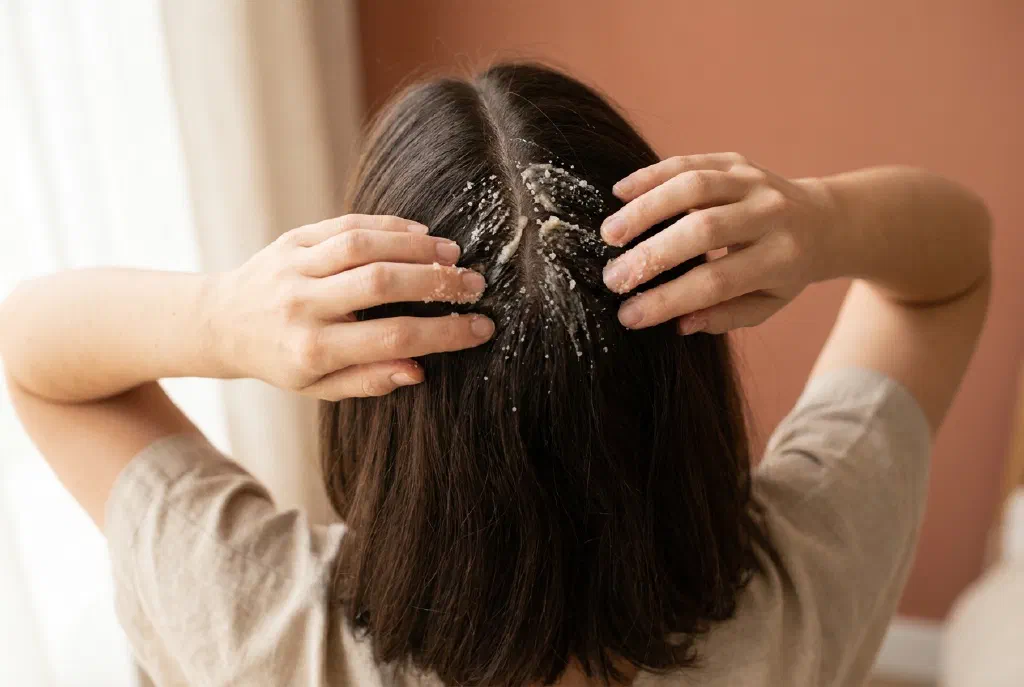
Mechanical scalp scrubs work with fine abrasive particles – such as sugar, salt or ground plant matter. As you massage them in, these particles rub the flakes away. The effect is immediately noticeable and the scalp feels clean afterwards. This variant suits a more robust scalp and a visibly flaky root area. If you have a sensitive scalp, work very gently and without pressure so that no tiny abrasions occur.
Chemical scrubs
Chemical scrubs require no friction. They contain salicylic acid (BHA), which is oil-soluble and especially suited to an oily, flaky scalp, or fruit acids (AHAs such as glycolic or lactic acid), which tend to dissolve dry flakes. Instead of removing material mechanically, these acids loosen the bonds between dead cells so they shed on their own. This is often the gentler choice for a sensitive scalp – but only as long as the skin is intact.
How to use a scalp scrub correctly
Technique decides whether the scrub cares for or irritates your scalp. Follow these steps:
- Wet and part the hair: Wet your hair and create narrow partings so you apply the scrub directly to the scalp, not just into the hair.
- Apply: Distribute the product section by section along the partings across the whole scalp.
- Massage gently: Work with your fingertips – not your nails – in small circular motions. One to two minutes is enough.
- Let it sit briefly: Chemical scrubs often need one to three minutes of contact time. Follow the product instructions.
- Rinse thoroughly: Remove all residue with lukewarm water. With mechanical scrubs, follow up with a mild shampoo as usual.
- Care: A light conditioner on the lengths or a soothing scalp care product rounds off the application.
Frequency: For most people once or twice a week is enough. Exfoliate a dry or sensitive scalp less often, while an oily root area tolerates it a little more frequently. More is not better – scrubbing too often disrupts the protective barrier.
Who it suits – and when to be careful
A scalp scrub is especially worthwhile for an oily root area, visible flakes and dull roots weighed down by product residue. Anyone who regularly uses dry shampoo or a lot of styling also benefits from the thorough cleanse.
Be careful, however, with an irritated, inflamed or damaged scalp: a scrub has no place on open spots, fresh sunburn or painful areas. With a dry scalp, choose a mild chemical scrub and exfoliate less often so as not to strain the already tense barrier further. If a stubborn problem lies behind an itchy scalp, it is better to clarify the cause first before scrubbing. If flakes, itching or redness persist, that belongs in professional hands.
Scalp scrub and the head spa
The scalp scrub is not only a home treatment but also a fixed component of professional care. In a head spa with its sequence and effects, the scalp is first cleansed, often freed of sebum and residue with a scrub, and then massaged extensively. The scrub prepares the scalp so that subsequent masks and care oils absorb better.
At home you can recreate this principle on a small scale: a scrub, a quiet scalp massage and a nourishing mask make for a little wellness ritual. That turns plain cleansing into a pleasant moment of relaxation – and keeps the scalp cared for in the long run.
Frequently Asked Questions (FAQ)
How often should I use a scalp scrub? For most scalp types once or twice a week is enough. An oily root area tolerates more frequent use well, while a dry or sensitive scalp should be exfoliated only about once a week or less. If redness or a tight feeling appears, you are scrubbing too often.
Which is better: a mechanical or a chemical scrub? That depends on your scalp. Mechanical scrubs with abrasive particles act immediately and suit a more robust, flaky scalp. Chemical scrubs with salicylic or fruit acid work without friction and are often the gentler choice for sensitive skin – provided the scalp is intact.
Does a scalp scrub help against dandruff? A scrub can loosen flakes and free the scalp from sebum and product residue, which improves its appearance. However, it does not replace treating the underlying cause. With stubborn, heavy flaking or itching you should have the cause clarified professionally.
Can I use a scalp scrub myself? Yes. Apply it to the damp, parted scalp, massage it in gently with your fingertips, let it sit briefly and rinse it out thoroughly. Avoid vigorous scrubbing with your nails and never use it on an irritated or damaged scalp.