Pregnancy Massage: Gentle, Safe and Soothing
In this article
Note: This article contains affiliate/advertising links. As an Amazon Associate we earn from qualifying purchases. If you click such a link and buy something, we may receive a small commission – at no extra cost to you.
A pregnancy changes your body day by day – and this often comes with back pain, swollen legs and inner tension. A pregnancy massage can be a real treat here: it gives you moments of calm, loosens tense muscles and helps you reconnect with yourself. To make sure the treatment stays truly gentle and safe, however, there are a few things you should know. In this guide you’ll learn what matters, which complaints a massage can relieve and when it’s better to hold back.
What makes a pregnancy massage special
A pregnancy massage is not just a modified version of an ordinary massage, but is specifically tailored to the needs of your changing body. The growing belly, the loosened ligaments and the extra strain on the back and pelvis call for a particularly mindful technique. The movements are gentler, the pressure is carefully measured, and the position on the table also differs significantly from a classic treatment.
The focus is on well-being – not intensive deep work. A good treatment should relax you, gently stimulate your circulation and give you the feeling of being in good hands. This very sense of calm is often passed on to the baby as well.
Which complaints a massage can relieve
Many pregnant women notice a tangible relief after just a single treatment. A gentle massage can help with the following complaints, among others:
- Back pain in the lower back caused by the changed posture
- Tension in the neck, shoulders and pelvic area
- Heavy, swollen legs thanks to stimulated circulation
- Inner restlessness and stress – the massage promotes relaxation and better sleep
- Tension headaches, which often arise from neck tension
The back in particular carries an enormous load during pregnancy. If you’re mainly troubled by tension in the back area, it can be worth addressing it specifically – similar to a classic back treatment that targets and releases tension in the back, only much gentler and tailored to the pregnancy.
What to keep in mind during the treatment
The right time
In the first trimester, many therapists are cautious, because the body is undergoing especially significant changes during this phase. It’s often recommended to start massages only after the twelfth week of pregnancy. When in doubt, talk to your midwife or doctor before booking an appointment.
Safe positioning
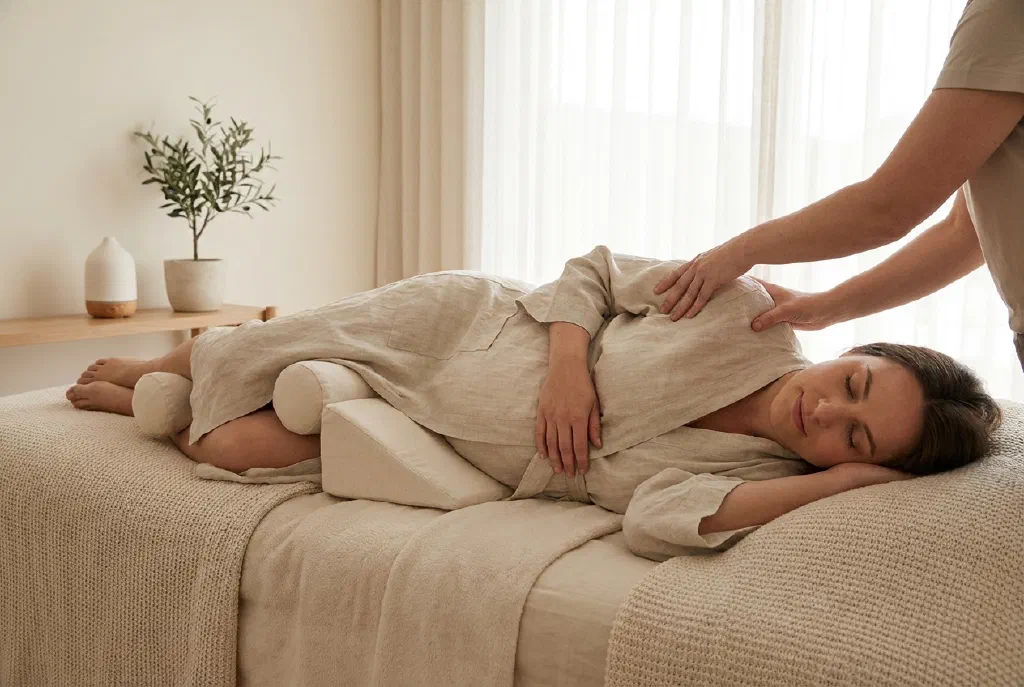
From the second trimester onwards, you should no longer lie flat on your back, as the weight of the uterus can press on a large vein. A good practice therefore works with:
- Side-lying position, supported by pillows and positioning bolsters
- special pregnancy tables with a cut-out for the belly (only briefly and with caution)
- a slightly elevated position of the upper body
What matters is that you feel comfortable at all times. Tell your therapist immediately if you feel dizzy or if a position is uncomfortable.
Gentle pressure instead of deep work
During pregnancy, the ligaments are loosened by the hormone relaxin. Deep, jerky movements are therefore off-limits. A good pregnancy massage works with stroking, flowing movements and mild pressure. Certain areas – such as the belly and intense points on the ankles and wrists – are deliberately treated only very gently or not at all.
Choosing the right person
Only let someone treat you who has experience with pregnant women. A properly trained masseuse or wellness therapist knows the sensitive zones and adapts the treatment to your week of pregnancy. Feel free to ask about qualifications and experience – reputable providers are happy to share this information.
When it’s better to be cautious
As soothing as a massage is, there are situations in which you should seek medical advice first. These include, among others:
- a high-risk pregnancy or a history of premature labour
- high blood pressure, preeclampsia or severe fluid retention
- acute infections, fever or skin problems in the area to be treated
- fresh varicose veins or a tendency towards thrombosis in the legs
This list does not replace medical advice. When in doubt, the rule is always: first check with your doctor or midwife, then relax. That way you’re on the safe side and can enjoy the treatment without worry.
Gentle additions for more well-being
In addition to the classic massage, there are other gentle methods that are perceived as pleasant during pregnancy. A careful foot massage, for example, can relieve tired legs. Some pregnant women also appreciate a very mild form of reflexology that reaches the body via the feet – here, however, particular caution is required, as some points should be avoided. Be sure to consult an experienced professional about this.
At home, too, you can do something for your well-being: a warm (not hot) foot bath, gentle stretching exercises or a light self-massage of the shoulders with a skin-friendly oil. Always pay attention to how your body feels and listen to its signals.
Frequently Asked Questions (FAQ)
From when is a pregnancy massage allowed?
As a rule, it’s recommended to start massages only after the first trimester, that is, roughly from the twelfth week of pregnancy. Since every pregnancy is individual, you should discuss the timing in advance with your midwife or doctor.
Is a massage during pregnancy safe?
With an uncomplicated pregnancy and an experienced professional, a gentle massage is considered well tolerated. The right positioning, mild pressure and avoiding certain zones are important. If there are risk factors, you should have it checked with a doctor beforehand.
Which body areas are avoided during a pregnancy massage?
The belly is touched very gently at most, and intense pressure points on the ankles and wrists are avoided. Deep, vigorous movements are also off-limits, since the ligaments are loosened by the pregnancy hormones.
Can a massage relieve back pain during pregnancy?
Yes, many pregnant women experience tangible relief from back and neck pain. The gentle movements release tension, promote circulation and relieve the posture altered by the belly.