Thalasso: what the seawater treatment in a spa really means
In this article
Note: This article contains affiliate/advertising links. As an Amazon Associate we earn from qualifying purchases. If you click such a link and buy something, we may receive a small commission – at no extra cost to you.
Thalasso is a wellness treatment in which everything comes from the sea: warm seawater, algae, marine mud and the salty climate of the coast. The word derives from the Greek “thalassa” (the sea) and today describes a spa experience built around these natural elements. In this guide you will learn what thalasso actually is, which applications it includes, how a typical thalasso day unfolds, how it differs from classic wellness, and what to look out for when booking.
What thalasso is
Thalasso bundles several natural coastal elements into a wellness concept. At its heart is warmed seawater, used in pools and tubs. Added to this are algae, marine mud (sediment from the sea floor) and the climate of the coast with its salty, fresh air. The idea behind it is simple: you surround yourself with what the sea has to offer and enjoy it in a calm, well-kept spa setting.
The name points to the long tradition of these treatments at coastal locations, especially in France and along the Atlantic and Mediterranean coasts. Today you will find thalasso above all in wellness hotels and spa resorts near the sea, and some city spas also work with seawater and algae products. It is worth being clear: here thalasso is described purely as a wellness and relaxation offering. It is about the experience, the feel of your skin and time out, not the treatment of illness.
Each of the ingredients used has its own character:
- Seawater: pleasantly warm, salty, holding the body gently in the pool.
- Algae: as a wrap or bath, often with an earthy, fresh scent.
- Marine mud: fine, warm sediment applied as a wrap.
- Coastal climate: salty air, experienced in an inhalation room or at the beach.
Typical applications in the spa
A thalasso area usually combines several building blocks that you move through one after another or as a package:
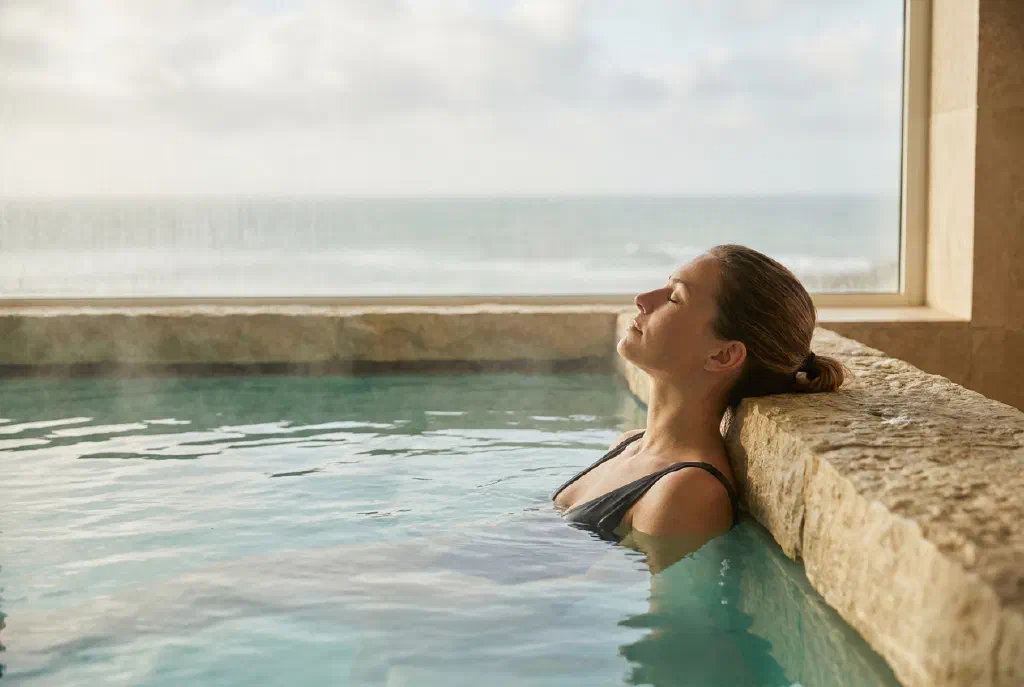
- Seawater baths: In tubs or larger pools you lie or float in warm, salty water. Jets are often built in, keeping the water gently in motion in a way that feels pleasant on the skin.
- Algae wraps: An algae paste is applied to the body, after which you are wrapped in film and warm towels. It feels cosily warm and leaves the skin with a smooth, cared-for feeling afterwards.
- Jets and pressure massages: A targeted jet of seawater is sprayed over the body. Depending on the pressure this feels invigorating and fresh, much like a brisk shower.
- Inhalation: In a room with fine salty air or beside a brine mist you calmly breathe in the salty aerosol. Many experience this as pleasantly clear and relaxing.
- Scrubs: Often a salt or sea-salt scrub comes first, preparing the skin for the treatments that follow. How to do this at home too is shown in the guide to making a body scrub yourself.
These building blocks combine well. A spa often arranges them into a coherent flow, so that warm and invigorating applications follow one another sensibly.
How a thalasso day unfolds
A thalasso day or a multi-day stay usually follows a calm rhythm. A typical sequence might look like this:
- Arrival: You check in at the spa, receive a bathrobe and slippers and get changed. There is often a short consultation about the programme you would like.
- Preparing the skin: A scrub frees the skin of dead flakes so the following treatments feel fresh.
- Warm bath: A seawater bath with jets opens the sequence and eases you into calm.
- Wrap: An algae or mud wrap follows, swathed in warm towels, with a rest phase to let it work.
- Invigorating part: A jet or pressure massage brings fresh energy before things wind down again.
- Wind-down: A quiet zone with loungers, tea and soft lighting rounds off the day. On multi-day stays this rhythm repeats with changing focuses.
Allow around two to three hours for a half-day and considerably more for a full day. Multi-day programmes at a resort spread the treatments out comfortably over the length of the stay, leaving plenty of time for breaks, walks in the fresh air and rest.
How it differs from regular wellness and sauna
Classic wellness and sauna rely above all on heat, infusions and the interplay of warmth and cooling. How to approach this properly is described in the guide to sauna for beginners done right. Thalasso, by contrast, revolves consistently around the elements of the sea: salty water, algae, mud and coastal climate.
There are also differences from a traditional bath such as the Japanese onsen: an onsen is a hot spring bath with its own bathing etiquette, while thalasso is a curated programme of several seawater applications. What they all share is the same aim: a conscious time out, relaxation and a good feeling in your body. If you would like to pick up the principle on a small scale at home, the article on wellness at home as a home spa offers ideas, for instance with a salt bath and a scrub.
Who it suits and what to look out for
Thalasso suits anyone seeking a calm, sensory time out by or with the sea, who appreciates warm baths, wraps and a well-kept spa ambience. It is also a good fit for anyone who wants to deliberately escape everyday life and enjoy a few hours without appointments.
When booking, a few points are worth checking:
- Real seawater: Ask whether the spa works with seawater or with prepared salt water, both are common.
- Scope of the programme: Clarify which treatments are included and how long the stay lasts.
- Location: Resorts near the sea additionally offer fresh coastal air and walks on the beach.
- Your own tolerance: Salt water and heat are not equally pleasant for everyone. For health questions, during pregnancy or with sensitive skin, clarify your suitability with a doctor beforehand.
- Sensitivity to heat: Warm wraps and baths can be demanding on the circulation, so plan rest phases and drink plenty.
Thalasso is a wellness application for relaxation and well-being. It does not replace medical treatment and should not be understood as a therapy.
Frequently asked questions (FAQ)
What does thalasso actually mean?
The term comes from the Greek word “thalassa” for the sea. Thalasso describes a wellness concept that bundles warm seawater, algae, marine mud and the climate of the coast into a relaxing spa experience.
Do I have to travel to the sea for thalasso?
Not necessarily. Many treatments take place in wellness hotels right on the coast, because seawater and coastal air are available there. Some city spas also offer seawater baths and algae wraps, though without the real coastal climate.
What does a seawater bath feel like?
The warm, salty water holds the body pleasantly, and jets often keep it gently in motion. Many find floating soothing, and the salt leaves a fresh feeling on the skin. After the bath you usually shower the salt off.
What do I wear for a thalasso treatment?
You usually wear swimwear, and the spa provides a bathrobe and slippers. For wraps the skin is exposed and wrapped in warm towels. If in doubt, ask in advance what is customary for the particular treatment.
Is thalasso suitable for everyone?
In principle it is a gentle feel-good offering. However, heat and salt water are not equally well tolerated by everyone. For health questions, during pregnancy or with sensitive skin, you should clarify your suitability with a doctor beforehand and mention it openly at the spa.