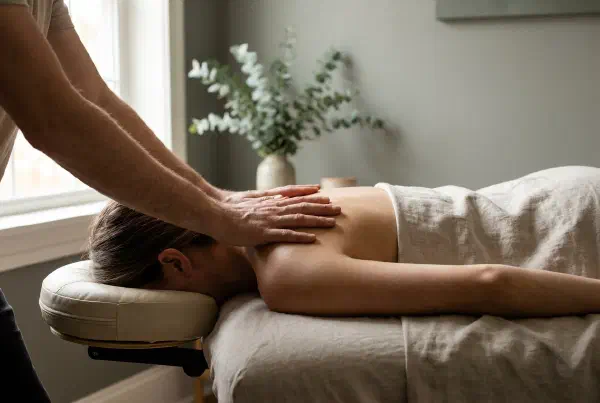
Deep Tissue Massage: Firm Pressure for Stubborn Tension
In this article
Note: This article contains affiliate/advertising links. As an Amazon Associate we earn from qualifying purchases. If you click such a link and buy something, we may receive a small commission – at no extra cost to you.
When classic stroking massages simply bounce off stubborn tension, deep tissue massage comes into play. Behind the English term deep tissue lies an intensive technique that does not stay on the surface of the skin but specifically reaches the deeper muscle layers and the surrounding connective tissue. With slow, firm strokes, the practitioner works their way down to the adhered structures that are responsible for chronic pain and restricted movement. In this guide, you will learn how the method works, what sets it apart from a wellness massage, and who really benefits from this firm treatment.
What Sets Deep Tissue Massage Apart
Deep tissue massage is one of the most intensive forms of manual treatment. While a classic Swedish massage primarily relaxes and stimulates circulation, deep tissue aims at the structural release of adhesions. The practitioner works deliberately slowly, because muscle tissue tenses reflexively under fast, hard pressure. Only through patient, deep work does the musculature give way and hardened areas release.
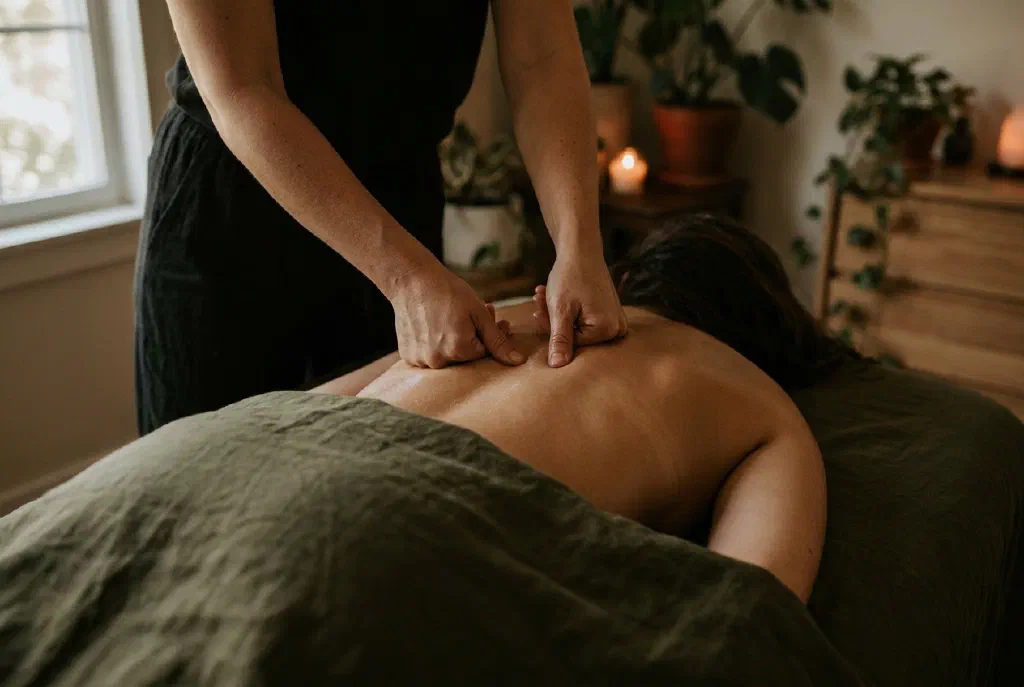
It involves not only the palms of the hands but also the thumbs, knuckles, elbows and forearms. This makes it possible to apply the necessary pressure in a controlled way and sustain it over a longer period. The focus is on individual problem zones rather than a broad full-body treatment. Areas commonly worked on are the neck, shoulders, lower back and the large muscle groups in the thighs and calves.
What Happens in the Tissue
Tension arises when muscle fibres remain permanently contracted and the surrounding connective tissue (fascia) becomes adhered. These adhesions restrict mobility and can trigger pain that radiates into neighbouring regions. Through the targeted pressure of deep tissue massage, the tissue becomes more supple again, circulation improves and chains of tension can release. Many people feel a noticeably greater range of motion after the treatment.
Who the Intensive Technique Is Suitable For
Deep tissue massage is not purely a pampering programme but a targeted treatment. Those who benefit particularly include:
- People with chronic tension in the neck and shoulders, for example from screen work
- Athletes with hardened, heavily used musculature
- Individuals with poor posture and the resulting restricted movement
- anyone seeking deep loosening after a period of high physical or muscular strain
Those who simply want to switch off and be gently stroked, on the other hand, are better served by a softer method. Anyone who responds to precise, painful muscle knots will find a closely related, even more focused treatment in Trigger Point Massage: Targeting Painful Muscle Knots. When concrete complaints take centre stage, a therapeutic massage harnessing medical benefits can be the right setting.
When to Be Careful
As effective as the method is, it is not suitable for every situation. With acute inflammation, fresh injuries, thrombosis, varicose veins or certain skin conditions, firm pressure should be avoided. Caution is also advised during pregnancy, with cardiovascular conditions, or when taking blood-thinning medication. When in doubt, you should always have a deep tissue massage medically or professionally cleared in advance, so that the intensive treatment does not harm you.
How a Treatment Proceeds
A proper deep tissue massage begins with a short consultation. The practitioner asks about complaints, affected regions and previous injuries in order to adjust the pressure individually. The target region is then first prepared with warming, broad strokes, so that the musculature does not go into the deep work cold and tense.
The main part itself consists of slow, targeted pressure movements along the muscle fibres. An important principle applies here:
- The pressure may be intense, but it should never turn into sharp, stabbing pain.
- A pleasant “good pain” at the edge of discomfort is normal and intended.
- Conscious exhaling during the pressure helps the musculature to let go.
- Feedback to the practitioner is expressly welcome, so that the pressure is right.
A session usually lasts between 30 and 60 minutes. Because the treatment works in a targeted and deep manner, it is often shorter than a relaxing full-body massage, but noticeably more intensive.
What to Keep in Mind Afterwards
After a deep tissue massage, the treated region may at first feel somewhat sensitive to pressure or slightly like muscle soreness. This is a normal reaction and usually subsides within one to two days. To help your body benefit optimally from the treatment, a few simple measures help:
- Drink plenty of water to support the stimulated circulation.
- Give your body rest and avoid intensive exercise immediately afterwards.
- Warmth, such as a warm bath, can make the after-effects more pleasant.
If you like to combine the relaxing ritual with plenty of warmth, a visit to the Turkish Bath: Procedure and Rituals in the Hammam pairs perfectly with deep work on the musculature. The moist heat prepares the tissue optimally beforehand or rounds off the treatment soothingly.
How Often Is Sensible?
For acute, stubborn tension, a tighter rhythm of one to two treatments per week can be sensible until a noticeable improvement sets in. For prevention and maintenance, an appointment every few weeks is then enough for many people. More important than a rigid plan is to listen to your body’s signals and adjust the frequency to your daily routine, your activity level and your wellbeing.
Frequently Asked Questions (FAQ)
Is a deep tissue massage painful? It can be intense and trigger a so-called “good pain” that moves at the edge of discomfort. Real, stabbing pain, however, is a warning sign. In that case, tell the practitioner immediately so that the pressure can be adjusted.
How does deep tissue differ from a classic massage? A classic wellness massage relaxes broadly and works rather superficially. Deep tissue massage applies deeper pressure in a targeted way to structurally release adhered muscle layers and fascia. It is therefore more focused and more intense.
How often should I repeat the treatment? For acute complaints, once or twice a week can be sensible; for maintenance, often an appointment every few weeks. The ideal frequency depends on your complaints and your activity level.
Are there situations in which I should avoid the massage? Yes. With acute inflammation, fresh injuries, thrombosis, varicose veins, during pregnancy or when taking blood-thinning medication, caution is advised. When in doubt, have your suitability medically or professionally clarified in advance.