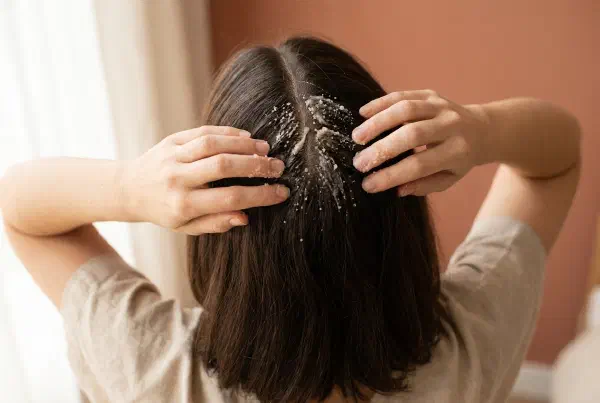
Dry scalp: care against tightness and flaking

In this article
Note: This article contains affiliate/advertising links. As an Amazon Associate we earn from qualifying purchases. If you click such a link and buy something, we may receive a small commission – at no extra cost to you.
When your scalp feels tight, itches, and sheds fine, dry flakes, it quickly becomes uncomfortable – especially in winter. A dry scalp isn’t a flaw but a signal: the natural protective film of sebum and moisture has fallen out of balance. The good news: with gentle care, the right washing routine, and a little patience, the skin usually calms down again. In this guide you’ll read what to do about a dry scalp, how to recognize it, and how to tell it apart from real dandruff or an oily scalp.
How to recognize a dry scalp
A dry scalp usually shows up as a combination of small complaints that get worse in the cold season:
- A feeling of tightness, especially right after washing
- fine, white to light-gray flakes that are dry and rather small
- itching that is sometimes mild, sometimes stubborn
- irritated, sometimes reddened patches along the hairline or part
- dull, brittle hair, because the skin no longer supplies the lengths sufficiently
Dryness often affects not just the scalp but the whole body. If you also struggle with dry facial and body skin in winter, you’ll recognize the same pattern: the skin lacks water and lipids. If the itching persists or takes center stage, it’s worth checking the guide on an itchy scalp, because the triggers can differ.
Why does the scalp become dry?
The scalp is skin like any other – just more densely packed with sebaceous and sweat glands. When its protective film works, it stays supple. When it falls out of rhythm, too much moisture evaporates and the skin dries out. Typical causes:
- Heated indoor air and winter cold: Dry room air and the constant switch between cold and heated rooms draw moisture out of the scalp.
- Washing too often or too hot: Every hot wash dissolves oils from the protective layer. Daily washing can overwhelm the barrier.
- Harsh shampoos: Strongly foaming surfactants (such as high sulfate levels), lots of alcohol, or intense fragrances irritate and degrease.
- Too little moisture and the wrong styling: Blow-drying on the highest setting, frequent straightening, and alcohol-based styling products dry it out further.
- Predisposition and age: Some people naturally produce less sebum, and with age the skin’s moisture decreases.
Dry, dandruff, or oily? The differences
Before you take action, it pays to identify the cause correctly – because the care differs significantly.
- Dry scalp: fine, dry, small flakes that fall off loosely. Plus tightness and often dry hair. The skin needs moisture and lipids.
- Real dandruff (seborrheic eczema): larger, greasy-yellowish flakes that tend to stick. A yeast on the scalp often plays a role, paired with increased sebum production. Read more in the guide on getting rid of dandruff.
- Oily scalp: The skin quickly looks stringy and shiny, often just a day after washing. Here a rich oil doesn’t help; a balancing care does.
A simple rule of thumb: dry flakes are small, light, and dry; oily dandruff is larger, yellowish, and oily. Anyone who confuses the two and degreases heavily “against dandruff” often only makes a dry scalp worse.
The right care for a dry scalp
Care doesn’t begin with applying creams but with washing.
1. Choose a mild shampoo. Reach for a gentle, ideally low-sulfate and low-fragrance shampoo that doesn’t over-cleanse the scalp. Products with soothing ingredients like panthenol, urea, or plant oils are ideal.
2. Wash less often. Instead of daily, every second or third day is often enough. This lets the natural protective film rebuild. Rinse the shampoo out thoroughly, as residue causes additional irritation.
3. Lukewarm instead of hot. Hot water feels pleasant but heavily degreases the scalp. Lukewarm water is much gentler – this also applies when rinsing.
4. Use moisture and oils. A few drops of a light oil (such as jojoba or almond oil) gently massaged into the scalp provide lipids and loosen dry flakes. Leave it on overnight and rinse it out mildly the next morning.
5. Use a scalp scrub in moderation. A gentle scalp scrub once or twice a month loosens loose flakes and improves circulation. Scrubbing too often irritates the already sensitive skin – here, less is more.
6. Reduce heat when styling. Blow-dry cooler and at a distance, temporarily skip the flat iron and alcohol-based sprays right at the roots.
A short, mindful scalp massage while applying the oil also relaxes you and stimulates circulation – a little at-home head-spa moment.
What you can additionally do in everyday life
Care works best when the surrounding conditions are right:
- Humidify the air: A humidifier or a bowl of water on the radiator balances out dry heated air.
- Choose head coverings with care: Hats made of scratchy materials irritate the scalp – soft, breathable fabrics are more comfortable.
- Drink enough and eat a balanced diet: A good fluid intake and nutrients like omega-3 fatty acids support the skin from within.
- Brush gently: A soft brush distributes the sebum and massages the scalp without scratching.
When you should see a professional
A dry scalp can usually be cared for well on your own. In some cases, though, there’s more behind it. Seek medical advice (a dermatology practice) if:
- the symptoms persist for weeks or get worse despite mild care,
- the scalp is heavily reddened, weeps, burns, or forms crusts,
- the itching becomes distressing or your sleep suffers,
- your hair falls out noticeably or bald patches develop.
Behind this can be conditions like psoriasis, eczema, or a fungal infection that need targeted treatment. Cosmetics alone are then not enough.
Frequently asked questions (FAQ)
Dry scalp – what to do first? First adjust your washing routine: a milder, low-sulfate shampoo, washing only every second to third day, and using lukewarm instead of hot water. Add a few drops of a light oil that you massage in and let soak. These three steps alone noticeably ease tightness and flaking for many people.
How often should I wash my hair with a dry scalp? As a rule, every second or third day is enough. Daily washing degreases the scalp further and intensifies the dryness. More important than the frequency is a mild shampoo and thorough but lukewarm rinsing.
How do I tell a dry scalp from dandruff? Dry flakes are small, light, and dry and fall off loosely. Real dandruff is larger, yellowish, and rather greasy-sticky. Oily flakes call for different care than pure dryness – when in doubt, the comparison in the guide on getting rid of dandruff helps.
Does oil help against a dry scalp? Yes, a light oil like jojoba or almond oil can replace missing lipids and loosen dry flakes. Massage it in gently, let it soak, and rinse it out mildly. Use it sparingly, though, or your hair quickly looks stringy.
Can stress worsen a dry scalp? Stress alone doesn’t dry out the scalp, but it can encourage skin complaints and itching and worsen scratching. Relaxation, a calm scalp massage, and a steady care routine help break the cycle of irritation and scratching.