Wellness at Home: Home Spa Ideas for Your Relaxation Day
In this article
Note: This article contains affiliate/advertising links. As an Amazon Associate we earn from qualifying purchases. If you click such a link and buy something, we may receive a small commission – at no extra cost to you.
A whole day just for you, with no appointments, no rush, with warm water, a lovely scent and quiet: that is exactly what a home spa promises. You don’t need an expensive wellness hotel or luxurious equipment for it. With a little planning, a few simple ingredients and the right atmosphere, you can turn your own bathroom into a relaxation zone. In this guide, I’ll show you how to build a soothing wellness day at home step by step, which rituals are worthwhile and what you should keep in mind along the way.
Creating the Right Atmosphere
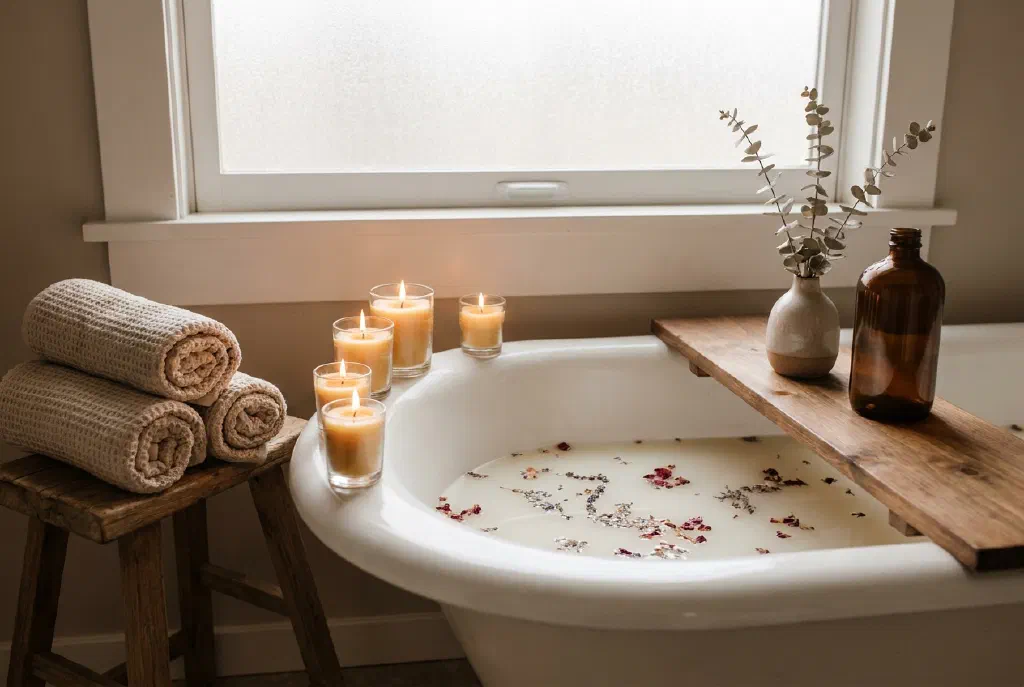
Before you think about baths and masks, take care of the mood in the room. Our well-being depends heavily on light, temperature and sounds. A few simple steps turn a plain bathroom into a small feel-good oasis.
- Dim the lights: Switch off the bright ceiling lamp and use candles or an indirect light source instead. Warm, dimmed light signals to the body that it’s allowed to wind down.
- Regulate the warmth: Heat the bathroom up well beforehand so you don’t get cold after the bath. A pre-warmed towel on the radiator adds a pleasant touch.
- Sound and silence: Calm music, nature sounds or simply intentional silence help you switch off. Ideally, place your phone out of reach or in airplane mode.
- Keep it tidy: Clear away anything lying around. A tidy room also calms the mind.
If you enjoy working with scents, it’s worth taking a look at Aromatherapy: understanding essential oils and their effects. Lavender is considered calming, while citrus scents tend to be invigorating. Always use essential oils sparingly and diluted, however.
The Soothing Bath as the Centerpiece
For many, a warm bath is the loveliest part of a home spa. The warmth relaxes the muscles and gives you time to fully arrive in the moment. Make sure the water is pleasantly warm and not too hot, around 37 to 38 degrees. Water that’s too hot strains the circulation and dries out the skin.
Bath Additives from the Kitchen
You don’t have to buy expensive products. You probably already have many effective additives at home:
- Sea salt or Dead Sea salt: A handful in the bathwater is soothing and can have a pleasant effect on the skin.
- Oats in a fabric pouch: A classic household remedy for sensitive, dry skin, as oats are said to have calming properties.
- Milk and honey: A time-honored Cleopatra bath that leaves the skin feeling supple.
- A few drops of essential oil: Mix it beforehand with a little cream or a neutral oil so it disperses better in the water.
Don’t bathe for longer than 15 to 20 minutes so the skin doesn’t swell up too much. Drink a glass of water before and after the bath, since the warmth gets the circulation going. If you have circulation problems, high blood pressure or are pregnant, you should, when in doubt, have hot full baths checked by a doctor.
Rituals for Skin and Senses
A home spa thrives on small rituals that you carry out mindfully and slowly. It’s exactly this mindfulness that makes the difference between quick care and genuine relaxation.
A Scrub for Smooth Skin
A body scrub removes dead skin flakes and gives you a fresh skin feeling. You can mix it yourself, for example from sugar or salt combined with a little oil. Massage it onto damp skin in circular motions and then rinse it off. For the face, finer mixtures are suitable, such as ground oats and honey.
Masks and Care
While you’re lying in the bath or afterward is the ideal time for a face mask. Choose it to match your skin type:
- Dry skin: rich masks with honey, avocado or quark
- Oily or blemished skin: masks with healing clay that absorb excess sebum
- Tired skin: refreshing masks with cucumber or yogurt
After the bath, while the skin is still slightly damp, care products absorb especially well. Take your time applying a rich body lotion or a body oil and massage it in gently.
Pampering Hands and Feet
Don’t forget your hands and feet, they often get neglected in everyday life. A warm foot bath with a little salt releases tension and prepares the nails for care. Afterward, you can gently push back the cuticles, shape the nails and finish with a nourishing cream. That way, your wellness day feels thoroughly complete.
Using Cold Stimuli Deliberately
Relaxation doesn’t have to be only warm. Alternating warm and cold stimuli boost circulation and can have an invigorating effect. A cold arm pour or briefly rinsing the legs with cool water after the warm bath is a simple method to get the circulation going. If you want to go deeper, you’ll find easy-to-follow instructions in Kneipp treatments for home: water pours explained simply. Always listen to your body and don’t overdo it.
Letting the Day Wind Down Properly
A successful wellness day doesn’t end with the last care step. Deliberately plan time to let it linger. Wrap yourself in a soft bathrobe, brew a herbal tea and treat yourself to another quiet hour. Reading, a nap or simply doing nothing are perfect ways to round things off. That way, you carry the calm with you into the rest of the day and often sleep especially well in the evening.
- Drink plenty of water or unsweetened tea.
- Eat something light if you get hungry.
- Don’t immediately reach for your phone again.
- Consciously enjoy the silence a while longer.
Frequently Asked Questions (FAQ)
How often should I have a home spa day? That’s entirely up to you. Many people enjoy a small wellness routine once a week and plan a whole relaxation day less frequently. More important than the frequency is that you really take the time consciously and don’t stress on the side.
Do I need expensive products for a good home spa? No. You’ll find many soothing ingredients in the kitchen, such as salt, honey, oats or quark. What matters is not the price of the products, but the atmosphere and the calm with which you take time for yourself.
Is a hot full bath suitable for everyone? Not necessarily. With circulation problems, low or high blood pressure, heart conditions or during pregnancy, you should approach hot full baths cautiously and, when in doubt, have them checked by a doctor. Always make sure the water temperature is pleasant and not too hot.
How can I relax even without a bathtub? A home spa works with a shower too. A warm foot bath, a body scrub in the shower, a face mask and a thorough moisturizing routine are also very soothing. Combine this with dimmed light and calm music for the right mood.