Ayurveda cure: how it works, its effects and what matters in a hotel
In this article
Note: This article contains affiliate/advertising links. As an Amazon Associate we earn from qualifying purchases. If you click such a link and buy something, we may receive a small commission – at no extra cost to you.
An Ayurveda cure is more than a few holiday massages. It follows a multi-day programme of treatments, a tailored diet and a calm daily rhythm, all rooted in the Indian tradition of Ayurveda. If you are thinking about booking such a cure at a hotel, you probably want to know what actually happens there, how long it takes and what you can realistically expect. This guide walks you through the typical procedure, puts the effects in sober perspective and shows what to look for when choosing a provider.
What an Ayurveda cure is
Ayurveda is a traditional Indian system of health and lifestyle. A cure in this sense is a connected programme aimed at cleansing and regenerating the body. The classic, intensive form is called Panchakarma, roughly „five actions". In the Ayurvedic tradition this refers to a multi-stage cleansing cure that works with oil treatments, sweat applications and a targeted diet. In wellness hotels you will often find gentler variants that pick out individual building blocks and focus on recovery rather than a strict cleanse.
At the centre lies the idea of the three doshas: Vata (movement), Pitta (metabolism) and Kapha (structure). According to Ayurvedic teaching, every person has their own blend of these energies, and a cure is meant to help foster a felt sense of balance. What happens in a single massage extends, in a cure, across the whole stay. Our guide to Ayurvedic massage explains how the individual treatments work in detail.
How an Ayurveda cure works
Constitutional assessment
It begins with a conversation, often with an Ayurveda therapist or, in reputable houses, with a doctor trained in Ayurveda. Your constitution is assessed, meaning your dominant dosha. This involves questions about sleep, digestion, energy and lifestyle, and sometimes a pulse or tongue examination. The individual programme is derived from this assessment: which oils are used, which treatments make sense and what the diet looks like.
The typical treatments
A cure combines several treatments that vary over the days:
- Abhyanga: The warm full-body oil massage is usually the centrepiece. It follows a calm rhythm with long strokes. Our article on the Abhyanga oil massage describes exactly how it works.
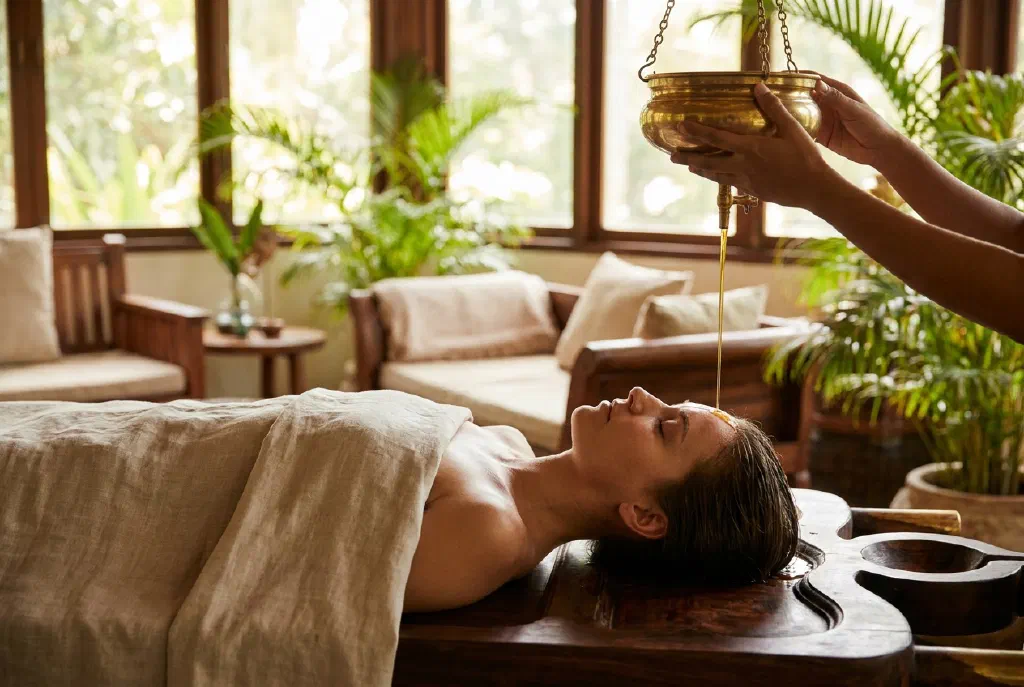
- Shirodhara: A thin stream of warm oil flows steadily over the forehead. This treatment is considered especially calming for the mind.
- Sweat and steam treatments: These are meant to let the previously applied oils take effect and are often used after the massage.
- Herbal and poultice treatments: Warmed herbal pouches are moved over specific areas of the body.
Diet and daily rhythm
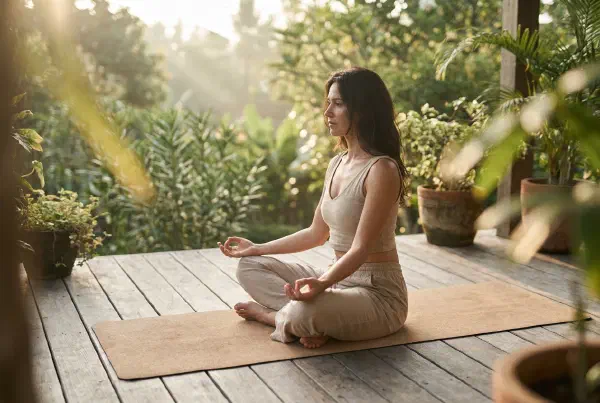
A fixed component is the diet. During a cure the food is usually light, warm and vegetarian, intended to suit your dosha. Hard-to-digest foods, alcohol and caffeine are generally reduced or cut. Added to this is a calm daily routine: set times for treatments, meals and breaks, often complemented by yoga, breathing exercises or meditation. For many guests this very rhythm is a large part of the recovery.
Duration and typical phases
How long an Ayurveda cure lasts depends on its ambition. A classic Panchakarma cure is traditionally set up over two to three weeks, because it falls into several phases:
- Preparation: In the first days the body is attuned to the actual cure with oil treatments and light food.
- Main phase: The more intensive cleansing and massage treatments take place.
- Aftercare: At the end, the body is slowly brought back to a normal diet and workload.
In hotels you will often find shortened variants of three to seven days that condense individual phases. A long weekend is enough for a first impression, while a noticeable shift in habits calls for a week or more.
Effects and what you can expect
This is where a sober look pays off. What many guests actually experience is easy to understand: relaxation from the calm treatments, a more mindful diet without alcohol and sugar, more sleep and distance from everyday life. These effects are real and valuable in their own right.
Beyond that, Ayurvedic teaching promises a „detox" or the healing of certain ailments. Such healing claims are not backed by conventional medicine. The body detoxifies itself through the liver and kidneys, and a medical cleansing effect from oils and diet has not been scientifically demonstrated. So understand an Ayurveda cure as a beneficial time-out with healthy routines, not as a substitute for medical treatment. If you have health complaints, they belong in medical hands, not solely on the massage table.
What to look for in a hotel or provider
Quality varies widely, from seriously supervised programmes to pure wellness packages with an Ayurveda label. These points will help you choose:
- Initial consultation: Is there a genuine constitutional assessment, ideally by a doctor or trained therapist?
- Qualifications: Are the treatments carried out by trained staff, and is the training transparently stated?
- Measured promises: Reputable houses advertise recovery, not the cure of diseases.
- Transparency: Are the programme, the oils used and the diet clearly described?
Anyone planning a more intensive cure should involve their family doctor beforehand, especially with pre-existing conditions, medication or during pregnancy. You will find general advice on planning health-oriented trips in our guide to health cures. What matters in choosing a hotel overall is summed up in our wellness hotel checklist.
Who an Ayurveda cure suits
An Ayurveda cure suits people who want to consciously wind down, change their diet and enjoy a fixed rhythm. If you want to reduce stress and be pampered, you are in the right place. If you like the guided character but are more open to yoga, meditation or detox, it is also worth looking at what a wellness retreat really involves. Caution is warranted, however, with acute illness, during pregnancy, with cardiovascular problems or when expecting a medical cure. In these cases, check with your doctor beforehand whether and in what form a cure makes sense for you.
Frequently asked questions (FAQ)
What is the difference between an Ayurveda cure and individual Ayurvedic massages? A single massage is a one-off treatment. A cure is a connected programme over several days that combines treatments, diet and daily rhythm and begins with a constitutional assessment.
How long should an Ayurveda cure last as a minimum? Three to four days are enough for a first impression. A noticeable change in habits and a classic Panchakarma cure rather need one to three weeks, because they fall into preparation, main phase and aftercare.
Is an Ayurveda cure medically proven? Relaxation and a more mindful diet are plausible effects. Wider healing claims such as a „detox" are not backed by conventional medicine. Understand the cure as recovery with healthy routines, not as medical treatment.
How do I recognise a reputable provider? By a genuine constitutional assessment, qualified staff, a transparent programme description and measured promises. Be sceptical of houses that guarantee specific cures.
Do I need to speak to a doctor before booking? With pre-existing conditions, medication or during pregnancy, that is advisable. An intensive cure affects diet and circulation, so a medical check is sensible if in doubt.